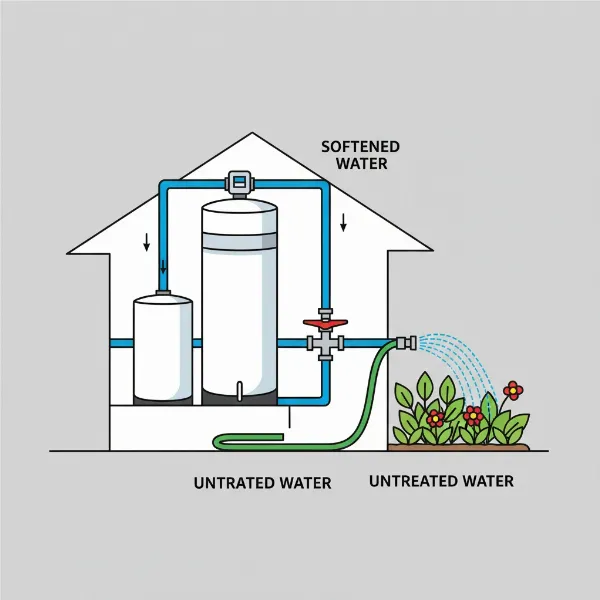
Navigating the world of home water treatment can feel overwhelming. You want cleaner, healthier water, but the options—water softeners, water filters, and various combinations—can quickly lead to confusion. Are they the same? Do they tackle similar problems, or are their roles distinctly different? Understanding the core functions of a water softener versus a water filter is crucial for making the right decision for your family’s health and your home’s longevity. This guide will clarify these essential distinctions, helping you cut through the noise and choose the optimal water solution.
What is Hard Water and Why Does It Matter?
Hard water is a prevalent issue affecting many households, characterized by a high concentration of dissolved minerals, primarily calcium and magnesium. These minerals are naturally picked up as water travels through soil and rocks. While generally not considered a health hazard, hard water can lead to a host of frustrating and costly problems around your home.
The effects of hard water are often visible. You might notice stubborn soap scum on shower doors and fixtures, white mineral deposits accumulating on faucets and in kettles, or spots on your freshly washed dishes. Beyond aesthetics, hard water significantly impacts the efficiency and lifespan of your water-using appliances, such as water heaters, washing machines, and dishwashers, by causing internal scale buildup. It can also make soap and detergent less effective, meaning you use more product to achieve cleanliness. For personal care, hard water can leave skin feeling dry and hair looking dull or brittle.
Understanding Water Softeners: The Solution for Hardness
A water softener is a specialized whole-house system designed specifically to address hard water by removing the hardness-causing minerals: calcium and magnesium. Its primary goal is to prevent the negative effects of these minerals throughout your home.
Water softeners typically work through a process called ion exchange. As hard water enters the softener, it passes through a tank containing resin beads charged with sodium (or sometimes potassium) ions. The calcium and magnesium ions in the water are attracted to these resin beads and exchanged for the sodium (or potassium) ions. The softened water, now free of hardness minerals, then flows into your home’s plumbing. Periodically, the resin beads need to be regenerated with a brine solution to flush out the accumulated hardness minerals and recharge them with sodium ions.
The benefits of soft water are significant. You’ll experience cleaner dishes and glassware without spots, soap and shampoo will lather more effectively, and skin and hair will feel softer and more hydrated. Appliances that use water, like water heaters and dishwashers, will operate more efficiently and last longer due to the absence of mineral scale buildup, potentially saving you money on energy bills and premature replacements.
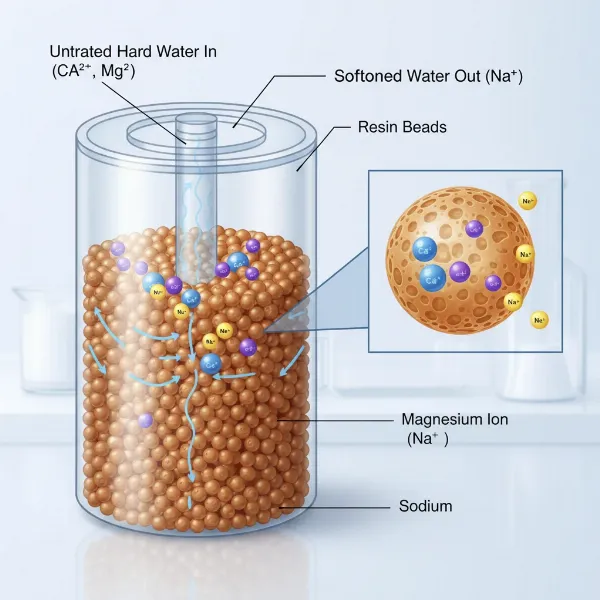 An illustration of how a water softener works using ion exchange, showing water flowing through resin beads.
Understanding Water Filters: The Guardian Against Contaminants
In contrast to water softeners, water filters are designed to remove a wide array of impurities and contaminants from your water supply. Their purpose is to improve the taste, odor, safety, and overall quality of your water by targeting substances that can be harmful or simply undesirable.
Water filters operate using various filtration methods, depending on the specific contaminants they are designed to remove.
- Sediment filters physically block larger particles like sand, silt, and rust.
- Carbon filters are highly effective at adsorbing chlorine, chloramine, volatile organic compounds (VOCs), pesticides, and other chemicals that cause unpleasant tastes and odors.
- Reverse osmosis (RO) systems utilize a semi-permeable membrane to significantly reduce total dissolved solids, including heavy metals like lead and arsenic, fluoride, and many other chemical contaminants.
- UV (Ultraviolet) filters use UV light to kill bacteria, viruses, and other microorganisms.
- Whole-house filtration systems treat all the water entering your home, while point-of-use filters (like under-sink or faucet filters) treat water at specific taps.
The benefits of filtered water are clear. You gain peace of mind knowing your drinking and cooking water is free from potentially harmful substances. Filtered water tastes and smells better, enhancing your daily hydration experience and improving the flavor of beverages like coffee and tea. It also protects you from contaminants such as lead, chlorine, and various industrial byproducts, which can pose health risks.
Water Softener vs. Water Filter: A Direct Comparison
To clearly illustrate their distinct roles, let’s look at a direct comparison:
| Feature | Water Softener | Water Filter |
|---|---|---|
| Primary Purpose | Removes hardness minerals | Removes contaminants and impurities |
| What it Removes | Calcium, Magnesium | Chlorine, sediment, chemicals, heavy metals, VOCs, bacteria, odors |
| How it Works | Ion exchange (typically with salt) | Various methods: Carbon filtration, sediment screen, reverse osmosis membrane, UV light |
| Main Problem Solved | Scale buildup, soap scum, appliance damage, dry skin/hair | Bad taste/odor, health concerns from contaminants, cloudy water |
| Water Quality Impact | “Soft” water feel, extends appliance life | Cleaner, safer, better-tasting, odor-free water |
| Installation | Whole-house (point-of-entry) | Whole-house (point-of-entry) or point-of-use (under-sink, faucet) |
| Typical Cost | Higher initial investment, ongoing salt cost | Varies widely by type, ongoing filter replacement cost |
> “Understanding your specific water challenges is the first step. A water softener handles the mineral-induced nuisances, while a quality filter protects against the unseen threats and taste issues. Often, the best solution involves a combination of both.” – Admin, waterfiltertogo.com
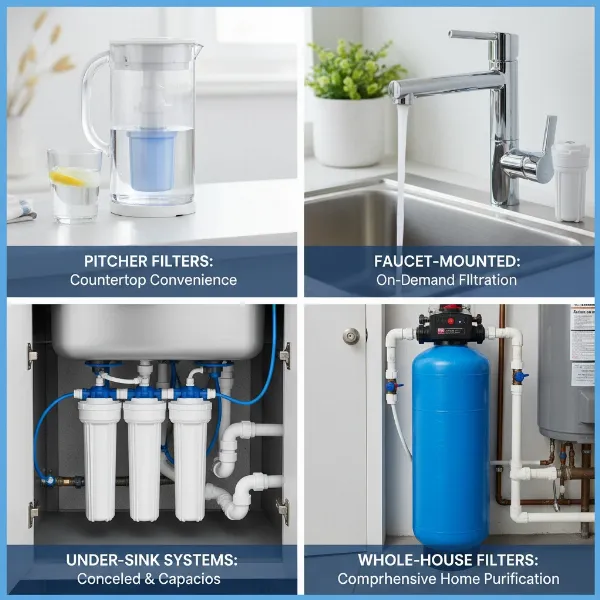 A collage showing different types of water filters like pitcher, faucet, under-sink, and whole-house systems.
Do You Need Both? Choosing the Right Water Treatment System
Deciding between a water softener, a water filter, or both, depends entirely on your specific water quality. The most effective way to determine your needs is through a professional water test. This test will identify the presence and concentration of hardness minerals, chlorine, heavy metals, and other contaminants in your water supply.
- If you only have hard water issues (scale, soap scum, dry skin/hair) and your municipal report shows no significant contaminants, a water softener might be sufficient.
- If you have unpleasant taste or odor (like chlorine), visible sediment, or concerns about health-related contaminants, but your water is not particularly hard, then a water filtration system is your primary need.
- Many homes, however, face both hard water and contaminant issues. In such cases, installing both a water softener and a whole-house water filter often provides the most comprehensive and effective solution. The filter would typically be installed before the softener to remove sediment and chlorine, protecting the softener’s resin and ensuring optimal performance. For premium drinking water, an additional reverse osmosis system under the kitchen sink can be paired with a whole-house softener and filter.
Consider your budget, the number of people in your household, and your specific concerns. Prioritizing healthy, clean water is always a worthwhile investment.
Maintaining Your Water Treatment Systems
Proper maintenance is key to ensuring the longevity and effectiveness of both water softeners and water filters.
For water softeners, regular monitoring of salt levels in the brine tank is essential. You’ll need to replenish the salt as it’s consumed during the regeneration cycle. Cleaning the brine tank periodically can also help prevent salt bridges and ensure efficient operation. Most modern softeners have indicators or alerts for low salt levels.
For water filters, the most crucial maintenance task is replacing filter cartridges on schedule. The replacement frequency depends on the filter type, your water quality, and your water usage. Failing to change filters can lead to reduced flow, decreased filtration effectiveness, or even bacterial growth. Always refer to your system’s manual for specific recommendations. For reverse osmosis systems, this includes periodically replacing the pre-filters, carbon filters, and the RO membrane itself.
Conclusion
Understanding the fundamental difference between a water softener and a water filter is the first step toward achieving optimal water quality in your home. While a water softener expertly tackles the nuisances of hard water minerals, a water filter stands guard against a spectrum of contaminants, ensuring your water is clean, safe, and tastes great. Many households benefit most from a combined approach, addressing both hardness and impurities for truly superior water. Don’t let uncertainty cloud your water decisions any longer. By identifying your specific water challenges, you can confidently choose the right system—or combination of systems—to protect your home and enhance your family’s well-being. What steps will you take today to ensure the purest water for your home?
Frequently Asked Questions
Is softened water safe to drink?
|
Our Picks for the Best Water Filter in 2026
As an Amazon Associate I earn from qualifying purchases.
|
||
| Num | Product | Action |
|---|---|---|
| 1 | Samsung HAF-QIN/EXP Genuine Refrigerator Water Filter, Reduces 99% of Harmful Contaminants for Clean, Clear Drinking Water, 6-Month Life, Easy Install, Pack of 1 |

|
| 2 | Brita Metro Water Filter Pitcher with SmartLight Change Indicator, BPA-Free, Replaces 1,800 Plastic Water Bottles a Year, Lasts Two Months, Includes 1 Filter, Small - 6-Cup Capacity, White |
|
| 3 | everydrop® by Whirlpool Refrigerator Water Filter A - EDRARXD1 (Pack of 1) |
|
| 4 | everydrop by Whirlpool Ice and Water Refrigerator Filter 1, EDR1RXD1, Single-Pack , Purple |
|
| 5 | GLACIER FRESH Water Filter Compatible with XWFE (Built-in CHIP), Replacement for GE XWFE, XWF Refrigerator Water Filter NSF/ANSI 42 Certification Pack of 1 |
|
| 6 | ZeroWater 32-Cup 5-Stage Water Filter Dispenser with Instant Read Out - 0 TDS for Improved Tap Water Taste - IAPMO Certified to Reduce Lead, Chromium, and PFOA/PFOS |
|
| 7 | E-3000UV Whole House Salt-Free Water Softener & Filter Combo with UV |
|
| 8 | Brita UltraMax Large Water Dispenser With Standard Filter, BPA-Free, Reduces Copper, Cadmium and Mercury Impurities, Lasts 2 Months or 40 Gallons, Includes 1 Filter, Kitchen Accessories, Large 27-Cup |
|
| 9 | FRIGIDAIRE ULTRAWF Pure Source Ultra Water Filter, Original, White, 1 Count |
|
| 10 | ZeroWater 20-Cup Ready-Pour 5-Stage Water Filter Dispenser with 0 TDS Water Filter – IAPMO Certified to Reduce Lead, Chromium, and PFOA/PFOS |
|
Yes, softened water is generally safe to drink. The softening process replaces hardness minerals like calcium and magnesium with a small amount of sodium (or potassium), which typically isn’t a health concern for most individuals. However, if you are on a sodium-restricted diet, you might consider a potassium-chloride-based softener or a separate drinking water filter, such as a reverse osmosis system, to remove the added sodium from your drinking water.
Can a water filter also soften water?
Generally, no. Standard water filters, like carbon or sediment filters, are designed to remove impurities such as chlorine, sediment, and chemicals, but they do not remove the minerals that cause water hardness. Some specialized filters, often called “water conditioners” or “salt-free softeners,” aim to condition water to reduce scale buildup without actually removing the hardness minerals, but they operate differently from traditional ion-exchange water softeners.
How can I tell if I have hard water?
Common signs of hard water include white scale buildup on plumbing fixtures, appliances (like kettles and coffee makers), and dishes; dry, itchy skin and dull hair after showering; and soap and shampoo that don’t lather well. The most accurate way to confirm hard water and its level is through a professional water test.
How often should I replace water filters?
The replacement schedule for Water Filters varies widely depending on the type of filter, the quality of your incoming water, and your household’s water usage. Sediment filters might need replacement every 3-6 months, while carbon filters could last 6-12 months. Reverse osmosis membranes typically last 2-5 years. Always consult your specific filter system’s manufacturer recommendations.