Finding the right water filtration system can feel like navigating a complex maze, especially with so many options promising pure, healthy drinking water. Are you tired of questionable tap water taste or worried about unseen contaminants lurking in your glass? The iSpring RCC7AK 6-Stage Reverse Osmosis System often stands out in the crowded market, positioned as a robust solution for homes seeking superior water quality. This in-depth review will explore every facet of the iSpring RCC7AK, from its multi-stage filtration capabilities to its installation and ongoing maintenance, helping you determine if this popular RO system is the optimal choice for your family’s hydration needs.
Understanding Reverse Osmosis and the Need for a Water Filter
At its core, a water filter is a device designed to remove impurities and contaminants from water, transforming it into a safer and more palatable drinking source. Why is this important? Municipal tap water, while generally considered safe, can still contain a variety of undesirable elements such as chlorine, lead, fluoride, heavy metals, pesticides, and other dissolved solids. Over time, exposure to these impurities can impact your health and certainly affects the taste and odor of your water.
Reverse Osmosis (RO) systems represent one of the most effective methods of home water filtration. These systems push water through a semi-permeable membrane that traps even microscopic contaminants, delivering a high level of purity. The iSpring RCC7AK, specifically, is engineered to address these concerns by significantly reducing up to 99% of a wide array of contaminants, ensuring that the water you consume is not only cleaner but also tastes remarkably better. The benefits extend beyond taste, contributing to overall well-being by removing potentially harmful substances before they enter your body.
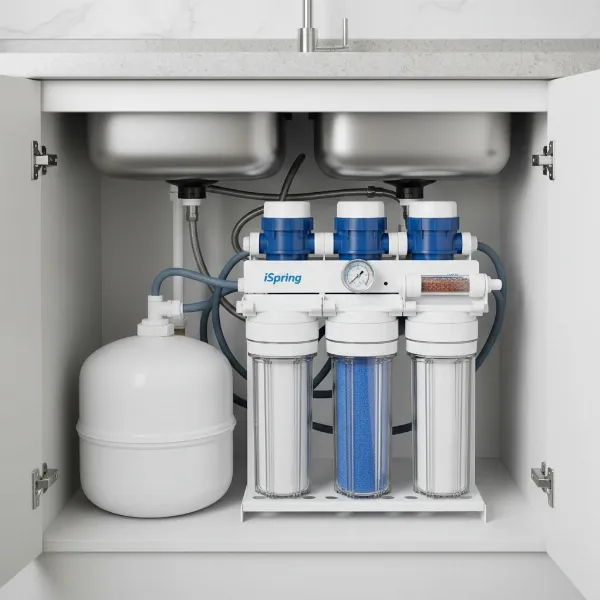 Overview of the iSpring RCC7AK 6-stage reverse osmosis system, showing its compact design and the different filter housings under a sink.
Unpacking the iSpring RCC7AK: What is a 6-Stage RO System?
The iSpring RCC7AK distinguishes itself as a 6-stage Reverse Osmosis system, a design aimed at providing comprehensive purification. While standard RO systems focus purely on contaminant removal, the RCC7AK incorporates an additional “AK” (Alkaline Remineralization) stage to enhance water quality further. This innovative approach ensures that while harmful substances are filtered out, beneficial minerals are reintroduced, addressing the common complaint that RO water can sometimes taste “flat” or slightly acidic due to the complete removal of all dissolved solids.
The filtration process typically begins with pre-filters that tackle larger particles like sediment, rust, and chlorine, protecting the delicate RO membrane. The core of the system is the RO membrane, which acts as a superfine barrier, effectively removing a vast spectrum of contaminants, including lead, fluoride (with an impressive 97-99% reduction), chromium, cadmium, and common PFAS “forever chemicals.” Following the RO membrane, the water passes through a post-carbon filter for final taste and odor refinement. The culminating 6th stage, the alkaline remineralization filter, then reintroduces a balanced mix of healthy minerals, raising the water’s pH level to a more alkaline state. This not only improves the water’s taste but also provides potential health benefits associated with alkaline water.
Choosing Your Ideal Water Filter: Factors to Consider with the RCC7AK
Selecting the perfect water filtration system requires a thoughtful assessment of your specific needs and circumstances. The iSpring RCC7AK, as an under-sink RO system, presents a compelling option, but understanding how it aligns with key factors is crucial.
Water Source Quality: The iSpring RCC7AK is highly effective at purifying municipal tap water, excelling in removing common contaminants like chlorine, fluoride, lead, and various dissolved solids. If your water source is known to have specific issues or a high TDS (Total Dissolved Solids) level, the RCC7AK’s robust multi-stage filtration, backed by NSF/ANSI 58 certification, provides a strong defense.
Household Usage and Demand: With a production rate of 75 Gallons Per Day (GPD), the RCC7AK is well-suited for average to larger households. This capacity ensures a consistent supply of purified water for drinking, cooking, and even making ice. Consider the number of people in your home and your daily water consumption habits to gauge if 75 GPD meets your requirements.
Budget Considerations: The iSpring RCC7AK is often cited as a budget-friendly option, offering a competitive upfront price for a 6-stage RO system with remineralization. Beyond the initial purchase, its annual filter replacement costs are also relatively affordable, estimated to be around $100-$110, translating to roughly $0.17 per day in long-term maintenance savings. This makes it an economical choice for those seeking high-quality filtration without a hefty ongoing expense.
Brand Reputation and Support: iSpring has consistently received positive feedback for its exceptional customer service. Many users commend their knowledgeable and patient support staff, who are readily available to assist with installation queries, maintenance, or promptly replace any defective parts. This strong commitment to customer satisfaction adds significant value and trustworthiness to the brand.
Certifications: The iSpring RCC7AK is NSF/ANSI 58 certified, a critical assurance that the system meets rigorous standards for contaminant reduction. This certification validates the system’s performance in removing specific impurities, providing peace of mind regarding its effectiveness and safety.
Installation and Maintenance: Keeping Your iSpring RCC7AK Optimal
The thought of installing a multi-stage water filtration system can be daunting for some, but the iSpring RCC7AK is designed with DIY installation in mind. The system comes with clear, comprehensive instructions and color-coded tubing to simplify the process. Many users find the installation straightforward, often completing it within a few hours with basic tools. A key feature is the patented top-mounted faucet design, which eliminates the awkward task of tightening nuts from underneath the sink, streamlining countertop faucet installation. While professional installation is an option (typically costing between $100-$500), many homeowners confidently tackle it themselves.
Regular maintenance is crucial for the optimal performance and longevity of your iSpring RCC7AK. The system’s filters have specific lifespans that require periodic replacement:
- Pre and Post Filters (Stages 1-3 & 5): Typically need replacement every 6-12 months.
- RO Membrane (Stage 4): Generally lasts 1-3 years.
- Alkaline Remineralization Filter (Stage 6): Usually replaced every 6-12 months.
The transparent first-stage housing allows for a quick visual inspection of the sediment filter, helping you monitor its condition and replace it promptly. While the filter changes involve cartridge-type replacements (which might be less convenient than some modular designs), they are manageable. It’s also recommended to replace O-rings every three years to prevent potential leaks. For proactive maintenance, using a TDS meter can help you gauge the efficiency of your filters and know precisely when a change is due, ensuring your water quality remains consistently high.
Pros and Cons of the iSpring RCC7AK: A Balanced Perspective
When evaluating any major home appliance, understanding both its strengths and weaknesses is key to making an informed decision. The iSpring RCC7AK, while highly regarded, also has its specific considerations.
Advantages:
- Exceptional Contaminant Removal: The 6-stage filtration, including the RO membrane, is highly effective at reducing up to 99% of common contaminants like lead, fluoride (97-99%), chlorine, heavy metals, and various dissolved solids.
- Alkaline Remineralization: The “AK” stage reintroduces beneficial minerals and balances the pH, resulting in better-tasting, slightly alkaline water, which many users prefer.
- NSF/ANSI 58 Certified: This crucial certification ensures the system meets strict industry standards for performance and material safety.
- Cost-Effective: It boasts an affordable initial purchase price and low long-term maintenance costs, with annual filter replacements estimated at $100-$110.
- DIY-Friendly Installation: Designed for relatively straightforward self-installation with clear instructions, color-coded components, and a patented top-mounted faucet.
- Excellent Customer Support: iSpring is widely praised for its responsive, knowledgeable, and helpful customer service, providing peace of mind.
- High Water Production: A 75 GPD capacity is ample for most households, ensuring purified water is readily available.
|
Our Picks for the Best Water Filter in 2026
As an Amazon Associate I earn from qualifying purchases.
|
||
| Num | Product | Action |
|---|---|---|
| 1 | ZeroWater 32-Cup 5-Stage Water Filter Dispenser with Instant Read Out - 0 TDS for Improved Tap Water Taste - IAPMO Certified to Reduce Lead, Chromium, and PFOA/PFOS |

|
| 2 | everydrop® by Whirlpool Refrigerator Water Filter A - EDRARXD1 (Pack of 1) |
|
| 3 | Brita UltraMax Large Water Dispenser With Standard Filter, BPA-Free, Reduces Copper, Cadmium and Mercury Impurities, Lasts 2 Months or 40 Gallons, Includes 1 Filter, Kitchen Accessories, Large 27-Cup |
|
| 4 | E-3000UV Whole House Salt-Free Water Softener & Filter Combo with UV |
|
| 5 | FRIGIDAIRE ULTRAWF Pure Source Ultra Water Filter, Original, White, 1 Count |
|
| 6 | Brita Metro Water Filter Pitcher with SmartLight Change Indicator, BPA-Free, Replaces 1,800 Plastic Water Bottles a Year, Lasts Two Months, Includes 1 Filter, Small - 6-Cup Capacity, White |
|
| 7 | GLACIER FRESH Water Filter Compatible with XWFE (Built-in CHIP), Replacement for GE XWFE, XWF Refrigerator Water Filter NSF/ANSI 42 Certification Pack of 1 |
|
| 8 | Samsung HAF-QIN/EXP Genuine Refrigerator Water Filter, Reduces 99% of Harmful Contaminants for Clean, Clear Drinking Water, 6-Month Life, Easy Install, Pack of 1 |
|
| 9 | ZeroWater 20-Cup Ready-Pour 5-Stage Water Filter Dispenser with 0 TDS Water Filter – IAPMO Certified to Reduce Lead, Chromium, and PFOA/PFOS |
|
| 10 | everydrop by Whirlpool Ice and Water Refrigerator Filter 1, EDR1RXD1, Single-Pack , Purple |
|
> “The iSpring RCC7AK offers a compelling balance of advanced filtration and affordability, making high-quality water accessible to more households.” – Waterfiltertogo.com Admin, Water Filtration Expert
Disadvantages:
- Under-Sink Space Requirement: As a traditional tank-based RO system, it occupies a significant amount of under-sink cabinet space, which might be a concern for smaller kitchens.
- Wastewater Production: Like most RO systems, it generates wastewater (typically a 2:1 or 3:1 waste-to-purified water ratio), which is an average but notable aspect of RO technology.
- Filter Change Design: While manageable, the cartridge-type filter housings are not as quick or convenient to change as some newer, modular filter designs.
- Remineralization Efficiency: Some reviews suggest the alkaline filter might not perfectly replenish all lost minerals or achieve optimal pH levels without sufficient contact time.
- Potential for Initial Leaks: A small percentage of users report initial minor leaks from O-rings or fittings, though iSpring’s customer service is noted for addressing these promptly.
- No Filter Life Indicator: The system lacks an electronic indicator to signal when filters need changing, requiring users to track it manually or use a TDS meter.
Conclusion: Is the iSpring RCC7AK the Right RO System for You?
The iSpring RCC7AK 6-Stage Reverse Osmosis System presents a powerful and cost-effective solution for families seeking to significantly upgrade their drinking water quality. Its robust 6-stage filtration process, enhanced by the alkaline remineralization stage, effectively removes a broad spectrum of contaminants while improving taste and balancing pH. Backed by NSF/ANSI 58 certification and excellent customer support, it offers a dependable pathway to cleaner, healthier water.
While it does require notable under-sink space and has a typical RO wastewater ratio, these are common considerations for traditional RO systems. For those prioritizing superior contaminant removal, improved taste, and a budget-friendly long-term investment, the iSpring RCC7AK stands out as a highly recommended choice. If you’re ready to invest in your family’s health and enjoy crisp, clean water directly from your tap, this system warrants serious consideration. Are you prepared to transform your home’s water quality with the iSpring RCC7AK?
Frequently Asked Questions
How often do I need to change the filters on the iSpring RCC7AK?
The pre and post-carbon filters typically need replacement every 6-12 months, the RO membrane every 1-3 years, and the alkaline remineralization filter annually. Regular replacement ensures optimal system performance and water quality.
Does the iSpring RCC7AK waste a lot of water?
Like most reverse osmosis systems, the RCC7AK produces some wastewater during the filtration process, typically at a ratio of 2:1 or 3:1 (waste to purified water). This is standard for RO technology and varies depending on your incoming water pressure.
Is the iSpring RCC7AK difficult to install for a DIYer?
The iSpring RCC7AK is generally considered DIY-friendly. It comes with clear instructions, color-coded tubing, and a patented top-mounted faucet design to simplify the process, often requiring only basic tools for installation.
What contaminants does the iSpring RCC7AK remove?
The system is NSF/ANSI 58 certified to remove up to 99% of various contaminants including lead, fluoride, chlorine, heavy metals, pesticides, arsenic, and total dissolved solids (TDS), significantly improving water purity and taste.
Does the alkaline remineralization stage fully restore minerals?
The AK stage reintroduces beneficial minerals and helps balance the water’s pH. While it significantly improves taste and alkalinity, some expert opinions suggest it may not fully replenish all mineral loss or achieve specific pH levels without sufficient water-media contact time.