The quest for pure, safe drinking water is a primary concern for many households, and the presence of fluoride is a common discussion point. While fluoride is often added to municipal water supplies for dental health benefits, some individuals prefer to remove it due to personal health concerns or simply to have more control over their water’s mineral content. Understanding which filtration methods are truly effective for fluoride removal is crucial for making an informed decision. Not all water filters are created equal when it comes to tackling this dissolved mineral, and relying on the wrong system can leave you with water that still contains unwanted levels of fluoride. This comprehensive guide will explore various filtration technologies, pinpointing which ones deliver on their promise and helping you choose the best solution for your home to ensure cleaner, healthier drinking water.
What is Fluoride and Why Consider Removing It?
Fluoride is a naturally occurring mineral found in varying amounts in soil, water, and foods. It is also synthetically produced for use in products like toothpaste and added to public water supplies in many regions as a measure to prevent tooth decay. The Centers for Disease Control and Prevention (CDC) recognizes community water fluoridation as one of 10 great public health achievements of the 20th century. However, despite its widespread use and recognized benefits at optimal levels, concerns about excessive fluoride intake have prompted many people to seek methods for its removal from their drinking water.
The primary reason individuals consider removing fluoride from their water stems from health considerations. While low levels are considered beneficial for dental health, prolonged exposure to higher levels of fluoride can potentially lead to dental fluorosis, which causes discoloration or pitting of tooth enamel, especially in children. In more severe cases, or with extremely high levels, skeletal fluorosis can occur, affecting bones and joints. Beyond direct health impacts, some individuals simply prefer to drink water that is free from any added chemicals, opting for a more natural composition. Taste can also be a factor, as some people detect a noticeable difference in highly fluoridated water.
Common Filtration Methods and Their Effectiveness Against Fluoride
Navigating the world of water filtration can be complex, especially when targeting specific contaminants like fluoride. It’s essential to distinguish between filters that claim to improve water taste and odor, and those specifically designed to remove dissolved minerals.
Ineffective Methods for Fluoride Removal
Many common household water filters, while effective against contaminants like chlorine, sediment, and some organic compounds, are largely ineffective at removing fluoride.
- Activated Carbon Filters: Standard activated carbon filters, found in popular pitcher filters, faucet attachments, and whole-house systems, are excellent for improving taste and odor by removing chlorine and certain volatile organic compounds (VOCs). However, they generally do not remove dissolved inorganic contaminants like fluoride. If your current filter doesn’t explicitly state fluoride removal, it’s highly probable it’s not doing so.
|
Our Picks for the Best Water Filter in 2026
As an Amazon Associate I earn from qualifying purchases.
|
||
| Num | Product | Action |
|---|---|---|
| 1 | Samsung HAF-QIN/EXP Genuine Refrigerator Water Filter, Reduces 99% of Harmful Contaminants for Clean, Clear Drinking Water, 6-Month Life, Easy Install, Pack of 1 |

|
| 2 | everydrop by Whirlpool Ice and Water Refrigerator Filter 1, EDR1RXD1, Single-Pack , Purple |
|
| 3 | FRIGIDAIRE ULTRAWF Pure Source Ultra Water Filter, Original, White, 1 Count |
|
| 4 | everydrop® by Whirlpool Refrigerator Water Filter A - EDRARXD1 (Pack of 1) |
|
| 5 | E-3000UV Whole House Salt-Free Water Softener & Filter Combo with UV |
|
| 6 | ZeroWater 20-Cup Ready-Pour 5-Stage Water Filter Dispenser with 0 TDS Water Filter – IAPMO Certified to Reduce Lead, Chromium, and PFOA/PFOS |
|
| 7 | GLACIER FRESH Water Filter Compatible with XWFE (Built-in CHIP), Replacement for GE XWFE, XWF Refrigerator Water Filter NSF/ANSI 42 Certification Pack of 1 |
|
| 8 | ZeroWater 32-Cup 5-Stage Water Filter Dispenser with Instant Read Out - 0 TDS for Improved Tap Water Taste - IAPMO Certified to Reduce Lead, Chromium, and PFOA/PFOS |
|
| 9 | Brita UltraMax Large Water Dispenser With Standard Filter, BPA-Free, Reduces Copper, Cadmium and Mercury Impurities, Lasts 2 Months or 40 Gallons, Includes 1 Filter, Kitchen Accessories, Large 27-Cup |
|
| 10 | Brita Metro Water Filter Pitcher with SmartLight Change Indicator, BPA-Free, Replaces 1,800 Plastic Water Bottles a Year, Lasts Two Months, Includes 1 Filter, Small - 6-Cup Capacity, White |
|
Highly Effective Methods for Fluoride Removal
For significant fluoride reduction, specific technologies are required that can tackle dissolved ions.
-
Reverse Osmosis (RO) Systems: Reverse osmosis is widely regarded as one of the most effective methods for removing fluoride. How it works is quite ingenious: water is forced under pressure through a semi-permeable membrane that has extremely tiny pores. These pores allow water molecules to pass through but block larger molecules and ions, including fluoride, lead, arsenic, nitrates, and many other dissolved solids.
- Pros: Highly effective, removing up to 90-99% of fluoride. Also removes a broad spectrum of other contaminants.
- Cons: Produces wastewater, can be slow, removes beneficial minerals along with contaminants, and often requires a storage tank. Installation can be more involved, typically fitting under the sink.
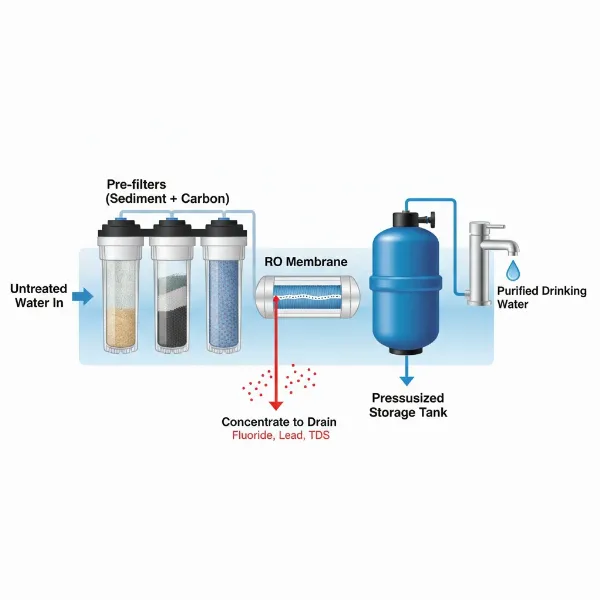 Diagram showing reverse osmosis water filtration process removing fluoride and other contaminants.
-
Distillation: Water distillation mimics nature’s hydrologic cycle by boiling water and then collecting the condensed steam, leaving impurities behind. As water turns into vapor, dissolved solids like fluoride, heavy metals, and minerals are left in the boiling chamber.
- Pros: Extremely effective, typically removing virtually 100% of fluoride and almost all other contaminants.
- Cons: Very slow process, energy-intensive due to boiling, removes all beneficial minerals, and requires regular cleaning of the boiling chamber. The taste of distilled water can also be flat to some users.
Other Effective Methods
Beyond RO and distillation, other specialized media can also target fluoride.
-
Activated Alumina Filters: Activated alumina is a porous material derived from aluminum oxide that excels at adsorbing fluoride. It’s commonly found in dedicated fluoride removal cartridges or within specialized water filter pitchers. The fluoride ions bind to the surface of the activated alumina through an ion exchange process.
- Pros: Effective for fluoride removal (up to 90%+), and generally more affordable than RO or distillation systems for specific applications.
- Cons: Effectiveness can decrease over time as the media becomes saturated, requires regular replacement, and performance can be affected by water pH. It can also leach aluminum into the water if not properly maintained or if the pH is too low.
-
Bone Char Filters: Bone char is a granular carbonaceous material produced from charred animal bones (often cattle). It has a unique pore structure and surface chemistry that makes it highly effective at adsorbing fluoride, as well as heavy metals like lead and cadmium.
- Pros: Very effective at removing fluoride (often 90%+), also removes heavy metals, and can be used in pitcher filters or whole-house systems.
- Cons: Can be more expensive, and some users may have ethical concerns regarding its origin. Like activated alumina, its capacity is finite, requiring replacement.
-
Ion Exchange Resins (Specialized): While general ion exchange resins are used for water softening, specialized anion exchange resins are designed to specifically target negatively charged ions like fluoride. These resins exchange fluoride ions for other benign ions (usually chloride) as water passes through them.
- Pros: Can be integrated into various filter types, effective at fluoride removal.
- Cons: Not common in generic pitcher filters; requires specialized resins. The effectiveness diminishes as the resin beds become saturated, requiring regeneration or replacement.
Comparing Fluoride Water Filters: A Detailed Overview
Choosing the best fluoride water filter involves weighing the pros and cons of each technology against your specific needs and priorities. Here’s a comparative look at the most common and effective options:
| Filter Type | Primary Mechanism | Fluoride Removal Efficiency | Other Contaminants Removed | Speed/Convenience | Maintenance | Cost (Initial/Ongoing) |
|---|---|---|---|---|---|---|
| Reverse Osmosis | Semi-permeable membrane | 90-99% | Lead, arsenic, nitrates, PFOA/PFAS, many dissolved solids | Moderate (can be slow, tank required) | Annual filter changes, periodic membrane replacement | High / Moderate |
| Distillation | Boiling and condensation | ~100% | All dissolved solids, bacteria, viruses | Very slow | Regular cleaning of boiling chamber | Moderate / High |
| Activated Alumina | Adsorption | 80-95% | Arsenic | Fast (depending on system) | Filter cartridge replacement | Moderate / Moderate |
| Bone Char | Adsorption | 80-90% | Lead, cadmium | Fast (depending on system) | Filter cartridge replacement | Moderate / Moderate |
| Specialized Ion Exchange | Anion exchange resin | 80-95% | Specific anions | Fast | Resin regeneration or replacement | High / Moderate |
| Standard Carbon | Adsorption | Minimal (0-10%) | Chlorine, VOCs, sediment | Fast | Filter cartridge replacement | Low / Low |
Choosing the Right Fluoride Water Filter: Key Factors
Selecting the ideal fluoride removal system requires a thoughtful assessment of several factors unique to your situation.
Current Water Quality
Before investing in a filter, it’s wise to understand your current water quality. Your local water provider can supply a Consumer Confidence Report (CCR) detailing contaminant levels, including fluoride. For well water or specific concerns, a professional water test can provide a comprehensive analysis of fluoride, heavy metals, and other potential issues. This knowledge will help you determine the necessary level of filtration.
Household Needs
Consider how much filtered water you need daily and for what purposes.
- Drinking and Cooking: A pitcher filter, countertop, or under-sink system might suffice.
- Whole-House Filtration: If you wish to remove fluoride from all water used for showering, bathing, and appliances, a whole-house system is necessary, though these are typically more complex and costly for fluoride removal.
- Number of Users: A single person might find a pitcher filter adequate, while a large family would benefit from a higher-capacity under-sink RO system or a whole-house solution.
Budget
Water filters come with varying price tags, from initial purchase to ongoing maintenance.
- Initial Cost: RO and distillation systems typically have higher upfront costs due to their complexity. Pitcher filters are generally the most affordable entry point.
- Ongoing Costs: Factor in the price and frequency of filter replacements. Some systems have multiple stages, each with its own replacement schedule and cost. High-quality filters with longer lifespans might have a higher initial cost but lower long-term expenses.
Installation and Maintenance
The ease of installation and required maintenance are practical considerations.
- DIY vs. Professional: Pitcher filters require no installation. Faucet filters and some countertop systems are easy to install. Under-sink and whole-house systems might require plumbing knowledge or professional installation.
- Maintenance: All filters require regular maintenance, primarily replacing cartridges. Neglecting this can lead to decreased effectiveness or even contamination. Distillers need regular cleaning to remove mineral buildup.
Certifications
Always look for third-party certifications, which verify a filter’s performance claims. Reputable organizations like NSF International and the Water Quality Association (WQA) test and certify filters to specific standards. For fluoride removal, look for certifications like NSF/ANSI Standard 58 (for RO systems) or Standard 53 (for health effects, which can include fluoride reduction for some filters).
Top Fluoride Water Filter Options
Based on effectiveness and common applications, several types of filters stand out for fluoride removal:
- Fluoride Water Pitchers: These are ideal for renters or small households seeking a simple, portable solution. Look for pitchers specifically designed with activated alumina or bone char media. Brands like Clearly Filtered or specific models from ZeroWater (which uses an ion-exchange resin) are often recommended for their fluoride reduction capabilities, far surpassing standard Brita or Pur pitchers. They are easy to use – just fill and store – and require no installation, making them a popular entry point for fluoride filtration.
- Countertop RO Systems: For those who want the power of reverse osmosis without permanent installation, countertop RO units offer a plug-and-play solution. Products like AquaTru are highly rated, often boasting multiple stages of filtration and extensive certifications. They offer high efficiency but require manual refilling and can take up counter space. They are a great choice for smaller kitchens or apartments where under-sink installation isn’t feasible.
- Under-Sink Reverse Osmosis Systems: These are arguably the most popular and effective choice for dedicated drinking and cooking water in owned homes. Systems from brands like Home Master or Waterdrop G3 series provide on-demand filtered water directly from a dedicated faucet. They offer superior fluoride removal, typically involving 3-5 stages of filtration, and often include a remineralization stage to add beneficial minerals back to the water. Installation is more involved but results in a discreet and highly effective solution.
- Whole-House Fluoride Filters: For complete fluoride-free water throughout your entire home, a whole-house system is required. These are less common specifically for fluoride compared to other contaminants, but specialized systems using activated alumina or bone char can be installed at the main water line. Products like SoftPro Chlorine+Fluoride Filter systems are designed for this purpose. These require significant initial investment and professional installation but ensure every faucet in your home delivers purified water.
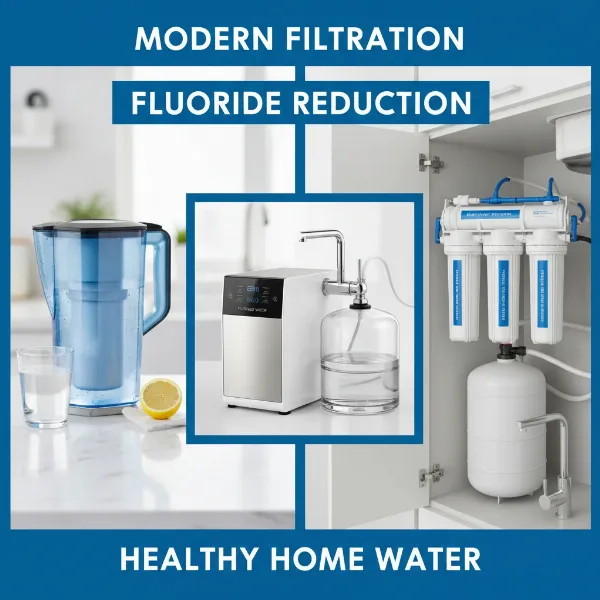 A collage or arrangement of various fluoride water filters, including pitchers, countertop, and under-sink systems.
Installation, Usage, and Maintenance Tips for Your Fluoride Filter
Once you’ve selected your fluoride water filter, proper installation, usage, and maintenance are key to ensuring its optimal performance and longevity.
- Installation:
- Pitcher Filters: Simply rinse the new filter cartridge as per instructions, insert it into the pitcher, and fill. Discard the first few batches of filtered water to flush out any loose media.
- Faucet Filters/Countertop Units: Follow the manufacturer’s specific instructions. Faucet filters typically screw onto your existing tap. Countertop units usually connect via a diverter valve to your faucet.
- Under-Sink RO/Whole-House Systems: These involve plumbing connections and often require drilling. If you’re not experienced with plumbing, it’s highly recommended to hire a certified plumber for installation to prevent leaks and ensure proper function.
- Usage:
- Follow Flow Rates: Do not try to force water through filters faster than recommended. This can reduce filtration efficiency and potentially damage the filter media.
- Daily Use: Use your filtered water regularly. Stagnant water in filters can sometimes become a breeding ground for bacteria if not used and maintained correctly.
- Maintenance:
- Filter Replacement: This is the most critical maintenance task. Each filter type and stage has a recommended lifespan (e.g., 3-6 months for pitcher filters, 6-12 months for RO pre-filters, 2-3 years for RO membranes). Mark your calendar or use a reminder app. Overdue filters lose effectiveness and can become clogged.
- Cleaning: For pitcher filters and distillers, regular cleaning of the reservoir and boiling chamber (for distillers) is essential to prevent mineral buildup and bacterial growth. Use mild soap and warm water, or a descaling solution for distillers.
- Check for Leaks: Periodically inspect under-sink and whole-house systems for any signs of leaks, especially after filter changes.
- Monitor Water Quality: If you notice a change in water taste, odor, or flow rate, it might be an indicator that your filter needs attention or replacement. Consider retesting your water occasionally to ensure the filter is still performing effectively.
Saving Money on Fluoride Water Filtration
While investing in a fluoride water filter is a commitment to healthier water, there are ways to manage costs without compromising quality.
- Choose Filters with Longer Lifespans: Some systems, particularly under-sink RO units, use larger, more robust filters and membranes that last longer, reducing the frequency and thus the cost of replacements. Compare the cost-per-gallon over the filter’s lifetime rather than just the upfront cartridge price.
- Buy Genuine Replacement Filters in Bulk: When it’s time to replace filters, purchasing multi-packs or buying directly from the manufacturer can often result in significant savings compared to buying single cartridges. Always use genuine replacement filters to ensure compatibility and performance.
- Perform Regular Maintenance: Diligent cleaning and timely filter replacements don’t just ensure effective filtration; they can also extend the overall life of your filtration system, deferring the need for costly repairs or full system replacements.
- Consider a Point-of-Use System: If your primary concern is drinking and cooking water, a point-of-use (under-sink, countertop, or pitcher) fluoride filter will be far more cost-effective than a whole-house system. You only filter the water you actively consume, saving on filter media and potentially installation costs.
- DIY Installation (Where Appropriate): For simpler systems like pitcher filters, faucet attachments, or some countertop units, self-installation can save on plumber fees. However, for complex RO or whole-house systems, professional installation is often a worthwhile investment to avoid costly mistakes.
Conclusion
Choosing the right water filter to remove fluoride is a vital step toward ensuring clean and safe drinking water for your home. While many common filters fall short, specialized systems like Reverse Osmosis, Distillation, Activated Alumina, and Bone Char offer proven effectiveness in tackling this dissolved mineral. Each method presents its own balance of efficiency, convenience, and cost, requiring you to carefully consider your specific needs, water quality, and budget. By understanding how these technologies work and committing to proper installation and maintenance, you can confidently select a solution that provides peace of mind and significantly improves your water quality. What steps will you take today to secure a fluoride-free water future for your family?
Frequently Asked Questions
Do Brita filters remove fluoride?
No, standard Brita filters, like most activated carbon filters, are not designed to remove fluoride. They are effective at reducing chlorine, sediment, and improving taste and odor, but fluoride is a dissolved mineral that requires more advanced filtration technologies like reverse osmosis or activated alumina for effective removal.
How much fluoride does a reverse osmosis system remove?
Reverse osmosis (RO) systems are highly effective at removing fluoride, typically reducing its concentration by 90% to 99%. The semi-permeable membrane in an RO system is designed to reject a wide range of dissolved solids, including fluoride ions, making it one of the most reliable methods for achieving low fluoride levels in drinking water.
Is removing fluoride from water beneficial for health?
While some fluoride levels are considered beneficial for dental health, concerns exist about potential adverse effects from excessive intake. Removing fluoride allows individuals to control their total intake from all sources and can alleviate worries about dental or skeletal fluorosis, contributing to overall peace of mind regarding their water quality.
How often should I replace my fluoride water filter?
The replacement frequency for fluoride Water Filters depends on the filter type, your water usage, and the quality of your source water. Pitcher filters might need replacement every 3-6 months, while RO pre-filters and carbon filters typically last 6-12 months, and RO membranes can last 2-3 years. Always refer to the manufacturer’s guidelines for precise recommendations.
Can boiling water remove fluoride?
Boiling water alone does not remove fluoride; in fact, it can slightly concentrate the fluoride as some water evaporates, leaving the minerals behind. To remove fluoride through boiling, you need a full distillation process where the steam is captured and condensed back into liquid, separating it from the dissolved solids.
Are activated alumina and bone char filters safe?
Yes, when used and maintained correctly, activated alumina and bone char filters are safe for fluoride removal. Activated alumina is an EPA-approved method, but proper pH levels are crucial to prevent aluminum leaching. Bone char is also effective, and reputable manufacturers ensure it’s processed safely for water filtration.