In a world increasingly conscious of well-being, the quality of the water we drink has become a central focus. Many are turning to alkaline water, a choice believed to offer superior hydration and potential health advantages. But what exactly is alkaline water, and how can a pitcher transform your ordinary tap water into this elevated form? If you’re looking to upgrade your daily hydration, understanding the Best Alkaline Water Pitchers To Raise PH Levels is your first step towards a refreshing change.
An alkaline water pitcher is more than just a filter; it’s a home hydration solution designed to purify your tap water while simultaneously increasing its pH level. Standard tap water often contains impurities like chlorine, sediment, and heavy metals, alongside varying pH levels that can sometimes be on the acidic side. These innovative pitchers address these concerns by not only removing unwanted contaminants but also infusing beneficial minerals, resulting in water that is often perceived as tasting cleaner, smoother, and more refreshing. Beyond taste, advocates suggest that drinking alkaline water may contribute to better hydration, aid in detoxification by neutralizing acidity in the body, and provide antioxidant support.
How Alkaline Water Pitchers Work: The Science Behind Elevated pH
The mechanism by which alkaline water pitchers work involves a sophisticated multi-stage filtration process designed to purify and remineralize water. Initially, tap water typically passes through an activated carbon filter layer. This stage is crucial for eliminating common impurities such as chlorine, chloramine, volatile organic compounds (VOCs), and sediment, which are often responsible for unpleasant tastes and odors.
Following the carbon filtration, the water usually encounters an ion-exchange resin. This specialized resin targets and reduces heavy metals like lead, copper, and sometimes even fluoride. Beyond contaminant removal, the ion-exchange process also plays a role in softening hard water, preventing mineral buildup and improving the overall texture of the water.
The final and distinguishing stage in most alkaline pitchers involves mineral stones or ceramic balls. These elements, often composed of tourmaline, maifan, or a blend of other natural minerals, slowly release beneficial compounds such as calcium, magnesium, zinc, potassium, and selenium into the water. It is the introduction of these alkaline minerals that actively increases the water’s pH level, typically raising it to a range of 8.0 to 9.5. This process not only elevates the pH but also remineralizes the water, which some believe enhances its hydrating properties and provides a subtle, improved taste. Some advanced filters also aim to reduce the water’s Oxidation-Reduction Potential (ORP), giving it antioxidant properties that may help neutralize free radicals in the body.
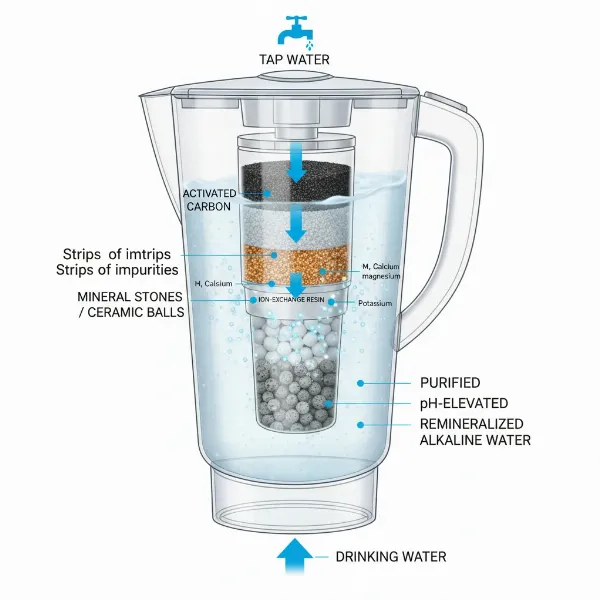 Diagram showing multi-stage filtration process in an alkaline water pitcher, highlighting mineral enhancement.
Key Factors to Consider When Choosing an Alkaline Water Pitcher
Selecting the right alkaline water pitcher involves more than just picking a brand. Several critical factors should influence your decision to ensure you find a product that perfectly aligns with your needs and preferences.
Filtration Effectiveness & Certifications
|
Our Picks for the Best Water Filter in 2026
As an Amazon Associate I earn from qualifying purchases.
|
||
| Num | Product | Action |
|---|---|---|
| 1 | Samsung HAF-QIN/EXP Genuine Refrigerator Water Filter, Reduces 99% of Harmful Contaminants for Clean, Clear Drinking Water, 6-Month Life, Easy Install, Pack of 1 |

|
| 2 | FRIGIDAIRE ULTRAWF Pure Source Ultra Water Filter, Original, White, 1 Count |
|
| 3 | ZeroWater 32-Cup 5-Stage Water Filter Dispenser with Instant Read Out - 0 TDS for Improved Tap Water Taste - IAPMO Certified to Reduce Lead, Chromium, and PFOA/PFOS |
|
| 4 | GLACIER FRESH Water Filter Compatible with XWFE (Built-in CHIP), Replacement for GE XWFE, XWF Refrigerator Water Filter NSF/ANSI 42 Certification Pack of 1 |
|
| 5 | Brita Metro Water Filter Pitcher with SmartLight Change Indicator, BPA-Free, Replaces 1,800 Plastic Water Bottles a Year, Lasts Two Months, Includes 1 Filter, Small - 6-Cup Capacity, White |
|
| 6 | everydrop® by Whirlpool Refrigerator Water Filter A - EDRARXD1 (Pack of 1) |
|
| 7 | E-3000UV Whole House Salt-Free Water Softener & Filter Combo with UV |
|
| 8 | ZeroWater 20-Cup Ready-Pour 5-Stage Water Filter Dispenser with 0 TDS Water Filter – IAPMO Certified to Reduce Lead, Chromium, and PFOA/PFOS |
|
| 9 | Brita UltraMax Large Water Dispenser With Standard Filter, BPA-Free, Reduces Copper, Cadmium and Mercury Impurities, Lasts 2 Months or 40 Gallons, Includes 1 Filter, Kitchen Accessories, Large 27-Cup |
|
| 10 | everydrop by Whirlpool Ice and Water Refrigerator Filter 1, EDR1RXD1, Single-Pack , Purple |
|
The primary function of any water pitcher is filtration. Look for pitchers that clearly outline the contaminants they remove, such as chlorine, lead, mercury, and other heavy metals. While many brands make claims, independent certifications, particularly from organizations like NSF International (e.g., NSF/ANSI Standards 42, 53, and 401), offer assurance that a product has been rigorously tested and meets specific performance criteria. Products with these certifications typically provide a higher level of trust regarding their contaminant reduction capabilities.
pH Level & Mineral Enhancement
The core purpose of an alkaline water pitcher is to raise the pH. Most effective pitchers will elevate tap water to a pH range of 8.0 to 9.5. It’s also important to consider the type of minerals added. Beneficial minerals like calcium, magnesium, and potassium are key not only for alkalization but also for enhancing the water’s taste and potentially contributing to better hydration.
Capacity & Filtration Speed
Consider your household’s water consumption habits. Pitchers vary in capacity, from smaller 2-liter (9-cup) models ideal for individuals or small families to larger 3.7-liter (15-cup) options suitable for busy households or offices. Filtration speed is also a practical consideration; while thorough filtration often takes a bit longer, some designs are optimized for faster processing without compromising quality.
Filter Lifespan & Replacement Costs
Filters are the heart of an alkaline water pitcher, and their lifespan can vary significantly, typically ranging from 1 to 4 months or 40 to 200 gallons. Longer-lasting filters can reduce the frequency of replacements and overall annual costs. Always check the price and availability of replacement filters, as these ongoing expenses can add up over time. Some brands offer subscription services or multi-packs that can help manage these costs more efficiently.
Pitcher Material
Alkaline water pitchers are commonly made from BPA-free plastic (such as Tritan), borosilicate glass, or even stainless steel. Each material has its advantages. BPA-free plastic is lightweight and durable, making it ideal for everyday use. Borosilicate glass, often used in laboratory equipment, offers a premium, aesthetically pleasing look and is resistant to absorbing odors or leaching chemicals, though it is heavier and more fragile. Stainless steel options provide durability and a modern aesthetic.
Design & User-Friendliness
A good pitcher should be easy to fill, pour, and clean. Look for features like ergonomic handles, spill-free spouts, and slim designs that fit comfortably in most refrigerator doors. A filter-life indicator, either manual or digital, is a convenient feature that helps you track when it’s time for a replacement, ensuring consistent water quality. Ease of assembly and disassembly for cleaning is also a practical consideration.
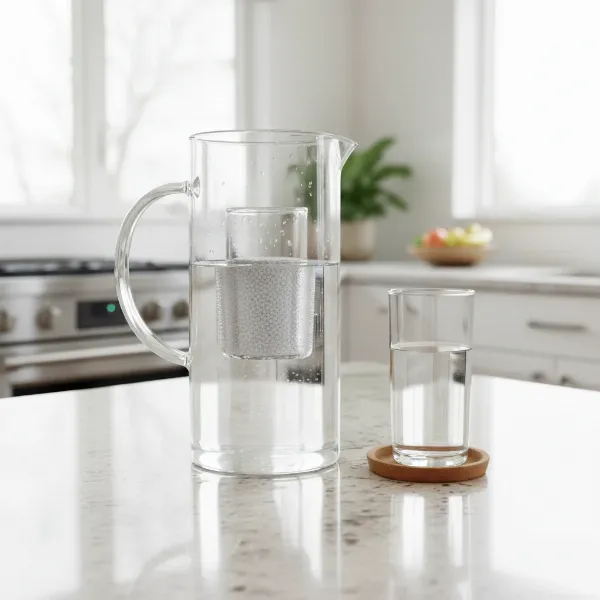 Sleek alkaline water pitcher on a kitchen counter, full of clear water, ready for use.
Top Alkaline Water Pitchers: A Curated Selection
Based on effectiveness, design, and user feedback, several alkaline water pitchers consistently stand out for their ability to raise pH levels and deliver enhanced drinking water.
Invigorated pH Restore Glass Alkaline Water Pitcher
The Invigorated pH Restore Glass Alkaline Water Pitcher is a top contender, highly praised for its elegant design and robust performance. Crafted from durable borosilicate glass with a stylish bamboo lid, it offers a premium, eco-friendly alternative to plastic pitchers. Its multi-stage PH001 filter system is designed to remove a wide range of contaminants, including chlorine, heavy metals, and fluoride, while simultaneously infusing beneficial alkaline minerals to achieve a pH of up to 9. While it may not carry formal NSF/ANSI certifications, independent testing and extensive positive user reviews underscore its effectiveness. Its large capacity (3.7 liters or 15 cups) makes it suitable for families, though its glass construction requires careful handling.
Seychelle Gen 2 Dual pH2O Pure Water Pitcher
For those prioritizing comprehensive contaminant removal with strong certifications, the Seychelle Gen 2 Dual pH2O Pure Water Pitcher is an excellent choice. This pitcher utilizes proprietary Ionic Adsorption Micro Filtration technology to target a broad spectrum of impurities, including organic and inorganic chemicals, lead, mercury, and even radiological contaminants, with claims of 90% fluoride reduction. It boasts NSF/ANSI 42 and 53 certifications, providing verified assurance of its filtration capabilities. The Seychelle pitcher excels at raising pH levels, often reaching up to 9.5. While its bulky design and smaller holding capacity might be drawbacks for some, its superior filtration and certification make it a reliable option for enhancing water quality.
Santevia MINA Alkaline Water Filter Pitcher
The Santevia MINA Alkaline Water Filter Pitcher strikes a balance between performance, sustainability, and value. Tested to NSF standards 42, 53, and 401, it is certified to remove 99% of 85 different contaminants, including heavy metals and industrial chemicals, while boosting pH to 9. Made from BPA/BPS-free Tritan plastic, its filter casing, lid, and divider are recyclable, and the alkaline media compostable, appealing to environmentally conscious consumers. Its compact 2-liter (9-cup) capacity fits easily in most refrigerators, and a lifetime warranty provides long-term peace of mind. Although it lacks an LCD filter change indicator, its proven filtration and mineral enhancement make it a solid everyday performer.
EHM Ultra Premium Alkaline Water Filter Pitcher
The EHM Ultra Premium Alkaline Water Filter Pitcher offers an affordable entry point into alkaline water filtration without sacrificing key features. This 3.8-liter pitcher provides fast and efficient filtration, utilizing micro-screen, activated carbon, and ion-exchange resin to remove chlorine, dirt, and other pollutants, while elevating the pH to 8.5–9.5. It also claims to ionize water and add beneficial minerals like calcium and magnesium. While it may lack extensive third-party certifications for all its claims, it is recognized for improving water taste and its cost-effectiveness, with filters lasting about 6-8 weeks (40 gallons).
Waterdrop Alkaline Lucid Water Filter Pitcher
Another budget-friendly option is the Waterdrop Alkaline Lucid Water Filter Pitcher. With a 10-cup capacity and a sleek, fridge-friendly design, it’s a popular choice for those seeking an economical solution. This pitcher is effective at elevating water pH to between 8 and 9.5 using alkaline ceramic balls and activated carbon. Users appreciate its ability to significantly improve water quality and taste at an accessible price point. The main consideration is its filter lifespan, which typically ranges from 40-50 gallons, requiring more frequent replacements compared to some higher-end models.
Maximizing Your Alkaline Water Pitcher: Usage and Maintenance Tips
To ensure your alkaline water pitcher consistently delivers clean, pH-balanced water and maintains its longevity, proper usage and maintenance are essential.
Initial Setup and Filter Priming
When you first get your pitcher or install a new filter, it’s often recommended to prime the filter. This usually involves soaking the new filter in water for a few minutes and then discarding the first one or two pitchers of filtered water. This helps to moisten the filter media, activate its components, and flush out any loose particles. For filters containing magnesium balls or similar ionizing media, moistening ensures the outer layer softens, allowing for the correct release of minerals and consistent pH elevation.
Regular Filter Replacement
The effectiveness of your alkaline water pitcher heavily relies on timely filter replacement. Manufacturers provide guidelines for filter lifespan, typically based on gallons filtered or months of use (e.g., 2-4 months, 40-200 gallons). Adhering to these recommendations is crucial for maintaining optimal filtration and pH levels. Many pitchers come with a manual or digital filter-life indicator to help you track usage. Neglecting to replace filters can lead to reduced contaminant removal, diminished pH boosting, and even a reintroduction of impurities.
Cleaning Your Pitcher
Regular cleaning of the pitcher body and components is vital. Most parts can be washed by hand with mild soap and warm water. Avoid using harsh abrasive cleaners or putting certain pitcher components in the dishwasher, as this can damage the material or filter system. Over time, you might notice a white film accumulating, especially in areas with hard water. This is usually calcium buildup. To remove it, soak the affected parts in a solution of equal parts vinegar and water for about 20 minutes, then rinse thoroughly. This simple trick will keep your pitcher looking new and functioning optimally.
Proper Storage
If you plan to store your alkaline water pitcher for an extended period, especially with a filter installed, it’s best to let the filter dry out completely. Remove the filter and store it in a dry, cool place away from direct sunlight. For the pitcher itself, ensure it’s clean and dry before storing to prevent mold or mildew growth. When ready to use it again, simply follow the initial setup instructions for the filter.
Testing Water pH
To verify that your pitcher is consistently raising the pH to your desired level, consider periodically testing your filtered water. You can purchase professional pH reagent drops (ensure they are for water testing, not pool water) from online retailers or specialty stores. Collect a small sample of water, add a drop or two of the reagent, and compare the color change to the provided chart. This simple test offers peace of mind regarding your pitcher’s performance.
Smart Sips: Cost-Saving Strategies for Alkaline Water Pitchers
Investing in an alkaline water pitcher is already a significant step towards saving money compared to regularly purchasing bottled alkaline water. However, you can further optimize your costs with a few smart strategies.
One primary way to save is by selecting an alkaline water pitcher known for its long-lasting filters. While these might have a higher upfront cost, their extended lifespan means fewer filter replacements throughout the year, translating into lower annual expenses. For instance, a filter that lasts 200 gallons will be more cost-effective than one requiring replacement after 40 gallons, even if the individual filter price is slightly higher.
Additionally, many manufacturers offer subscription programs or discounts for bulk purchases of replacement filters. Enrolling in a subscription ensures you always have a fresh filter when needed and often comes with a percentage off the regular price, plus free shipping. Similarly, buying multi-packs of filters can reduce the per-filter cost.
Finally, consistent routine cleaning and proper maintenance of your pitcher, as discussed, can extend the life of both the pitcher and its filter. Preventing mineral buildup and ensuring all components function efficiently can prevent premature wear and tear, safeguarding your investment.
Conclusion
Choosing the best alkaline water pitcher to raise pH levels is a practical and impactful decision for anyone prioritizing optimal hydration and water quality. These innovative devices offer a convenient and sustainable way to transform ordinary tap water into a cleaner, mineral-rich, and pH-balanced beverage. By understanding how they work, considering key factors like filtration effectiveness, pH range, capacity, and material, and choosing from top-rated models, you can make an informed choice that suits your lifestyle and budget.
Embracing an alkaline water pitcher isn’t just about filtering water; it’s about making a conscious commitment to your well-being, enhancing the taste of your daily hydration, and reducing your environmental footprint. With the right pitcher and mindful maintenance, you’ll unlock a refreshing source of vitality right in your home.
Are you ready to experience the difference a high-quality alkaline water pitcher can make in your daily routine?
Frequently Asked Questions
Are the health benefits of alkaline water scientifically proven?
While many users report benefits like improved hydration and digestion, scientific research on the extensive health claims of alkaline water is still evolving and often limited. The primary, tangible benefits widely recognized include enhanced taste, removal of common tap water contaminants like chlorine, and the addition of beneficial minerals that can positively impact daily hydration. Always consult with a healthcare professional regarding specific health concerns.
How often should I change the filter in my alkaline water pitcher?
The filter change frequency depends on the specific model and your water usage. Most manufacturers recommend replacing filters every 1 to 4 months or after filtering a certain volume of water, typically ranging from 40 to 200 gallons. Always refer to your pitcher’s user manual for precise instructions.
Can I put hot water in my alkaline water pitcher?
It is generally not recommended to put hot water in an alkaline water pitcher. Most pitchers and filters are designed for use with cold tap water. Hot water can damage the filter media, reduce its effectiveness, and potentially warp plastic components, compromising both the filtration process and the pitcher’s integrity.
How do I know if my alkaline water pitcher is working correctly?
You can typically tell your pitcher is working if you notice an improvement in the taste and odor of your water, and if a pH testing kit confirms an elevated pH level. If the flow rate significantly decreases or if the taste of your water reverts to its original tap water quality, it’s usually an indication that the filter needs to be replaced.