Ensuring the water you drink is clean and safe is a top priority for every household. Yet, navigating the world of water filters can be perplexing, with a myriad of claims and technical specifications. How do you cut through the noise to find a reliable water filter? The answer often lies in understanding independent certifications, particularly those from NSF International. These certifications provide a trusted benchmark, assuring that a water filter performs as promised. Without a clear grasp of what standards like NSF 42, 53, and 401 signify, you might be left guessing about your water quality. This comprehensive guide will demystify these crucial NSF certifications, empowering you to make an informed decision for your home’s water filter needs.
What is NSF Certification and Why Does It Matter?
NSF International is a global public health organization that writes standards, and tests and certifies products. When a water filter carries an NSF certification, it means the product has undergone rigorous independent testing and meets strict standards for safety, performance, and contaminant reduction. This third-party verification eliminates guesswork, providing consumers with confidence that a filter’s claims are legitimate. It’s not just about what a manufacturer says their water filter can do; it’s about what an unbiased expert has verified it does do. Choosing an NSF-certified water filter is a proactive step towards safeguarding your family’s health and ensuring consistent water quality.
NSF/ANSI Standard 42: Aesthetic Effects
NSF/ANSI Standard 42 focuses on the aesthetic aspects of drinking water, addressing contaminants that affect the taste, odor, and appearance of your water, but are not necessarily harmful to health. When a water filter is certified to NSF 42, it means it effectively reduces non-health-related impurities.
Common contaminants targeted by NSF 42 include chlorine, chloramine, and particulates. These substances often give tap water an unpleasant smell or taste, or contribute to cloudy water. A filter certified for NSF 42 will significantly improve the palatability and clarity of your drinking water, making it more enjoyable to consume. This standard is ideal for those primarily concerned with enhancing their water’s sensory qualities, providing a noticeable difference in their daily drinking experience.
NSF/ANSI Standard 53: Health Effects
Stepping up in critical importance, NSF/ANSI Standard 53 certifies water filters designed to reduce specific health-related contaminants. These are substances with known health effects, and their presence in drinking water can pose significant risks. Filters certified to NSF 53 undergo extensive testing to ensure they can effectively remove or reduce these dangerous impurities.
The range of contaminants covered by NSF 53 is broad, often including heavy metals like lead, biological cysts such as Cryptosporidium and Giardia, volatile organic compounds (VOCs), and asbestos. For example, if you live in an older home with lead pipes, a water filter with NSF 53 certification for lead reduction is essential. This standard provides a vital layer of protection against contaminants that could lead to serious health issues, offering peace of mind that your water filter is actively working to keep your family safe.
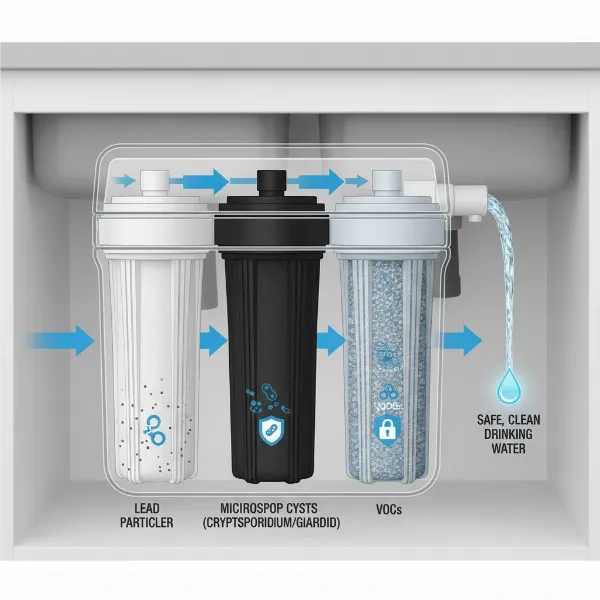 Water filter removing lead, cysts, and other health-threatening contaminants for safe drinking.
NSF/ANSI Standard 401: Emerging Compounds/Incidental Contaminants
NSF/ANSI Standard 401 addresses a newer category of contaminants known as “emerging compounds” or “incidental contaminants.” These are substances that have been detected in drinking water supplies at trace levels, often not yet subject to widespread regulation, but whose long-term health effects are a growing concern. A water filter with NSF 401 certification offers an advanced level of purification, targeting these modern environmental challenges.
This standard covers a specific list of up to 15 contaminants, which can include certain prescription and over-the-counter medications (like ibuprofen or naproxen), pesticides, herbicides, and chemical compounds such as Bisphenol A (BPA). While these compounds may only be present in minute quantities, the NSF 401 certification ensures your water filter is equipped to reduce them, offering a more comprehensive approach to water purification. It reflects a commitment to addressing the evolving landscape of water quality challenges.
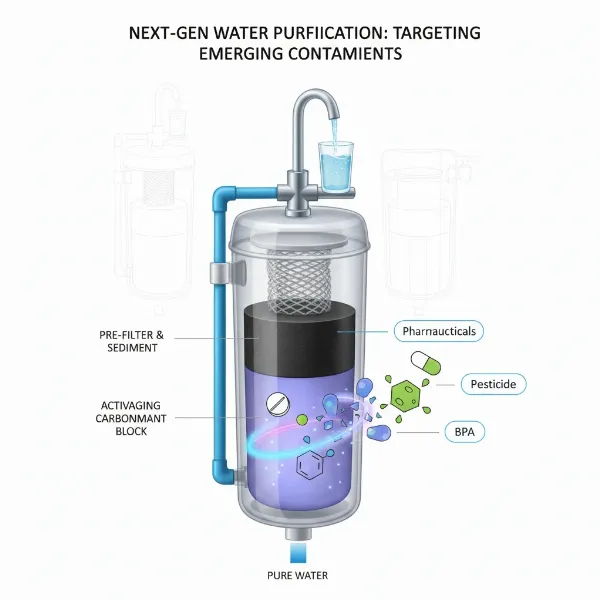 Advanced water filter reducing emerging contaminants like pharmaceuticals and pesticides for cleaner water.
Comparing NSF 42, 53, and 401: A Quick Guide
Understanding the distinctions between these NSF certifications is key to selecting the right water filter. While all aim to improve water quality, their primary focus and the types of contaminants they target differ significantly. Here’s a summary to help clarify their roles:
| NSF/ANSI Standard | Primary Focus | Key Contaminants Addressed | Main Benefit |
|---|---|---|---|
| 42 | Aesthetic Effects | Chlorine, chloramine, taste, odor, particulates | Improved water appearance, taste, and smell |
| 53 | Health Effects | Lead, Cryptosporidium, Giardia, VOCs, asbestos, chromium, mercury, cysts | Protection against serious health risks |
| 401 | Emerging/Incidental Contaminants | Pharmaceuticals (e.g., ibuprofen), pesticides, herbicides, BPA | Addresses modern, unregulated water quality concerns |
This table clearly illustrates that while NSF 42 enhances the pleasantness of your water, NSF 53 tackles direct health threats, and NSF 401 provides a safeguard against newly identified or less regulated substances. Many advanced water filters will be certified to multiple standards, offering comprehensive protection.
How to Choose a Water Filter Based on NSF Certifications
Choosing the right water filter is a personal decision that should be guided by your specific needs and local water quality. The NSF certifications provide invaluable guidance. Here’s a practical approach:
- Assess Your Water Quality: The first step is to understand what’s in your water. If you use municipal water, your local water report can provide details. For well water, private testing is crucial. This will help you identify the specific contaminants you need to address.
- Identify Your Concerns: Are you bothered by the taste of chlorine? Are you worried about lead in older plumbing? Or are you seeking comprehensive protection against a wide array of potential contaminants, including emerging ones? Your concerns will guide which NSF standards are most relevant.
- Match Certifications to Needs:
- For improved taste and odor, look for NSF 42.
- For protection against health-threatening contaminants like lead or cysts, prioritize NSF 53.
- For concerns about pharmaceuticals or other emerging compounds, seek NSF 401.
- Many high-quality water filters are certified to a combination of these standards, offering multi-layered protection. Always check the specific contaminant reduction claims listed on the product.
- Consider System Type: Whether you need a point-of-use (POU) water filter (like a pitcher or under-sink system) or a point-of-entry (POE) whole-house system will depend on where you want the filtered water and the extent of the contamination. NSF certifications apply to both types of systems.
“Understanding your local water quality is the bedrock of choosing an effective water filter. NSF certifications then act as a trusted roadmap, guiding you to products proven to address those specific issues.” – Dr. Eleanor Vance, Environmental Health Scientist
Beyond the Numbers: What Else to Look For?
While NSF certifications for standards 42, 53, and 401 are paramount, they are part of a broader commitment to water filter quality. These certifications also encompass evaluations of material safety and structural integrity. This means that the components of the water filter itself will not leach harmful substances into your water, and the system is built to withstand typical operating pressures. Always look for reputable brands that openly display their NSF certifications and provide clear information about their products. Proper installation and diligent maintenance, including timely filter replacement as per manufacturer guidelines, are also crucial for ensuring the long-term effectiveness of any certified water filter.
Conclusion
Navigating the options for a water filter can feel overwhelming, but NSF certifications like 42, 53, and 401 provide clear, verifiable benchmarks for performance. By understanding that NSF 42 addresses aesthetic concerns, NSF 53 targets health-related contaminants, and NSF 401 tackles emerging compounds, you are empowered to make a highly informed decision. These certifications are your assurance that a water filter has been independently tested and will perform as claimed, delivering safer, better-tasting water. Investing in an NSF-certified water filter is investing in your health and peace of mind. What steps will you take today to ensure your water filter meets the highest standards?
Frequently Asked Questions
Can a water filter be certified to multiple NSF standards?
|
Our Picks for the Best Water Filter in 2026
As an Amazon Associate I earn from qualifying purchases.
|
||
| Num | Product | Action |
|---|---|---|
| 1 | ZeroWater 20-Cup Ready-Pour 5-Stage Water Filter Dispenser with 0 TDS Water Filter – IAPMO Certified to Reduce Lead, Chromium, and PFOA/PFOS |

|
| 2 | Brita UltraMax Large Water Dispenser With Standard Filter, BPA-Free, Reduces Copper, Cadmium and Mercury Impurities, Lasts 2 Months or 40 Gallons, Includes 1 Filter, Kitchen Accessories, Large 27-Cup |
|
| 3 | everydrop® by Whirlpool Refrigerator Water Filter A - EDRARXD1 (Pack of 1) |
|
| 4 | everydrop by Whirlpool Ice and Water Refrigerator Filter 1, EDR1RXD1, Single-Pack , Purple |
|
| 5 | GLACIER FRESH Water Filter Compatible with XWFE (Built-in CHIP), Replacement for GE XWFE, XWF Refrigerator Water Filter NSF/ANSI 42 Certification Pack of 1 |
|
| 6 | E-3000UV Whole House Salt-Free Water Softener & Filter Combo with UV |
|
| 7 | Brita Metro Water Filter Pitcher with SmartLight Change Indicator, BPA-Free, Replaces 1,800 Plastic Water Bottles a Year, Lasts Two Months, Includes 1 Filter, Small - 6-Cup Capacity, White |
|
| 8 | Samsung HAF-QIN/EXP Genuine Refrigerator Water Filter, Reduces 99% of Harmful Contaminants for Clean, Clear Drinking Water, 6-Month Life, Easy Install, Pack of 1 |
|
| 9 | FRIGIDAIRE ULTRAWF Pure Source Ultra Water Filter, Original, White, 1 Count |
|
| 10 | ZeroWater 32-Cup 5-Stage Water Filter Dispenser with Instant Read Out - 0 TDS for Improved Tap Water Taste - IAPMO Certified to Reduce Lead, Chromium, and PFOA/PFOS |
|
Yes, many advanced water filters are certified to multiple NSF standards (e.g., NSF 42, 53, and 401) to provide comprehensive protection against a wider range of contaminants, including aesthetic issues, health threats, and emerging compounds.
Does NSF certification guarantee all contaminants are removed?
NSF certification guarantees that a Water Filter reduces the specific contaminants listed on its certification claims, as tested under rigorous conditions. It does not mean it removes all contaminants; you must check the specific standards and claims relevant to your concerns.
What is the difference between POU and POE systems regarding NSF certification?
Both point-of-use (POU) systems (like pitchers or under-sink filters) and point-of-entry (POE) systems (whole-house filters) can be NSF certified to standards 42, 53, and 401. The key difference is that POU treats water at a single tap, while POE treats all water entering your home.