There’s nothing quite as frustrating as expecting a refreshing glass of filtered water, only to be met with an unexpected, unpleasant taste. You invested in a water filter for clean, pure-tasting hydration, so when your water tastes off—be it metallic, earthy, or even plastic-like—it can leave you wondering if your system is doing its job. The good news is that most peculiar tastes have identifiable causes and actionable solutions.
This comprehensive guide will delve into the common reasons behind strange-tasting filtered water, helping you diagnose the problem and arming you with practical fixes to restore your water’s pristine quality. Say goodbye to guesswork and hello to consistently great-tasting water for your home.
Understanding Your Water Source: The First Step to a Better Taste
Before diving into filter-specific issues, it’s crucial to understand that your raw water source plays a significant role in how your filtered water tastes. Different sources come with unique sets of contaminants and characteristics that even the best filters have to contend with.
- Municipal Water: Water supplied by your city is often treated with chlorine or chloramine to kill harmful bacteria and viruses. While essential for safety, these chemicals can leave a residual taste and odor. Additionally, municipal water travels through miles of aging infrastructure, where it can pick up sediment, rust, and even tiny metal particles from old pipes.
- Well Water: Private well water, unlike municipal supplies, is not typically pre-treated. This means it can contain naturally occurring minerals like iron, sulfur, and manganese, which contribute to metallic, musty, or “rotten egg” smells and tastes. Well water is also susceptible to agricultural runoff or other localized contamination.
- Tank or Stored Water: Water stored in tanks, especially if not regularly circulated or cleaned, can become stagnant. This environment is ripe for bacterial growth and can lead to unappealing, stale, or moldy tastes.
The Importance of Water Testing
Identifying your water source is a great start, but to truly understand what you’re dealing with, water testing is indispensable. A proper test reveals the specific contaminants, mineral levels, and pH of your water, guiding you toward the right solutions.
- Home Test Kits: These affordable kits can give you a quick overview of common issues like chlorine, hardness, pH, iron, and basic bacterial presence. They are readily available online or at hardware stores.
- Lab Testing: For a more detailed and accurate analysis, especially if you suspect serious contamination or rely on well water, sending a sample to a certified laboratory is recommended. Lab tests provide a comprehensive breakdown of your water’s composition, including heavy metals, volatile organic compounds (VOCs), and other complex contaminants.
It’s advisable to test municipal water at least once a year, or immediately if you notice a sudden change in taste or odor. Well water should be tested every 6-12 months and promptly after natural events like flooding or drought. Knowing your water’s exact composition empowers you to choose the most effective filtration strategy and troubleshoot issues proactively.
Common Reasons Your Filtered Water Tastes Unusual
Even with a water filter installed, various factors can lead to an undesirable taste. Let’s explore the most frequent culprits and how they manifest in your glass.
Old or Expired Filters
This is perhaps the most common reason for a decline in water quality after filtration. Water filters have a finite lifespan, measured either by volume of water processed or by time. As a filter nears the end of its life, it becomes saturated with the contaminants it’s designed to capture.
- Clogged Media: Sediment, rust, and other particles can clog the filter media, reducing flow rate and allowing smaller contaminants to pass through.
- Reduced Absorption: Activated carbon, which is excellent at removing chlorine, odors, and organic compounds, eventually loses its adsorptive capacity. Once saturated, it can no longer effectively trap these impurities.
- Bacterial Buildup: In some cases, old filters can become breeding grounds for bacteria, especially if left unused for extended periods. This can introduce new, unpleasant tastes and odors into your supposedly clean water.
When a filter is old, you might notice a return of the original tap water taste, or even a new, musty or stale flavor.
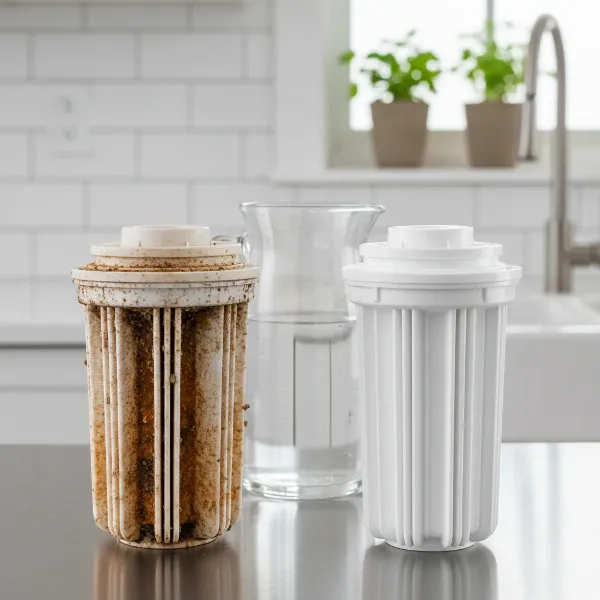 A visibly old, dirty, and clogged water filter, indicating it needs replacement.
New Filter Issues
It might seem counterintuitive, but a newly installed water filter can sometimes initially produce strange-tasting water. This is usually a temporary issue.
- Carbon Dust: Many filters, especially carbon-based ones, contain fine carbon particles. During the initial flush, these harmless particles can be released into the water, giving it a slightly gritty texture or an earthy taste.
- Air Bubbles: Air can become trapped in the filter system during installation. As this air is flushed out, it can create a milky appearance and affect the taste and texture of the water for a short period.
- Protective Liquids: Some reverse osmosis (RO) membranes or other filter types come with a protective liquid to keep them moist during storage. This liquid needs to be thoroughly flushed out before consumption.
These issues typically resolve after proper flushing.
Improper Filter Type or Installation
The effectiveness of your filtration system hinges on selecting the right filters for your specific water problems and installing them correctly.
- Mismatched Filter: If your water test reveals high iron levels, but your filter is primarily designed for chlorine removal, the iron will pass through, leading to a metallic taste. Similarly, a sediment filter won’t remove chemical contaminants.
- Incorrect Order in Multi-Stage Systems: In multi-stage systems, filters must be placed in a specific order (e.g., sediment filter before carbon block). An incorrect order can overwhelm subsequent filters, reduce their lifespan, and impair overall performance.
- Loose Connections/Bypasses: Improper installation can lead to leaks or allow unfiltered water to bypass the filter media entirely, rendering the system useless against taste issues.
System Build-Up and Stagnation
Even the filter housing and internal plumbing of your system require attention.
- Algae, Mineral Scale, or Biofilm: Over time, these can accumulate inside filter housings, supply lines, and fittings. Biofilm, a slimy layer of microorganisms, can introduce musty, earthy, or even fishy tastes and odors. Mineral scale can impact filter efficiency and water flow.
- Stagnant Water: If your water filter system (especially pitcher filters or whole-house systems that haven’t been used in a while) sits idle, water within the filter media or lines can become stagnant. This old water can develop a stale, plastic-like, or even slightly sour taste as microorganisms grow or dissolved solids settle.
Specific Taste Profiles and Their Underlying Causes
Different tastes can pinpoint specific contaminants or issues within your water or filtration system.
- Metallic or Bitter Taste:
- High Metal Content: Iron, copper, zinc, or manganese are common culprits. These can leach from old or corroding plumbing, especially in homes with galvanized steel or copper pipes, or occur naturally in well water.
- Low pH Levels (Acidic Water): Water with a pH below 6.5 is corrosive and can leach metals from pipes. Acidic water also directly activates acid-sensing receptors on your tongue, giving it a sour, metallic sensation.
- High Chlorine Levels: While chlorine itself has a distinct chemical taste, it can also react with metals in plumbing, contributing to a metallic flavor over time.
- Certain Health Conditions: Sometimes, the metallic taste isn’t from the water but from medications, poor oral hygiene, or even pregnancy, altering your taste perception.
- Earthy, Moldy, or Musty Taste:
- Organic Matter and Algae: Decaying organic material, such as leaves or algae, in the water source is a common cause. These compounds, like geosmin and 2-methylisoborneol (2-MIB), are typically harmless but highly detectable by taste. This is frequent in surface water sources, especially during seasonal changes, and in private wells.
- Biofilm Build-up: As mentioned, a build-up of bacteria or fungi in pipes or filter housings can also contribute to these unpleasant, “dirt-like” flavors.
- Plastic or Chemical Taste:
- New Plumbing or Components: New plastic pipes, hoses, or filter housings can leach plasticizers or other chemicals during their initial use, resulting in a distinct plastic or chemical taste. This typically dissipates over time with regular flushing.
- Disinfectant Byproducts: While filters remove chlorine, they might not remove all disinfectant byproducts, which can sometimes have a chemical or medicinal taste.
- Manufacturing Residue: Occasionally, manufacturing residues from the filter media itself can contribute to a chemical taste, requiring thorough flushing.
- Salty Taste:
- Water Softener Issues: If you have a water softener, a salty taste could indicate an issue with its regeneration cycle, too much salt in the brine tank, or a problem with the resin beads.
- Natural Deposits or Runoff: In some geological areas, water can naturally pick up high levels of sodium or chlorides. Nearby agricultural runoff or industrial spills can also introduce salinity.
- RO System Imbalance: While rare, if a reverse osmosis membrane is damaged, it might not properly reject salts, allowing them to pass through.
- Sweet Taste:
- Mineral Imbalances: A slightly sweet taste can arise from certain mineral mixes, particularly high levels of calcium or magnesium, or an elevated pH.
- Disinfectant Byproducts: Some disinfectant byproducts can also impart a sweet or sometimes sweet-plastic taste. While usually not harmful in small amounts, any strong, sudden sweetness should warrant investigation.
- “Flat” or Lacking Taste:
- Over-Filtration/RO Systems: Reverse osmosis systems are highly effective at removing almost everything from water, including beneficial minerals and dissolved oxygen. This can leave the water feeling “empty” or “flat” to some palates. Some RO systems incorporate a remineralization stage to address this.
Actionable Steps to Restore Your Water’s Freshness
Having identified potential causes, let’s explore practical steps you can take to banish those weird tastes and enjoy pure, clean water once more.
1. Regular Filter Replacement
This is fundamental. Filters are consumables, and adhering to the manufacturer’s recommended replacement schedule is crucial for optimal performance and taste.
- Sediment Filters: Typically every 3-6 months.
- Carbon Filters: Generally every 6 months.
- Specialty Filters (KDF, Iron/Manganese, Lead Reduction): Usually every 6-12 months, depending on water quality and usage.
- RO Membranes: Can last 2-5 years, but pre-filters protect their lifespan.
Always use high-quality, system-compatible replacement filters to ensure they meet your filtration needs.
2. Proper System Flushing
Whether you’ve just installed a new filter or replaced an old one, flushing is a vital step often overlooked.
- New Filters: Run cold water through the system for at least 5-10 minutes (or as per manufacturer instructions) after installation. This flushes out any carbon dust, air bubbles, or protective liquids, ensuring the water runs clear and taste-free.
- After Disuse: If your system has been idle for a few days or weeks, flush a gallon or two of water through it to remove any stagnant water that may have developed an off-taste.
3. Routine Cleaning and Maintenance
Beyond just changing filters, regular cleaning of your entire filtration system is essential.
- Sanitize Filter Housings: Periodically disassemble and clean filter housings with a mild bleach solution or a food-grade sanitizer. This prevents the buildup of algae, mineral scale, and biofilm, which can contribute to musty or slimy tastes. Inspect for any visible residue or slime.
- Clean Faucet Aerators: The small screens at the tip of your faucets can trap metal particles and debris. Unscrew and clean them every few months. Soaking them in white vinegar can dissolve mineral buildup and dislodge trapped gunk.
- Check for Leaks and Damage: Regularly inspect your system for any signs of leaks or physical damage that could compromise its integrity and introduce contaminants.
4. Water Testing and System Adjustment
If unusual tastes persist, or if you notice a sudden change in your water’s flavor, re-testing your water is the next logical step.
- Re-test Your Water: A new test can confirm if previous contaminants have returned or if new issues have emerged due to seasonal changes, municipal upgrades, or well contamination.
- Adjust or Upgrade Your Filter Setup: Based on the water test results, you might need to adjust your current system (e.g., adding a pre-filter for sediment) or upgrade to a more robust filtration technology. For instance, if metals are a persistent issue, a specialized heavy metal filter or a reverse osmosis system might be necessary. For pH imbalances, a calcite neutralizer can help.
5. Address Plumbing Issues
Old or corroding pipes can continuously leach contaminants into your water, even after it’s been filtered.
- Flush Your Pipes: In homes with older plumbing, simply running your cold water taps for 15-30 seconds before drinking or cooking can clear out stagnant water that has accumulated metals from the pipes.
- Use Cold Water: Always draw water for drinking and cooking from the cold tap. Hot water interacts with pipe materials more aggressively, increasing the leaching of metals and other impurities. Avoid using water that has passed through water heaters for consumption.
- Consider Plumbing Inspection/Upgrades: If metallic tastes are severe and persistent, a professional plumber can inspect your home’s internal plumbing for corroding pipes and recommend repairs or replacements.
When to Call a Professional
While many common taste issues can be resolved with DIY troubleshooting, there are situations where professional help is warranted.
- Persistent Issues: If you’ve diligently followed all troubleshooting steps—regular filter changes, flushing, cleaning, and even re-testing—and the strange taste persists, it’s time to consult a water filtration specialist. They can perform more in-depth diagnostics on your system and water quality.
- High Levels of Harmful Contaminants: If your water test reveals dangerously high levels of lead, arsenic, or other toxic contaminants, do not attempt to fix it yourself. Immediately contact your local health department or a certified water treatment professional. They can recommend appropriate, often specialized, whole-house solutions or emergency measures.
- Complex System or Plumbing Problems: For intricate whole-house filtration systems, well water treatment, or suspected plumbing corrosion, a professional can offer expert installation, maintenance, and repair services that go beyond basic DIY capabilities.
Conclusion
Experiencing a weird taste in your filtered water can be disheartening, but it’s rarely a sign of an unsolvable problem. From simply replacing an old filter to addressing specific mineral imbalances or plumbing issues, most strange tastes have a clear root cause and a straightforward remedy. By understanding your water source, diligently maintaining your filtration system, and performing regular water tests, you can proactively ensure that every sip you take is clean, refreshing, and exactly what you expect.
Don’t let an off-taste diminish the peace of mind that comes with filtered water. Embrace proactive maintenance, and if ever in doubt, consult with a water quality expert. You deserve consistently pure and great-tasting water for your home.
What steps will you take today to ensure your filtered water tastes its absolute best?
Frequently Asked Questions
Why does my new water filter make water taste bad?
A new water filter can sometimes initially produce an off-taste due to carbon dust or trapped air within the system. Carbon filters, in particular, may release fine particles during their first uses. This issue typically resolves after thoroughly flushing the filter by running cold water through it for 5-10 minutes, or as specified by the manufacturer.
How often should I change my water filter if the water tastes off?
If your water tastes off, it’s often a strong indicator that your filter needs changing, even if it’s before the recommended schedule. Filter lifespan depends on water quality and usage; heavily contaminated water or high usage can exhaust a filter faster. As a general guideline, sediment filters should be replaced every 3-6 months, and carbon filters every 6 months.
Is metallic-tasting filtered water safe to drink?
Metallic-tasting filtered water isn’t always unsafe, but it warrants investigation. It can indicate the presence of metals like iron, copper, or zinc, which can leach from old plumbing or occur naturally. While some metals are harmless at low levels, others like lead are highly toxic. Water testing is crucial to determine the specific metal and its concentration to assess safety.
Can a water filter make water taste worse?
Yes, a Water Filter can make water taste worse if it’s old and saturated with contaminants, leading to a build-up of impurities or bacterial growth. Additionally, a new filter that hasn’t been properly flushed can release carbon dust or protective liquids, causing an initial bad taste. Using the wrong type of filter for your specific water problems can also fail to improve or even worsen taste.