Ever fill a glass of water from the tap and pause for a second, wondering what’s really in it? It looks clear, it smells fine, but we’ve all heard stories. It’s a thought that crosses most of our minds. You’re trying to do the right thing for your health and your family, but navigating the world of water purification can feel overwhelming. That’s where we come in. Let’s talk about one of the most powerful technologies available for your home: What Is Reverse Osmosis Filtration and how it can completely change the way you think about your drinking water.
Did you know that even municipal water that meets federal safety standards can still contain contaminants you might not want to drink? We’re talking about things like chlorine, lead, pesticides, and even emerging concerns like microplastics. It’s not about fear-mongering; it’s about being empowered with knowledge to make the best choice for your household.
The Invisible Guest in Your Glass: Why Filter Tap Water?
Before we get into the nitty-gritty of reverse osmosis, let’s set the stage. Your local water treatment plant does an incredible job of making water safe on a massive scale. They typically use disinfectants like chlorine to kill off bacteria and viruses. However, the journey from the plant to your faucet is a long one, and a few uninvited guests can hop in along the way.
Here are a few common culprits you might find in your tap water:
- Chlorine: While essential for disinfection, it can leave an unpleasant taste and odor. Think “swimming pool.”
- Heavy Metals: Lead and mercury can leach from old pipes and plumbing fixtures. The EPA has stated that there is no safe level of lead in drinking water.
- Total Dissolved Solids (TDS): This is a catch-all term for minerals, salts, and organic matter dissolved in water. High TDS can affect the taste and quality.
- PFAS: Often called “forever chemicals,” these are industrial compounds that are incredibly persistent in the environment and have been linked to health concerns.
- Pesticides & Herbicides: Runoff from agricultural areas can sometimes find its way into water sources.
This isn’t to say your tap water is dangerous, but it could certainly be better. Purer, cleaner, and tastier. And that’s where filtration becomes your best friend.
So, What is Reverse Osmosis Filtration, Really?
Okay, let’s demystify the term. It sounds like something out of a high school chemistry class, but the concept is surprisingly simple.
Imagine a nightclub with a very, very picky bouncer. This bouncer only lets the absolute best, most pristine guests (water molecules) inside. Everyone else—the troublemakers, the riff-raff (contaminants)—gets turned away at the door.
In a nutshell, what is reverse osmosis filtration is a water purification process that uses a semipermeable membrane to act as that ultra-fine bouncer. It uses your home’s water pressure to push tap water through this membrane. The membrane’s pores are so incredibly tiny (around 0.0001 microns) that only pure water molecules can squeeze through. Virtually everything else—we’re talking 99% of dissolved solids, heavy metals, chlorine, fluoride, bacteria, and viruses—is blocked and flushed away down the drain.
“Reverse osmosis is the gold standard for residential water purification. It goes beyond simple taste and odor filtration to physically remove an incredibly broad spectrum of contaminants that other filters can leave behind. It’s a technology that provides true peace of mind.” – Dr. Eleanor Vance, Environmental Scientist.
How It Works: A Peek Under the Hood
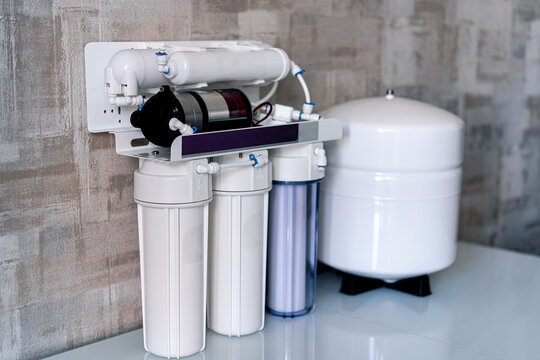
A typical under-sink reverse osmosis (RO) system isn’t just one magic membrane. It’s a multi-stage process, like a team of specialists working together.
- The Sediment Pre-Filter: This is the first line of defense. Its job is to catch the big stuff—rust, dirt, sand, and silt. This protects the more delicate filters down the line from getting clogged.
- The Carbon Pre-Filter: Next, the water passes through one or more carbon filters. Carbon is fantastic at grabbing chlorine and other chemicals that affect taste and odor. Think of it as a sponge for chemicals.
Bảng trống. - The Reverse Osmosis Membrane: This is the heart of the system. Here, the real heavy lifting happens as water is forced through the membrane, leaving nearly all contaminants behind.
- The Storage Tank: The purified water, known as “permeate,” is stored in a small, pressurized tank, ready for you to use. This ensures you have a supply of clean water on demand.
- The Carbon Post-Filter: When you turn on your dedicated RO faucet, the water makes one final pass through a “polishing” carbon filter. This removes any lingering tastes or odors that might have been picked up from the storage tank, ensuring the water is perfectly crisp and fresh.
What Contaminants Does Reverse Osmosis Remove?
This is where RO systems truly shine. They are incredibly effective at reducing a vast list of unwanted substances. An NSF/ANSI 58 certified system is proven to significantly reduce:
- Total Dissolved Solids (TDS)
- Heavy Metals like Lead, Arsenic, Copper, and Chromium
- Fluoride
- Nitrates and Nitrites
- Chlorine and Chloramine
- Radium and Barium
- Cysts like Giardia and Cryptosporidium
The result? Water that is exceptionally pure, often testing close to zero TDS. It’s the closest you can get to pure H₂O right from your kitchen sink.
Is Reverse Osmosis the Right Choice for Your Family?
Now for the big question: do you need one? If you’re serious about the quality of your drinking water, the answer is very likely yes.
An RO system is an excellent investment for:
- Families with young children or elderly members, who can be more vulnerable to contaminants.
- Anyone living in an area with known water quality issues, like old infrastructure (risk of lead) or agricultural runoff.
- People with compromised immune systems who need the highest level of water purity.
- Homeowners with well water, which isn’t municipally treated and can contain a wide range of contaminants.
- Coffee and tea aficionados, home chefs, and even plant lovers who know that the quality of their water directly impacts the final result. You will be amazed at how much better your morning coffee tastes.
Common Myths, Busted
I’ve heard a couple of common concerns over the years, so let’s clear the air.
- “Doesn’t it remove healthy minerals?” Yes, RO is so effective it also removes minerals like calcium and magnesium. However, most people get the vast majority of their essential minerals from food, not water. For those concerned, many modern RO systems include a remineralization stage that adds back a healthy blend of minerals after filtration.
- “Doesn’t it waste a lot of water?” Older RO systems did have a higher ratio of wastewater to purified water. But technology has improved dramatically. Modern, high-efficiency systems have significantly reduced the amount of brine (wastewater) produced, with some achieving a nearly 1:1 ratio. This “wastewater” is simply carrying the rejected contaminants away, which is exactly what you want.
How to Choose the Perfect Reverse Osmosis System
Feeling ready to make the leap? Here’s a simple checklist to guide you:
- Know Your Water: Start by getting a water quality report from your local utility or, for a more accurate picture, use an at-home water test kit. This tells you exactly what you’re up against.
- Look for Certification: This is non-negotiable. Only consider systems certified by NSF/ANSI, specifically Standard 58 for RO systems. This is your guarantee that the system does what it claims to do.
- Consider GPD (Gallons Per Day): This rating tells you how quickly the system can produce purified water. A family of four will be well-served by a system rated for 50-75 GPD.
- Check Filter Life & Cost: Understand how often you’ll need to replace the pre- and post-filters (typically every 6-12 months) and the RO membrane itself (every 2-4 years). Factor this into the long-term cost.
- Remineralization or Not?: Decide if you want an alkaline remineralization stage to add back healthy minerals and raise the pH of the water.
Frequently Asked Questions About Reverse Osmosis Filtration
How is reverse osmosis different from a standard pitcher or faucet filter?
Standard filters typically use activated carbon to improve taste and odor by removing chlorine. Reverse osmosis is a much more comprehensive purification process that uses a membrane to physically remove a far wider range of contaminants, including heavy metals, TDS, and fluoride, which carbon filters cannot.
Does reverse osmosis make water acidic?
By removing alkaline minerals, the RO process can slightly lower the pH of water, making it mildly acidic. This is not harmful, but if you prefer alkaline water, simply choose a system with a remineralization filter, which adds back minerals to raise the pH.
How much water does a modern RO system waste?
While older models could waste 3-5 gallons for every gallon purified, modern high-efficiency systems have drastically improved. Many now have waste-to-pure ratios of 2:1 or even 1:1, making them much more environmentally friendly.
How often do I need to change reverse osmosis filters?
It varies by system, but a general rule of thumb is to replace the sediment and carbon pre-filters every 6 to 12 months. The RO membrane itself is more durable and typically lasts 2 to 4 years, depending on your water quality and usage.
Can I install a reverse osmosis system myself?
Absolutely. Most under-sink RO systems are designed for DIY installation and come with clear instructions. If you’re comfortable with basic plumbing tasks like connecting a few tubes and tightening fittings, you can likely have it up and running in an hour or two.
Your Journey to Purer Water Starts Now
Investing in your family’s health is one of the most important decisions you can make. It starts with the very foundation of life: water. Understanding what is reverse osmosis filtration is the first step toward taking control of what’s in your glass. It’s not just a filter; it’s a commitment to providing the cleanest, safest, and best-tasting water for the people you care about most. You’ll taste the difference in your first sip, your morning coffee, and every meal you cook. It’s a simple change that delivers profound benefits, day after day.