Imagine sipping a glass of seemingly clear water, unaware that it may contain an invisible cocktail of tiny plastic particles. This unsettling reality is becoming increasingly common as microplastics infiltrate our environment and, consequently, our drinking water. For over a decade, as an Admin at waterfiltertogo.com and a water purification technician, I’ve seen firsthand the concerns consumers have about water quality. The presence of microplastics in tap water is a growing global issue that demands our attention, not just for the sake of our planet, but for the health of our families. This guide delves into the science behind microplastics in our water, explores their potential health implications, and outlines practical steps you can take to ensure your drinking water is as clean and safe as possible.
What are Microplastics and Why Should You Care?
Microplastics are minute plastic fragments, generally defined as being less than five millimeters in length. Often invisible to the naked eye, these pervasive particles are a growing environmental concern. Even smaller, a subset known as nanoplastics measure less than one micrometer and are even more challenging to detect. These tiny invaders are ubiquitous, detected in everything from the air we breathe and the food we eat to the deepest oceans and, most alarmingly, inside the human body itself. Studies have recently identified microplastics in human blood and lung tissue, underscoring their widespread presence.
The concern extends beyond their mere physical existence. Microplastics can contain chemical additives used during their manufacturing, such as bisphenol A (BPA) and phthalates, which are known endocrine disruptors. Moreover, their surfaces can adsorb other pollutants present in water, including heavy metals and polycyclic aromatic hydrocarbons (PAHs), effectively acting as tiny toxic carriers [2, 3 (query “microplastics in tap water dangers”), 1 (query “health effects”)]. The combined impact of these plastics and the chemicals they carry raises serious questions about their long-term effects on human health, making it crucial to understand and mitigate our exposure.
Where Do Microplastics in Tap Water Come From?
Microplastics infiltrate our drinking water through a complex web of environmental and infrastructural pathways. Our daily lives contribute significantly to this problem, with sources ranging from the breakdown of larger plastic items like bottles and bags to the microscopic microbeads found in some personal care products. Synthetic fibers shed from clothing during washing, such as polyester and nylon, are a major contributor, releasing millions of microfibers into wastewater systems [2 (query “microplastics in tap water dangers”), 1 (query “sources”)].
Environmental factors also play a crucial role. Surface runoff, treated and untreated wastewater effluent, combined sewer overflows, industrial discharge, degraded plastic waste, and even atmospheric deposition all transport microplastics into our freshwater sources [1, 2, 3 (query “sources”)]. Even our modern water treatment facilities, while designed to purify water, are not always fully equipped to remove these minuscule particles. Conventional treatment methods may reduce microplastic levels, but they often struggle with smaller particles and can even contribute to the problem by fragmenting larger plastics during processing or by releasing particles from degrading filter membranes and equipment [3, 4 (query “sources”)].
Further along the supply chain, the very pipes that deliver water to our homes can be a source. Plastic pipes and fittings made from PVC, polyethylene (PE), polyamide (PA), and polypropylene (PP) can release microplastics over time through abrasion or chemical interactions with disinfectants, especially in older systems [3 (query “sources”)]. Adding to this paradox, studies have revealed that bottled water, often perceived as a purer alternative, can contain significantly higher concentrations of microplastics than tap water. The plastic packaging itself sheds particles, particularly when exposed to heat, sunlight, or mechanical stress during transportation and storage, meaning that choosing bottled water doesn’t necessarily protect you from microplastic ingestion [5 (query “microplastics in tap water dangers”)].
 Various sources contributing to microplastic contamination in tap water, including wastewater, runoff, and degrading plastic infrastructure
Unveiling the Health Risks of Microplastics in Drinking Water
The potential health implications of microplastics in our drinking water are a subject of intensive and ongoing scientific investigation. While research is still emerging, several key areas of concern have been identified:
Chemical Leachates and Endocrine Disruption: Microplastics are not inert. They can leach harmful chemicals such as bisphenol A (BPA) and phthalates, which are known endocrine disruptors. These substances interfere with the body’s hormonal systems, potentially leading to issues like fertility problems, metabolic disorders, and developmental complications [2, 3 (query “microplastics in tap water dangers”), 2 (query “health effects”)]. Beyond their inherent chemistry, microplastics also act as “sponges,” absorbing other environmental toxins like heavy metals and persistent organic pollutants, which can then be transported into the body [1 (query “health effects”)].
Physical Irritation and Gut Microbiome Impact: The ingestion of solid plastic particles, even microscopic ones, can cause physical irritation to the gastrointestinal tract, potentially leading to inflammation. There’s also growing evidence that microplastics can alter the delicate balance of the intestinal microbiome, which is crucial for digestive health and overall well-being [2 (query “microplastics in tap water dangers”), 3, 4 (query “health effects”)].
Emerging Research: Cardiovascular, Neurological, and Other Systemic Effects: Recent studies are shedding light on more profound systemic impacts. A groundbreaking 2024 study published in The New England Journal of Medicine found that patients with microplastics or nanoplastics detected in arterial plaque were 4.5 times more likely to experience a serious cardiovascular event (such as a heart attack or stroke) over a 34-month follow-up period [3 (query “microplastics in tap water dangers”)]. Additionally, microplastics have been detected in human brain tissue, with one 2024 study in Nature Medicine linking higher concentrations to individuals diagnosed with dementia, suggesting these particles can cross the blood-brain barrier [3 (query “microplastics in tap water dangers”)]. While some of these high-profile findings are undergoing scientific scrutiny regarding potential contamination and false positives, particularly for nanoplastics, the collective body of evidence points to a genuine health concern [4, 5 (query “studies”)]. Other suspected links include altered metabolism, immune system disruption, neurotoxicity, respiratory issues like lung cancer if inhaled, and an increased risk of certain cancers [1, 2, 5 (query “microplastics in tap water dangers”), 1, 2, 3, 4, 5 (query “health effects”)].
“While the full extent of microplastic impact on human health remains a complex field of ongoing research, the growing evidence linking these particles to issues ranging from hormonal disruption to cardiovascular disease underscores an urgent need for awareness and action.” – Dr. Elena Petrova, Environmental Health Specialist
The Scientific Debate and Ongoing Research: It’s important to acknowledge that the science on microplastics and human health is still evolving. The World Health Organization (WHO) notes that while microplastics are ubiquitous, there is currently limited evidence to suggest they are causing significant adverse health impacts, urging for more holistic and quality-assured research. The challenges in detection and standardization of testing methods mean that some studies on the presence of microplastics in human tissue have faced criticism for potential contamination [5 (query “microplastics in tap water dangers”), 2 (query “sources”), 4, 5 (query “studies”)]. However, the consensus is that the potential for harm exists, particularly from the smallest nanoplastic particles that can cross biological barriers more readily. Continued vigilance and research are paramount to fully understanding and addressing this silent threat.
Can You Test for Microplastics in Your Water?
Understanding whether your tap water contains microplastics is a valid concern for many homeowners. However, directly identifying these microscopic particles is not a straightforward process that can be done at home.
Professional Laboratory Testing: The Only Reliable Option: Currently, the only truly reliable way to test for microplastics in your drinking water is by submitting samples to a certified laboratory. These specialized labs possess the advanced equipment and expertise required to detect, quantify, and even characterize the types of plastic particles present. This involves sophisticated analytical techniques that are far beyond the scope of consumer-grade testing.
Limitations of At-Home Testing: Unfortunately, there are no credible or widely available at-home testing kits designed to accurately detect microplastics. Any product marketed as such should be viewed with skepticism, as the complexity of microplastic analysis requires professional-grade methodology. Until such technology becomes widely accessible and verified, trusting certified laboratories remains the most accurate approach to assess microplastic contamination in your water supply.
Effective Solutions: How to Remove Microplastics from Your Tap Water
While the pervasive nature of microplastics can be daunting, there are highly effective methods to significantly reduce or even eliminate them from your drinking water. Implementing a reliable filtration system is often the most practical solution for household use.
Reverse Osmosis Systems: The Gold Standard: Reverse osmosis (RO) filtration is widely regarded as one of the most effective methods for removing microplastics, including the elusive nanoplastics. RO systems work by forcing water through a semi-permeable membrane with incredibly tiny pores, typically as small as 0.0001 to 0.001 microns. This process effectively filters out not only microplastics but also a vast array of other contaminants like heavy metals, chemicals, and dissolved solids, providing exceptionally pure water [1, 2 (query “how to remove”)].
Advanced Filtration: Activated Carbon and Ultrafiltration:
- Activated Carbon Filters: High-quality activated carbon filters, often found in pitcher filters, faucet filters, and whole-house systems, are effective at removing larger microplastic particles. While their pore size might not capture the very smallest nanoplastics, they are excellent at adsorbing chemicals and other impurities that microplastics can carry, improving overall water quality and taste [1, 4 (query “how to remove”)].
- Ultrafiltration (UF): UF systems utilize a membrane with slightly larger pores than RO (typically 0.01 to 0.02 microns) but are still highly effective at blocking microplastic particles and many pathogens. Some advanced ultrafilters can even block nanoplastic particles, though standardized testing for their efficacy at this minute scale is still developing [4 (query “how to remove”)].
The Surprising Simplicity of Boiling Your Water: For a cost-effective and readily available solution, boiling and filtering your tap water can be surprisingly effective. Recent research indicates that boiling tap water, especially hard water, can remove up to 90% of microplastics and nanoplastics. As the water boils, calcium carbonate (limescale) precipitates, effectively encapsulating the plastic fragments in a chalky crust. Once cooled, this “crust” can be filtered out, offering a simple DIY method to reduce microplastic intake [3, 5 (query “how to remove”)]. This method demonstrates that sometimes, the simplest solutions can yield significant results.
Other Filtration Technologies: Other filter types like ceramic filters are also known to be effective at removing microplastics [1 (query “how to remove”)]. Additionally, some personal water filters, such as those made by LifeStraw, utilize membrane microfilters (down to 0.2 microns) and are tested to remove 99.999% of microplastic particles ranging from 5mm to 1 micron [4 (query “how to remove”)]. When considering any filtration system, always check the manufacturer’s specifications for micron ratings and specific contaminant removal claims.
Choosing the Right Water Filtration System for Microplastics
Selecting the optimal water filtration system to combat microplastics requires careful consideration of various factors, ensuring it aligns with your specific needs, budget, and desired level of purification.
Understanding Filter Types and Micron Ratings:
The effectiveness of a filter against microplastics largely depends on its micron rating—the smallest particle size it can physically block.
- Reverse Osmosis (RO): Offers the most comprehensive removal, often filtering down to 0.0001 microns, making it highly effective against both microplastics and nanoplastics.
- Ultrafiltration (UF): Filters down to approximately 0.01-0.02 microns, excellent for microplastics and many smaller particles, but may not catch the absolute smallest nanoplastics.
- Activated Carbon: Primarily removes chemicals and larger microplastic particles (typically down to 0.5-1 micron), enhancing taste and odor.
- Ceramic Filters: Generally filter down to 0.2-0.5 microns, effectively removing microplastics and bacteria.
Key Factors for Selection: Needs, Budget, and Certifications:
- Water Source and Quality: If your tap water has known contamination issues beyond microplastics (e.g., lead, PFAS), a multi-stage system like RO will offer broader protection.
- Household Needs: Consider the volume of water you consume. Pitcher filters are convenient for small amounts, while under-sink or whole-house systems provide filtered water throughout your home.
- Budget: RO systems typically have a higher upfront cost and more complex installation but offer superior filtration. Activated carbon and ceramic filters are often more affordable for initial purchase and maintenance.
- Certifications: Look for certifications from reputable organizations such as NSF International or the Water Quality Association (WQA). While specific microplastic certifications are still emerging, certifications for “particulate reduction” or specific micron ratings provide assurance of performance against tiny particles.
- Installation and Maintenance: Evaluate ease of installation (DIY vs. professional) and the frequency and cost of filter replacements. Regular maintenance is crucial to ensure your system continues to perform effectively.
Maintenance Tips for Optimal Performance:
To maximize your filter’s efficiency in removing microplastics and other contaminants, always follow the manufacturer’s guidelines for filter replacement. Neglecting to change filters can lead to reduced effectiveness and potentially allow contaminants to pass through. Regular cleaning of system components, where applicable, can also prolong the life and performance of your water filtration system.
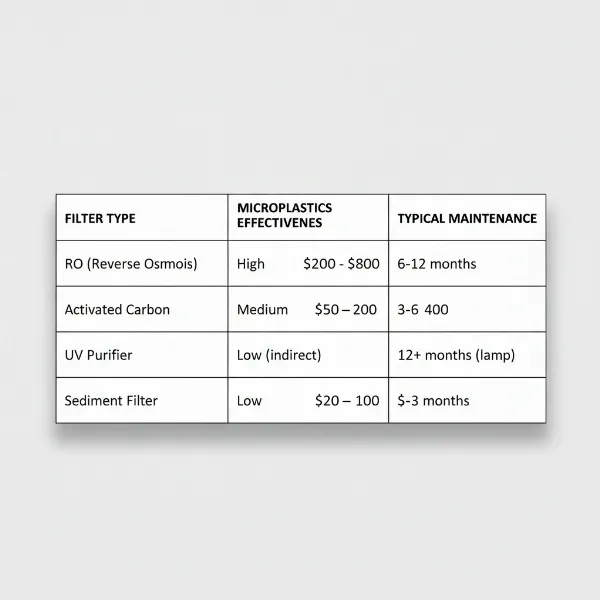 Table comparing different water filter types for microplastic removal, showing effectiveness, cost, and maintenance
Beyond Filtration: Reducing Your Overall Microplastic Footprint
While advanced filtration systems are crucial for safeguarding your drinking water, tackling the microplastic problem also requires a broader approach to reduce their presence in our environment and, subsequently, in our bodies. Every small change contributes to a larger impact.
Minimizing Single-Use Plastics: One of the most significant steps you can take is to drastically reduce your reliance on single-use plastics. This includes items like plastic water bottles, coffee cups, straws, and disposable utensils. These items are often the first to break down into microplastics in the environment. Instead, opt for durable, reusable alternatives made from materials like glass, stainless steel, or ceramic.
Smart Choices in the Kitchen and Laundry:
- Food Storage and Preparation: Avoid heating food in plastic containers, as heat can accelerate the shedding of microplastics and the leaching of harmful chemicals [5 (query “microplastics in tap water dangers”)]. Choose glass or stainless steel containers for storing and reheating meals.
- Laundry Habits: Synthetic clothing, such as fleece and nylon, releases microplastic fibers every time it’s washed. Consider choosing natural fiber alternatives like cotton, linen, or wool. For synthetic garments you already own, consider using laundry bags designed to capture microfibers or installing a washing machine filter.
Advocating for Change: Beyond personal habits, supporting policies and initiatives aimed at reducing plastic pollution is vital. This can involve advocating for better waste management, improved recycling infrastructure, and regulations on plastic production and disposal. Engaging in community clean-up efforts or supporting organizations dedicated to environmental protection can also contribute to a healthier, less plastic-laden future. By combining personal actions with broader advocacy, we can collectively work towards diminishing the hidden dangers of microplastics for generations to come.
The Future of Microplastics in Drinking Water: Research and Regulation
The issue of microplastics in drinking water is a rapidly evolving area, with scientists, policymakers, and industries striving to understand and mitigate its impact. The future will undoubtedly bring significant advancements in research, technology, and regulation.
Ongoing scientific inquiry is crucial to fill the existing knowledge gaps regarding the precise health effects of microplastics and nanoplastics, as well as their long-term accumulation in the human body. Researchers are working to develop standardized testing methods, which are currently lacking, to accurately measure and compare microplastic concentrations across different studies and regions [5 (query “microplastics in tap water dangers”), 2 (query “sources”)]. This will provide a clearer picture of exposure levels and help identify the most effective intervention strategies.
Technological innovations in water treatment are also on the horizon. While current filtration methods like reverse osmosis are highly effective, new materials and processes are being explored to enhance microplastic removal even further, potentially offering more efficient and sustainable solutions.
From a regulatory standpoint, increasing public awareness and scientific data will likely drive the development of more stringent guidelines and policies. These may include regulations on plastic production and disposal, improvements in wastewater treatment standards, and potentially limits on microplastic levels in drinking water. However, the World Health Organization currently advises against routine monitoring for microplastics in drinking water, emphasizing that resources should primarily focus on addressing known microbial pathogens and other chemical priorities, which pose more immediate health risks [2 (query “sources”)]. Despite this, they stress the importance of optimizing existing water treatment for particle removal, which incidentally helps with microplastics. The collective effort of research, technological advancement, and informed policy will be essential in shaping a future where the hidden dangers of microplastics in our drinking water are no longer a concern.
Frequently Asked Questions
How small are microplastics?
|
Our Picks for the Best Water Filter in 2026
As an Amazon Associate I earn from qualifying purchases.
|
||
| Num | Product | Action |
|---|---|---|
| 1 | everydrop by Whirlpool Ice and Water Refrigerator Filter 1, EDR1RXD1, Single-Pack , Purple |

|
| 2 | Brita UltraMax Large Water Dispenser With Standard Filter, BPA-Free, Reduces Copper, Cadmium and Mercury Impurities, Lasts 2 Months or 40 Gallons, Includes 1 Filter, Kitchen Accessories, Large 27-Cup |
|
| 3 | ZeroWater 20-Cup Ready-Pour 5-Stage Water Filter Dispenser with 0 TDS Water Filter – IAPMO Certified to Reduce Lead, Chromium, and PFOA/PFOS |
|
| 4 | Samsung HAF-QIN/EXP Genuine Refrigerator Water Filter, Reduces 99% of Harmful Contaminants for Clean, Clear Drinking Water, 6-Month Life, Easy Install, Pack of 1 |
|
| 5 | ZeroWater 32-Cup 5-Stage Water Filter Dispenser with Instant Read Out - 0 TDS for Improved Tap Water Taste - IAPMO Certified to Reduce Lead, Chromium, and PFOA/PFOS |
|
| 6 | Brita Metro Water Filter Pitcher with SmartLight Change Indicator, BPA-Free, Replaces 1,800 Plastic Water Bottles a Year, Lasts Two Months, Includes 1 Filter, Small - 6-Cup Capacity, White |
|
| 7 | E-3000UV Whole House Salt-Free Water Softener & Filter Combo with UV |
|
| 8 | FRIGIDAIRE ULTRAWF Pure Source Ultra Water Filter, Original, White, 1 Count |
|
| 9 | everydrop® by Whirlpool Refrigerator Water Filter A - EDRARXD1 (Pack of 1) |
|
| 10 | GLACIER FRESH Water Filter Compatible with XWFE (Built-in CHIP), Replacement for GE XWFE, XWF Refrigerator Water Filter NSF/ANSI 42 Certification Pack of 1 |
|
Microplastics are generally defined as plastic particles less than 5 millimeters (about 0.2 inches) in length. A subset, called nanoplastics, are even smaller, measuring less than 1 micrometer (one-thousandth of a millimeter), and are invisible to the naked eye. Both can be found in our water sources.
Can boiling water remove microplastics?
Yes, surprisingly, boiling water can effectively reduce microplastics. Recent studies show that boiling tap water, especially hard water, can cause limescale to form and encapsulate microplastic particles. Once the water cools, these encapsulated plastics can then be filtered out, removing up to 90% in some cases.
Is bottled water safer than tap water regarding microplastics?
Not necessarily. Research indicates that bottled water can contain significantly higher concentrations of microplastics compared to tap water. The plastic packaging itself sheds particles, especially when exposed to heat, sunlight, or during transportation, making bottled water a potential source of increased microplastic ingestion.
What are nanoplastics and are they more dangerous?
Nanoplastics are plastic particles smaller than 1 micrometer. Due to their extremely small size, they are considered potentially more dangerous than microplastics because they can more easily cross biological barriers in the body, such as cell membranes and even the blood-brain barrier, leading to greater systemic exposure.
What certifications should I look for in a water filter for microplastics?
While specific “microplastic removal” certifications are still developing, look for Water Filters certified by organizations like NSF International or the Water Quality Association (WQA) for “particulate reduction” to very small micron sizes (e.g., 0.5 micron or smaller). Systems certified for reverse osmosis (RO) are generally the most effective at removing the smallest plastic particles.