Imagine pouring a glass of seemingly clear water, only to wonder what unseen elements might be lurking within. While water looks pristine, it often contains a myriad of dissolved substances that impact its quality, taste, and even your health. Understanding these invisible components is crucial for ensuring the water you consume is truly clean and safe. This comprehensive guide will demystify Total Dissolved Solids (TDS) and explain how a TDS meter helps you understand what’s really in your tap.
What Are Total Dissolved Solids (TDS)?
Total Dissolved Solids (TDS) refers to the cumulative concentration of all inorganic and organic matter dissolved in water, apart from the pure H₂O molecules themselves. These dissolved substances can include a wide array of elements such as minerals, salts, metals, and various ions. When water flows through the environment, it naturally picks up these materials, which become suspended or fully integrated into the liquid.
The presence of TDS significantly influences several characteristics of your water. High levels can lead to a noticeable difference in taste, often described as salty, bitter, or metallic. It can also affect the water’s appearance, causing cloudiness, and potentially lead to scale buildup on faucets, fixtures, and inside appliances like kettles and water heaters. While TDS is not typically considered a primary pollutant that directly impacts health, it serves as a critical indicator of overall water quality and can signal the presence of other concerning contaminants.
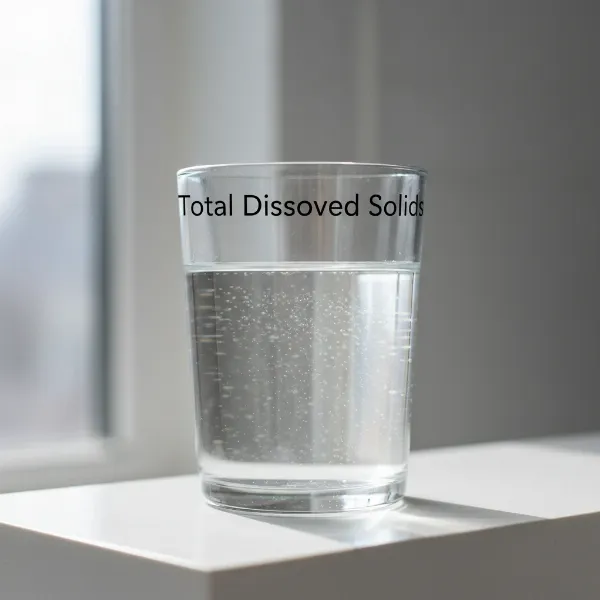 A glass of water with visible dissolved particles and text "Total Dissolved Solids"
How Does a TDS Meter Work?
A TDS meter is a simple yet effective tool for estimating the concentration of Total Dissolved Solids in water. Its operation relies on the principle of electrical conductivity (EC). Pure water (H₂O) is a poor conductor of electricity, but when various substances dissolve in it, they often form ions that can readily conduct an electrical current. The more dissolved ions present, the higher the water’s electrical conductivity.
When you dip a TDS meter into a water sample, it passes a tiny, harmless electrical current between two electrodes. The meter then measures how well this current is conducted. A higher conductivity indicates a greater concentration of dissolved solids. This electrical conductivity reading is then converted by the meter into a TDS value, usually expressed in parts per million (ppm) or milligrams per liter (mg/L), which are essentially interchangeable units. For example, a reading of 100 ppm means there are 100 parts of dissolved solids for every million parts of water. This indirect measurement provides a quick and convenient snapshot of your water’s purity.
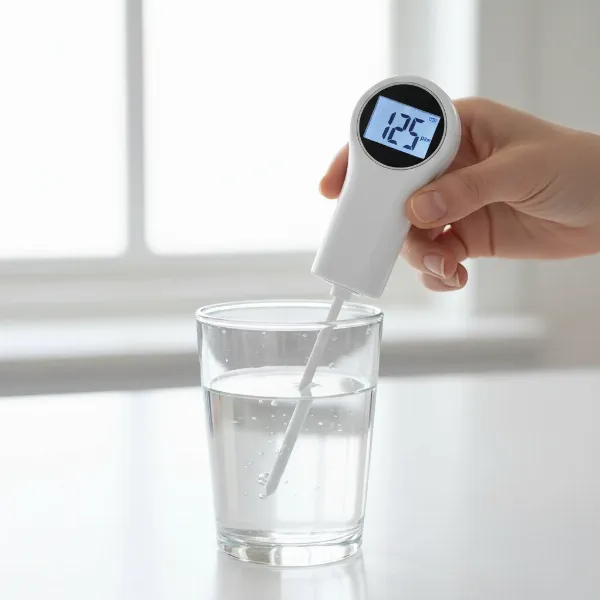 A handheld TDS meter being used to test a glass of water, showing a digital reading
Interpreting TDS Readings: What’s Ideal for Drinking Water?
Understanding what your TDS meter reading means is key to assessing your water quality. While there isn’t a universally “perfect” TDS level, guidelines from organizations like the U.S. Environmental Protection Agency (EPA) and the World Health Organization (WHO) provide useful benchmarks. These standards primarily focus on aesthetic qualities like taste and odor, rather than direct health impacts, for general TDS levels.
The EPA’s secondary drinking water standard for TDS is set at 500 ppm. Levels above this can lead to undesirable tastes, odors, and increased scaling. Here’s a general guide to interpreting your TDS readings:
| TDS Level (ppm) | Classification | Recommendation |
|---|---|---|
| 0-50 | Very Low | May lack beneficial minerals; flat taste. |
| 50-150 | Optimal | Ideal for drinking; good mineral balance and taste. |
| 150-300 | Acceptable | Generally acceptable; good taste. |
| 300-500 | High | May notice taste; consider checking specific contaminants. |
| 500+ | Very High | Not recommended for regular drinking; investigate the source and consider filtration. |
Water within the 50-150 ppm range is often considered optimal, balancing good taste with the presence of beneficial minerals like calcium and magnesium. A higher TDS reading doesn’t automatically imply unsafe water, but it certainly warrants further investigation, especially if it exceeds 500 ppm or if you notice unpleasant changes in your water’s sensory characteristics.
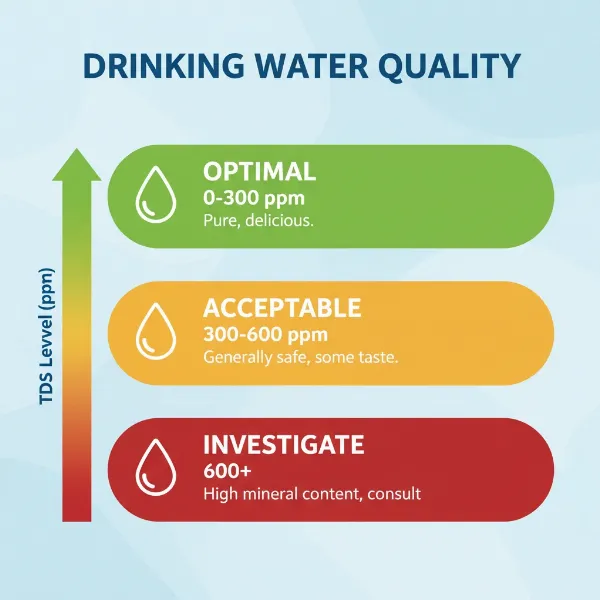 A colorful infographic illustrating ideal and concerning TDS levels for drinking water with corresponding ppm ranges
Sources of Total Dissolved Solids in Your Water
Total Dissolved Solids can enter your water supply from a wide range of both natural and anthropogenic (human-caused) sources. The journey of water through the environment is a primary factor in its TDS content.
- Natural Geological Factors: As water moves through rocks, soil, and other natural formations, it dissolves minerals and salts. Areas rich in limestone or halite, for example, tend to have naturally higher TDS levels due to the readily soluble nature of calcium carbonate and sodium chloride. Wells near coastal regions might also exhibit elevated TDS from saltwater intrusion.
- Human Activities:
- Agricultural Runoff: Fertilizers, pesticides, and herbicides used in agriculture can leach into groundwater and surface water, contributing to TDS.
- Urban Runoff: Stormwater carrying road salts, chemicals, and pollutants from residential and commercial areas can wash into water sources.
- Industrial Waste: Discharges from manufacturing processes often contain a variety of dissolved chemicals and metals that increase TDS levels.
- Sewage Treatment Plants: Effluents from these facilities, if not adequately treated, can also contribute organic and inorganic substances to water bodies.
- Home Plumbing Systems: Even within your own home, old or corroding pipes can leach metals like lead and copper into your water, adding to its TDS count. Chemicals used in municipal water treatment, while essential for disinfection, can also add to the overall dissolved solids.
Understanding these varied sources helps in diagnosing potential issues and determining the most effective water treatment solutions for your specific situation.
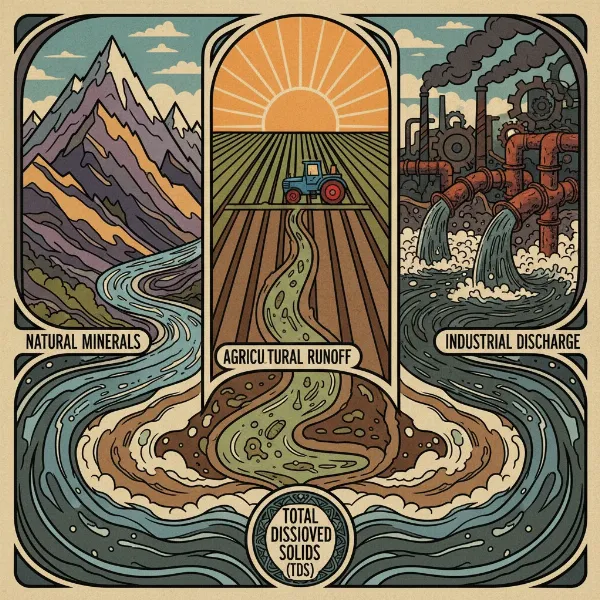 Illustrations showing natural and human sources of TDS like rocks, agricultural runoff, and industrial discharge
The Limitations of a TDS Meter: What It Can’t Tell You
While a TDS meter is an invaluable tool for general water quality assessment, it’s crucial to understand its limitations. A common misconception is that a low TDS reading automatically means your water is safe and pure, or that a high reading definitively means it’s harmful. The reality is more nuanced.
- Quantity, Not Quality: A TDS meter measures the total quantity of dissolved ions, but it does not identify which specific substances are present. This means it cannot differentiate between beneficial minerals (like calcium and magnesium) and potentially harmful contaminants (like lead, arsenic, or nitrates). A glass of mineral-rich spring water might have a high TDS reading, while water containing dangerous, uncharged organic chemicals could register a low TDS.
- Cannot Detect Uncharged Contaminants: TDS meters operate by measuring electrical conductivity, which means they can only detect charged ions. Many hazardous substances, however, are uncharged and will not register on a TDS meter. These can include:
- Harmful biological microorganisms like bacteria, viruses, and parasites.
- Pesticides and herbicides.
- Many pharmaceuticals.
- Volatile organic compounds (VOCs).
- Certain “forever chemicals” like PFAS.
- Chlorine, which is often used in municipal water treatment.
This limitation means that even water with a very low TDS reading could still contain serious health threats that remain undetected by the meter alone. Therefore, relying solely on a TDS meter for water safety is insufficient; it’s a screening tool, not a comprehensive safety analyzer.
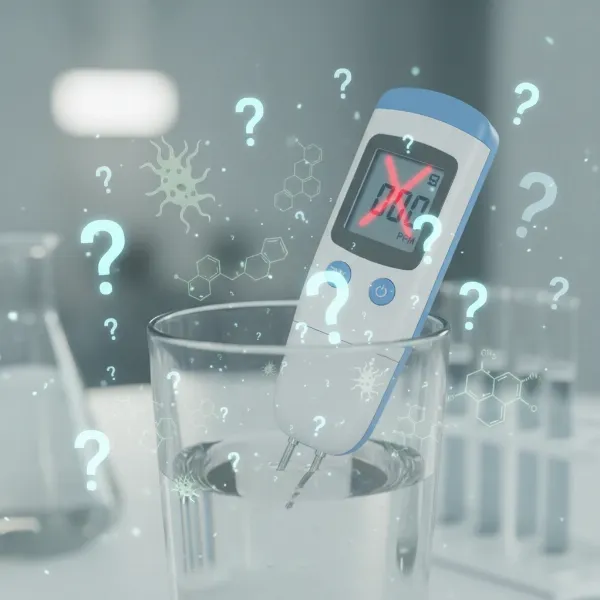 A TDS meter with question marks around it, indicating unseen contaminants like bacteria and chemicals
TDS vs. Water Hardness: Understanding the Difference
Many people confuse Total Dissolved Solids with water hardness, but they are distinct measurements with different implications for your home and health. Understanding the difference is important for choosing the right water treatment solution.
Water hardness specifically refers to the concentration of dissolved calcium and magnesium ions in your water. These minerals are responsible for common “hard water” problems such as soap scum, dingy laundry, and scale buildup in pipes and appliances. Hardness is typically measured in grains per gallon (gpg) or milligrams per liter (mg/L).
TDS, on the other hand, is a much broader measurement that includes all dissolved substances, including calcium and magnesium, but also sodium, potassium, chlorides, sulfates, and other organic or inorganic compounds. Therefore, all hard water will inherently have some level of TDS, but not all water with high TDS is necessarily considered hard. For example, water with high sodium chloride content (salt) would have a high TDS reading but might not be classified as hard water. A water softener effectively removes calcium and magnesium to reduce hardness but may not significantly impact the overall TDS level, especially if other dissolved solids are present. To reduce a wider spectrum of dissolved solids, a more advanced filtration system like reverse osmosis (RO) is often required.
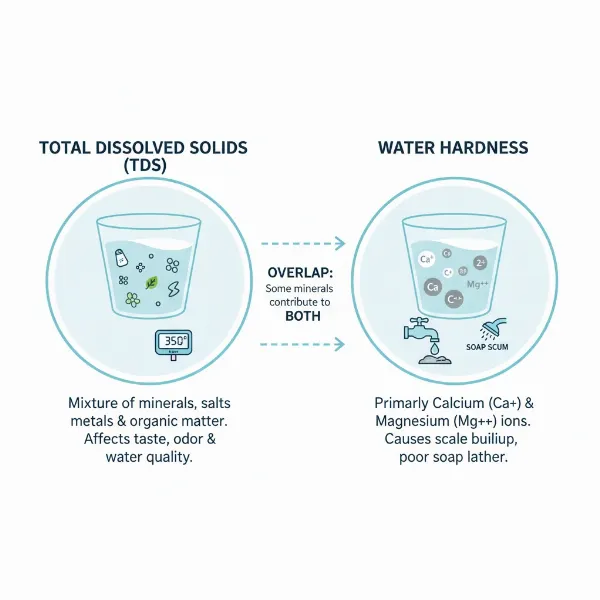 A side-by-side comparison of TDS and water hardness, highlighting their different measurements and implications
When to Use a TDS Meter and When to Seek Professional Testing
A TDS meter is a valuable and convenient tool, but knowing when and how to best utilize it, and when to opt for more comprehensive testing, is crucial for truly understanding your water quality.
Effective Uses for Your TDS Meter:
- Monitoring Water Filter Performance: If you have a reverse osmosis (RO) system, distillation unit, or deionization system, a TDS meter is excellent for checking if your filters are still effectively removing dissolved solids. A significant increase in TDS post-filtration indicates it’s time to replace your filters.
- Checking Water Softener Operation: While a TDS meter doesn’t directly measure hardness, a properly functioning water softener might show a slight decrease in TDS, though its primary function is to remove calcium and magnesium.
- Estimating Mineral Content (with caution): For naturally sourced waters, a TDS reading can give a general idea of mineral richness, but without knowing the specific minerals, this is an estimation.
- Tracking Trends: Regular TDS testing allows you to observe changes over time, which can signal underlying issues in your water source or plumbing.
- Aquarium and Hydroponics: For specific applications like aquariums or hydroponic systems, maintaining certain TDS levels is vital for the health of aquatic life or plants.
When to Seek Comprehensive Professional Water Testing:
A TDS meter provides a high-level overview, but it doesn’t give you the full picture. You should seek professional water analysis in the following situations:
- New Water Source: If you’re moving to a new home, especially with well water, a professional test is essential to understand potential contaminants.
- Health Concerns: Unexplained illnesses or symptoms in your household could be linked to water quality, requiring specific contaminant testing.
- Taste, Odor, or Appearance Issues: If your water has a strange taste, smell, or discoloration that a TDS reading doesn’t explain, a lab test can pinpoint the cause.
- Proximity to Pollution Sources: Living near agricultural fields, industrial sites, landfills, or old mining operations warrants testing for specific chemicals, pesticides, or heavy metals.
- Suspected Lead Pipes: A TDS meter won’t detect lead, so if you suspect lead in your plumbing, get a specialized test.
Think of your TDS meter as a helpful screening tool, like a quick temperature check. For a complete diagnosis of your water’s health, a detailed lab analysis is the gold standard.
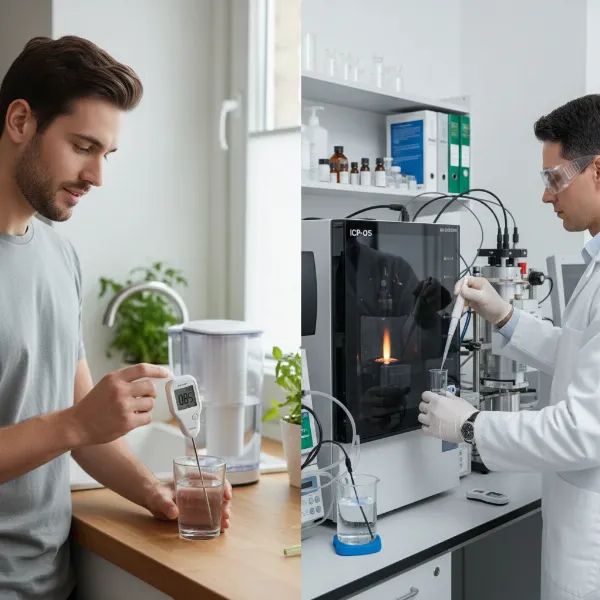 A person using a home TDS meter alongside a laboratory setting for comprehensive water analysis
Conclusion
Understanding Total Dissolved Solids and how a TDS meter works empowers you to take a more proactive role in monitoring your home’s water quality. While a TDS meter is an accessible and valuable tool for detecting the total concentration of dissolved substances and gauging the efficiency of your filtration systems, it’s vital to remember its limitations. A low TDS reading doesn’t inherently guarantee purity or safety, nor does a high reading always indicate danger.
Ultimately, a TDS meter serves as an excellent initial indicator and a consistent monitoring device for systems like reverse osmosis. For a complete picture of your water’s safety and composition, especially if you have concerns about specific contaminants or health, always combine your TDS readings with periodic, comprehensive laboratory water testing. By doing so, you can make informed decisions to ensure your family enjoys clean, great-tasting, and truly safe water every day. What steps will you take to understand your water better?
Frequently Asked Questions
Is low TDS water always better?
|
Our Picks for the Best Water Filter in 2026
As an Amazon Associate I earn from qualifying purchases.
|
||
| Num | Product | Action |
|---|---|---|
| 1 | FRIGIDAIRE ULTRAWF Pure Source Ultra Water Filter, Original, White, 1 Count |

|
| 2 | everydrop by Whirlpool Ice and Water Refrigerator Filter 1, EDR1RXD1, Single-Pack , Purple |
|
| 3 | ZeroWater 20-Cup Ready-Pour 5-Stage Water Filter Dispenser with 0 TDS Water Filter – IAPMO Certified to Reduce Lead, Chromium, and PFOA/PFOS |
|
| 4 | everydrop® by Whirlpool Refrigerator Water Filter A - EDRARXD1 (Pack of 1) |
|
| 5 | ZeroWater 32-Cup 5-Stage Water Filter Dispenser with Instant Read Out - 0 TDS for Improved Tap Water Taste - IAPMO Certified to Reduce Lead, Chromium, and PFOA/PFOS |
|
| 6 | E-3000UV Whole House Salt-Free Water Softener & Filter Combo with UV |
|
| 7 | GLACIER FRESH Water Filter Compatible with XWFE (Built-in CHIP), Replacement for GE XWFE, XWF Refrigerator Water Filter NSF/ANSI 42 Certification Pack of 1 |
|
| 8 | Samsung HAF-QIN/EXP Genuine Refrigerator Water Filter, Reduces 99% of Harmful Contaminants for Clean, Clear Drinking Water, 6-Month Life, Easy Install, Pack of 1 |
|
| 9 | Brita UltraMax Large Water Dispenser With Standard Filter, BPA-Free, Reduces Copper, Cadmium and Mercury Impurities, Lasts 2 Months or 40 Gallons, Includes 1 Filter, Kitchen Accessories, Large 27-Cup |
|
| 10 | Brita Metro Water Filter Pitcher with SmartLight Change Indicator, BPA-Free, Replaces 1,800 Plastic Water Bottles a Year, Lasts Two Months, Includes 1 Filter, Small - 6-Cup Capacity, White |
|
Not necessarily. While extremely low TDS water, like distilled or RO-filtered water, indicates high purity, it can sometimes taste flat or lack beneficial minerals like calcium and magnesium, which contribute to flavor and health. Conversely, naturally occurring minerals that are good for you will increase TDS, so a moderate reading isn’t inherently bad.
Does boiling water reduce TDS?
Boiling water helps kill bacteria and viruses and can remove some volatile organic compounds. However, it does not remove dissolved inorganic solids like minerals and salts. In fact, as water evaporates during boiling, the concentration of these dissolved solids can slightly increase, leading to a higher TDS reading.
How often should I test my water’s TDS?
For general household water, testing every few months or whenever you notice a change in taste, odor, or appearance is a good practice. If you use a water filtration system like an RO unit, you should test more frequently (e.g., monthly) to monitor its performance and determine when filters need replacement.