In an age where clean drinking water is no longer a given, more and more households are turning to filtration solutions. Among the myriad of options, the LifeStraw Home Water Filter Pitcher has emerged as a popular choice, promising not just purer water but also a touch of elegance to your kitchen. But does this aesthetically pleasing pitcher truly deliver on its promise of superior filtration and user convenience? As an expert with over a decade in water purification, I’ve seen countless systems, and this review will cut through the marketing to give you an honest, in-depth look at the LifeStraw Home, exploring its technology, performance, design, and overall value to help you decide if it’s the right fit for your home.
What is the LifeStraw Home Water Filter Pitcher and Why Do You Need One?
The LifeStraw Home Water Filter Pitcher is a countertop water filtration system designed to provide cleaner, better-tasting drinking water directly from your tap. At its core, it’s a convenient solution for improving the quality of your everyday water supply. The importance of a reliable water filter cannot be overstated, especially when considering the potential presence of various contaminants in municipal tap water, such as chlorine, lead, mercury, microplastics, and even certain bacteria and parasites.
These impurities, even in small amounts, can affect not only the taste and odor of your water but also pose long-term health risks. Chlorine, often used for disinfection, can leave an unpleasant taste and smell. Heavy metals like lead can accumulate in the body, while microplastics are an emerging concern with unknown long-term effects. By effectively reducing these common culprits, a water filter pitcher like the LifeStraw Home can significantly enhance your health, improve the sensory experience of drinking water, and encourage greater hydration for you and your family. It offers a tangible benefit by transforming ordinary tap water into a refreshing and safer beverage.
Key Features and Design of the LifeStraw Home Pitcher
The LifeStraw Home Water Filter Pitcher stands out with a design that marries functionality with modern aesthetics. It’s available in both durable, shatter-resistant BPA-free plastic and elegant glass options, allowing users to choose based on their preference for material and look. The pitcher comes in various capacities, commonly 7-cup and 10-cup models, catering to different household sizes and water consumption needs. Its sleek, often slender form factor means it can be a stylish addition to any countertop or refrigerator.
A notable design feature is its automatic lid, which conveniently tilts to allow water in when placed under a faucet, eliminating the need to manually open and close it. This thoughtful detail enhances ease of use during refilling. At the heart of its filtration capabilities are two distinct filters: a membrane microfilter and an activated carbon + ion exchange filter. The membrane microfilter is designed to remove bacteria, parasites, and microplastics, while the activated carbon + ion exchange filter tackles lead, mercury, chlorine, herbicides, pesticides, and other chemical contaminants, significantly improving taste and odor. The LifeStraw Home filters are also NSF-certified, specifically for the reduction of lead, chlorine, and mercury, assuring users of their tested performance against these specific substances.
Performance: What Does It Filter (and What Not)?
When it comes to water filtration, performance is paramount. The LifeStraw Home Water Filter Pitcher generally receives high marks for significantly improving the taste and smell of tap water, largely due to its effective chlorine reduction. Many users report a crisp, fresh taste that makes drinking water more enjoyable. The dual-stage filtration system, comprising a membrane microfilter and an activated carbon + ion exchange filter, is engineered to target a broad spectrum of impurities.
Specifically, the system is designed and often NSF-certified to reduce lead, mercury, chlorine, pesticides, herbicides, and microplastics. The membrane microfilter is particularly effective against bacteria and parasites. However, it’s crucial to acknowledge varying reports on its overall purification capabilities. While many positive reviews highlight its effectiveness, some laboratory tests have indicated that it may not remove all dissolved solids (TDS) and, in certain instances, has reportedly failed to remove specific contaminants such as uranium, arsenic, and lithium. This discrepancy might arise from different testing methodologies, varying tap water compositions, or even the specific model/certification of the pitcher being tested. Consumers should always consider their local water quality and specific concerns when evaluating any filter’s performance.
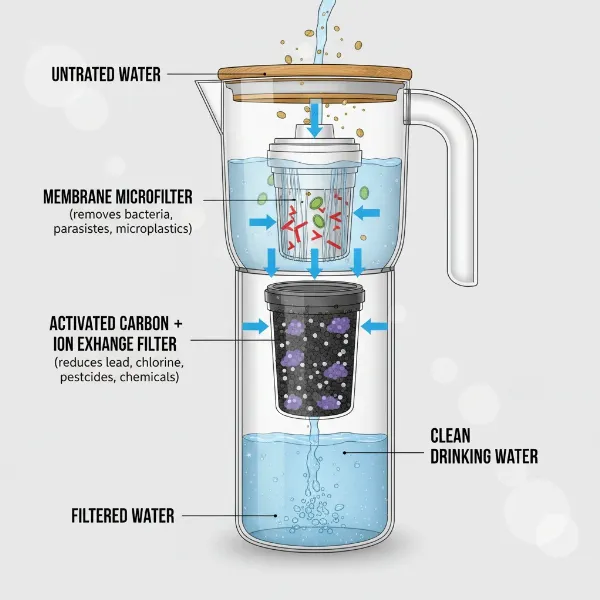 LifeStraw Home Water Filter Pitcher demonstrating its dual-stage filtration process
Pros and Cons of the LifeStraw Home Water Filter Pitcher
Like any product, the LifeStraw Home Water Filter Pitcher comes with its own set of advantages and disadvantages. Understanding these can help you make an informed decision.
Pros:
- Superior Taste and Odor Improvement: Users consistently praise the noticeable improvement in water taste and the effective removal of chlorine odors, making water more palatable.
- Effective Contaminant Reduction: The dual filtration system is certified to reduce lead, mercury, chlorine, herbicides, pesticides, and microplastics, as well as bacteria and parasites, offering comprehensive protection against common impurities.
- Elegant and Functional Design: Available in glass and BPA-free plastic, the pitcher features a sleek, modern aesthetic that fits well in most kitchens. The automatic lid for refilling is a convenient touch.
- Durable Build Quality: Many reviews highlight the sturdy construction, with secure lids and reservoirs thanks to silicone rings, preventing leaks and ensuring stability during pouring.
- Long-lasting Filters: The membrane microfilter boasts a lifespan of approximately 264 gallons (around one year), reducing the frequency of replacements.
|
Our Picks for the Best Water Filter in 2026
As an Amazon Associate I earn from qualifying purchases.
|
||
| Num | Product | Action |
|---|---|---|
| 1 | everydrop® by Whirlpool Refrigerator Water Filter A - EDRARXD1 (Pack of 1) |

|
| 2 | FRIGIDAIRE ULTRAWF Pure Source Ultra Water Filter, Original, White, 1 Count |
|
| 3 | Brita UltraMax Large Water Dispenser With Standard Filter, BPA-Free, Reduces Copper, Cadmium and Mercury Impurities, Lasts 2 Months or 40 Gallons, Includes 1 Filter, Kitchen Accessories, Large 27-Cup |
|
| 4 | ZeroWater 20-Cup Ready-Pour 5-Stage Water Filter Dispenser with 0 TDS Water Filter – IAPMO Certified to Reduce Lead, Chromium, and PFOA/PFOS |
|
| 5 | Samsung HAF-QIN/EXP Genuine Refrigerator Water Filter, Reduces 99% of Harmful Contaminants for Clean, Clear Drinking Water, 6-Month Life, Easy Install, Pack of 1 |
|
| 6 | Brita Metro Water Filter Pitcher with SmartLight Change Indicator, BPA-Free, Replaces 1,800 Plastic Water Bottles a Year, Lasts Two Months, Includes 1 Filter, Small - 6-Cup Capacity, White |
|
| 7 | everydrop by Whirlpool Ice and Water Refrigerator Filter 1, EDR1RXD1, Single-Pack , Purple |
|
| 8 | GLACIER FRESH Water Filter Compatible with XWFE (Built-in CHIP), Replacement for GE XWFE, XWF Refrigerator Water Filter NSF/ANSI 42 Certification Pack of 1 |
|
| 9 | ZeroWater 32-Cup 5-Stage Water Filter Dispenser with Instant Read Out - 0 TDS for Improved Tap Water Taste - IAPMO Certified to Reduce Lead, Chromium, and PFOA/PFOS |
|
| 10 | E-3000UV Whole House Salt-Free Water Softener & Filter Combo with UV |
|
Cons:
- Slow Filtration Speed: The filtration process can be slower than some other pitchers, often requiring multiple fills of the top reservoir to achieve a full pitcher of filtered water, which might be inconvenient for heavy users.
- Initial Flushing Required: A few initial pitcherfuls of water may need to be discarded to eliminate a plastic-like taste from new filters, which can be an unexpected first step.
- Weight (Glass Model): The glass versions, while elegant, can be heavy, especially when full, making them cumbersome for some users to lift and pour with one hand.
- Refrigerator Fit Issues: Its tall and slender design, while attractive, can sometimes make it too tall for standard refrigerator shelves, limiting placement options.
- Reported Leaks and Cracks: Some users have experienced issues with leaks or cracks developing in the pitcher over time, indicating potential durability concerns for a subset of products.
- Limited Contaminant Removal (Specifics): While effective against many common contaminants, some independent tests suggest it may not remove all dissolved solids (TDS) and could be less effective against less common but serious contaminants like uranium, arsenic, or lithium.
> “The LifeStraw Home pitcher strikes an excellent balance between aesthetic appeal and effective core filtration. However, consumers with very specific or unusual water contamination concerns should always verify the filter’s capabilities against those specific threats.” – Dr. Anya Sharma, Environmental Health Specialist
User Experience and Maintenance
Using the LifeStraw Home Water Filter Pitcher is generally straightforward, though a few steps are important for optimal performance and longevity. Upon first use, it’s crucial to properly prime the filters as per the manufacturer’s instructions, which typically involves soaking and flushing a few pitcherfuls of water. This initial flush helps activate the filter media and eliminates any potential manufacturing residues that could affect taste. Refilling is made easy by the automatic tilt lid, allowing for direct placement under the faucet. However, as noted, the filtration speed means patience is required, as the reservoir may need multiple top-offs to fill the entire pitcher.
Maintenance primarily revolves around filter replacement. The membrane microfilter, responsible for removing bacteria, parasites, and microplastics, typically lasts for about 264 gallons or roughly one year. The activated carbon + ion exchange filter, which tackles chlorine, lead, and other chemicals, usually requires replacement every 40 gallons or approximately two months, depending on usage and water quality. Regular cleaning of the pitcher itself, using mild soap and water, is also recommended to prevent buildup and maintain hygiene. Following these simple maintenance guidelines ensures your LifeStraw Home pitcher continues to provide clean, great-tasting water efficiently.
Is the LifeStraw Home Pitcher Right for You?
Deciding if the LifeStraw Home Water Filter Pitcher is the ideal choice for your household depends on several factors, aligning your needs with its strengths and limitations.
- Your Water Source Quality: If you primarily rely on municipal tap water and are concerned about common contaminants like chlorine, lead, mercury, microplastics, or taste and odor issues, the LifeStraw Home is well-equipped to handle these. However, if your water source is well water or has known issues with unique or highly concentrated contaminants (e.g., specific heavy metals not explicitly certified for removal), you might need a more specialized filtration system or additional testing.
- Household Needs and Usage: Consider how much water your household consumes daily. For individuals or small families who appreciate a visually appealing product and don’t mind a slightly slower filtration pace, the pitcher is excellent. Larger families or those with very high water consumption might find the 7-cup or 10-cup capacity and slower fill time require more frequent refilling.
- Budget Considerations: Evaluate both the initial purchase price and the ongoing cost of replacement filters. The LifeStraw Home is generally competitive, but filter replacement frequency (especially the activated carbon filter every two months) is an important running cost to factor in.
- Priorities: Aesthetics vs. Maximum Filtration: If a sleek, modern design and material choice (like glass) are important to you, and you prioritize taste improvement along with solid reduction of common contaminants, this pitcher excels. If your primary concern is filtering out every conceivable contaminant to the highest possible degree, regardless of aesthetics or convenience, you might explore multi-stage under-sink or whole-house systems.
- Certification Importance: The NSF certifications for lead, chlorine, and mercury reduction provide a level of assurance. Always verify that the certifications align with the specific contaminants you are most concerned about in your water supply.
Ultimately, the LifeStraw Home Water Filter Pitcher is an excellent choice for most urban and suburban homes looking for an effective, stylish, and convenient way to enhance their drinking water quality.
Conclusion
The LifeStraw Home Water Filter Pitcher stands out in the crowded market of water filtration solutions by offering a compelling blend of effective purification, thoughtful design, and user convenience. It excels at delivering great-tasting water by significantly reducing chlorine, lead, mercury, microplastics, and other common contaminants, backed by NSF certifications for key impurities. While its filtration speed and some specific contaminant removal capabilities have been points of discussion, its overall performance in improving daily drinking water quality for the average household is strong.
With its sleek aesthetics, choice of materials, and intuitive features like the automatic refill lid, it’s more than just a functional appliance—it’s an enhancement to your kitchen and your lifestyle. For those seeking a reliable, stylish, and user-friendly pitcher to elevate their home’s drinking water, the LifeStraw Home is a worthy contender. Are you ready to experience the difference clean, great-tasting water can make in your home?
Frequently Asked Questions
How often do I need to replace the LifeStraw Home filters?
The membrane microfilter typically lasts for approximately 264 gallons, which is about one year for most households. The activated carbon + ion exchange filter, crucial for taste and chemical reduction, should be replaced every 40 gallons or every two months, whichever comes first.
Does the LifeStraw Home Water Filter Pitcher remove fluoride?
While the LifeStraw Home effectively removes many contaminants, it is not specifically designed or certified to remove fluoride. If fluoride removal is a primary concern, you may need to look into reverse osmosis (RO) systems or other specialized filters.
Is the LifeStraw Home pitcher safe for well water?
The LifeStraw Home can remove bacteria and parasites, which are common concerns in well water. However, well water can have a broader range of contaminants, including high levels of minerals, heavy metals, or agricultural runoff. It’s recommended to have your well water tested to ensure the pitcher addresses your specific contamination profile.
Can I put the LifeStraw Home glass pitcher in the dishwasher?
Generally, it’s recommended to hand wash the glass pitcher and other components with mild soap and water to ensure longevity and prevent damage to the plastic parts or filter housing. Always refer to the specific cleaning instructions provided in your product manual.
What is the difference between the membrane microfilter and the activated carbon filter?
The membrane microfilter is primarily responsible for removing microbiological contaminants like bacteria, parasites, and microplastics. The activated carbon + ion exchange filter focuses on chemical contaminants such as chlorine, lead, mercury, pesticides, and herbicides, significantly improving taste and odor. They work together for comprehensive filtration.