The quest for pristine drinking water is a universal pursuit, driven by a desire for better health and an enhanced quality of life. In a world where tap water quality can be unpredictable, a reliable filtration system is not just a luxury, but a necessity. The APEC Water Systems ROES-50 emerges as a highly popular choice for many homeowners seeking a powerful yet budget-friendly solution. This comprehensive review will delve deep into the features, performance, and overall value of the APEC ROES-50, helping you decide if this 5-stage reverse osmosis system is the right fit for your home.
What is the APEC ROES-50 Water Filter? Why Do You Need One?
The APEC ROES-50 is a robust, 5-stage under-sink reverse osmosis (RO) drinking water filter system designed to deliver ultra-pure, great-tasting water directly to your faucet. At its core, reverse osmosis is a technology that pushes water through a semi-permeable membrane, effectively filtering out nearly all impurities.
Why is such advanced filtration essential? Tap water, even seemingly clean municipal water, can harbor a surprising array of contaminants. These often include chlorine and chloramines, which affect taste and odor, as well as heavier, more harmful substances like lead, fluoride, arsenic, nitrates, pesticides, industrial chemicals (VOCs, PFAS), and total dissolved solids (TDS). Long-term exposure to these impurities can pose health risks and significantly diminish the enjoyment of your drinking and cooking water. By removing up to 99% of these contaminants, the APEC ROES-50 provides peace of mind, improved hydration, and a noticeable difference in the flavor of your beverages and meals. It’s an investment that saves you from the ongoing cost and environmental impact of bottled water, all while safeguarding your family’s health.
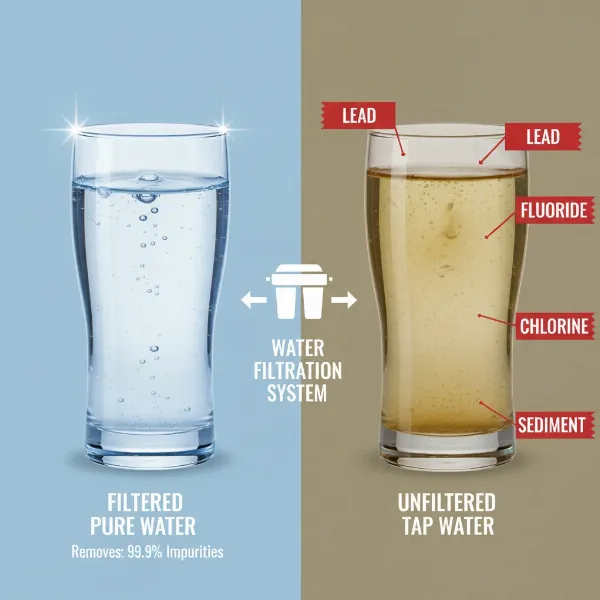 Graphic illustrating clean drinking water versus tap water with various contaminants like lead, chlorine, and sediment.
Unpacking the APEC ROES-50: Key Features and Technology
The effectiveness of the APEC ROES-50 lies in its meticulously engineered 5-stage filtration process, each stage targeting specific impurities to ensure comprehensive purification. This traditional under-sink system comes equipped with a dedicated faucet and a pressurized storage tank, providing purified water on demand.
The filtration sequence works as follows:
- Sediment Filter (Stage 1): This pre-filter tackles larger particles such as rust, sand, and dirt, preventing them from clogging subsequent filters and extending the system’s overall lifespan.
- Carbon Block Filter (Stage 2): Utilizing activated carbon, this stage is highly effective at removing chlorine, chloramines, tastes, odors, and volatile organic compounds (VOCs) that can be found in tap water.
- Another Carbon Block Filter (Stage 3): A second carbon block filter provides an additional layer of protection, further reducing chlorine and enhancing the removal of other organic chemicals, ensuring the water reaching the RO membrane is as clean as possible.
- High-Rejection RO Membrane (Stage 4): This is the heart of the system. The high-performance Dow Filmtec 50 GPD (Gallons Per Day) membrane filters water at a molecular level, rejecting up to 99% of dissolved solids, heavy metals, fluoride, lead, arsenic, bacteria, and viruses.
- Post-Carbon Filter (Stage 5): The final stage acts as a polishing filter. Made from high-quality coconut shell carbon, it removes any residual tastes or odors that might have developed in the storage tank, ensuring the water dispensed from your faucet is fresh, crisp, and clean.
The ROES-50 boasts a capacity of 50 gallons per day under optimal conditions (60 psi, 77°F), backed by a 4-gallon pressurized tank to ensure you always have purified water readily available. Its traditional canister design is built for durability, with certifications like NSF-58 for Total Dissolved Solids (TDS) reduction and Water Quality Association (WQA) certification affirming its performance and quality.
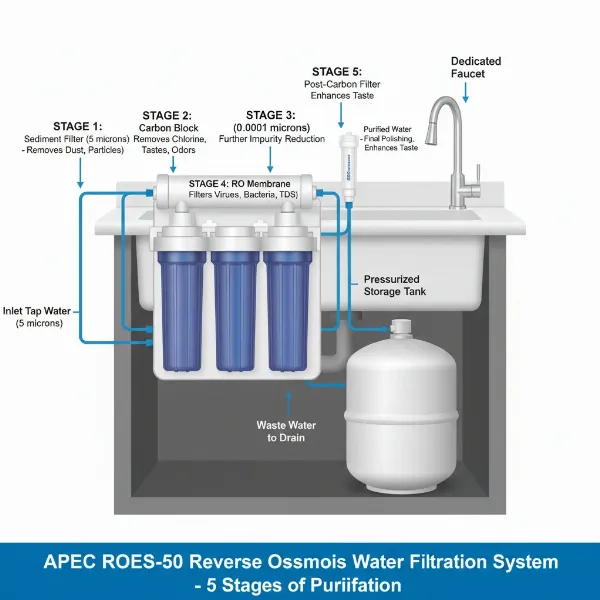 Diagram showing the five stages of the APEC ROES-50 reverse osmosis system with labeled filters and water flow.
Pros and Cons: A Balanced Look at the APEC ROES-50
Every water filtration system comes with its unique set of advantages and considerations, and the APEC ROES-50 is no exception. Understanding these can help you weigh its suitability for your specific needs.
Advantages:
- Exceptional Contaminant Removal: The ROES-50 consistently receives high marks in lab tests for reducing critical contaminants like chlorine, lead, fluoride, and a broad spectrum of other pollutants, delivering truly purified water.
- Superior Water Taste: Users consistently praise the crisp, clean, and neutral taste of the water produced by the ROES-50. The final post-carbon filter effectively eliminates any lingering aftertastes, often making it preferable to bottled water.
- Affordable Price Point: Often recognized as a “budget-friendly” RO system, the ROES-50 offers premium filtration performance without the premium price tag. The cost of replacement filters is also relatively low, contributing to its overall value.
- Reliable and Durable: APEC is known for its quality components. The system is designed for long-lasting performance, with many users reporting years of trouble-free operation.
- DIY-Friendly Installation: While it requires some handy work like drilling, the system comes with clear instructions and numerous online resources, making it manageable for most DIY enthusiasts to install.
Disadvantages:
- Significant Under-Sink Space Requirement: As a traditional tank-based system with multiple canister housings, the ROES-50 takes up a considerable amount of cabinet space under your sink, which might be a concern for smaller kitchens.
- High Wastewater Ratio: A common characteristic of non-pumped RO systems, the ROES-50 produces a notable amount of wastewater. The typical waste-to-pure water ratio can range from 3:1 to 5:1, meaning several gallons of water go down the drain for every gallon purified.
- Less Convenient Filter Changes: Unlike some newer quick-twist filter designs, changing the ROES-50’s filters involves unscrewing the housing canisters. This process can be a bit messier and requires more effort, with a slight risk of spills.
- Remineralization Stage Absent: The ROES-50 effectively removes nearly all dissolved solids, including beneficial minerals like calcium and magnesium. For those who prefer re-mineralized water or are concerned about pH levels, an additional remineralization filter would need to be purchased separately.
- Limited Specific Certifications: While NSF-58 certified for TDS reduction and WQA certified, some comparisons note that it has fewer specific contaminant reduction certifications compared to certain competitors, though its lab-tested performance remains strong.
Who is the APEC ROES-50 Best Suited For?
The APEC Water Systems ROES-50 is a stellar choice for a diverse range of households, particularly those who prioritize exceptional water quality without breaking the bank.
This system is ideal for:
- Budget-Conscious Consumers: If you’re looking for an affordable entry into high-quality reverse osmosis filtration, the ROES-50 provides outstanding value for its price.
- Individuals and Families Prioritizing Pure Water: For those deeply concerned about removing a wide array of contaminants like lead, fluoride, chlorine, arsenic, and heavy metals, the ROES-50’s filtration capabilities are top-tier.
- Those Desiring Great-Tasting Water: If you’re tired of unpleasant tastes or odors in your tap water and yearn for refreshing, neutral-tasting hydration, the ROES-50 consistently delivers.
- Households with Moderate Water Consumption: With a 50 GPD capacity and a 4-gallon tank, it generally provides ample purified water for typical family drinking and cooking needs.
- DIY Enthusiasts: If you’re comfortable with basic plumbing tasks and can follow instructions, installing and maintaining the ROES-50 yourself is a feasible and cost-saving option.
- Homes Without Existing Water Softeners (with caveats): While it removes hardness minerals, very hard water might shorten the lifespan of the pre-filters. Pre-treatment for exceptionally hard water is always recommended for any RO system.
Consider your under-sink space and your stance on water waste. If these are major concerns, you might explore tankless or more efficient RO systems, but be prepared for a higher initial investment or potentially higher long-term filter costs.
Installation and Maintenance of Your APEC ROES-50 System
Setting up and maintaining your APEC ROES-50 system is crucial for ensuring its longevity and consistent performance. While a DIY installation is achievable, understanding the process and ongoing care is key.
Installation Guide:
The ROES-50 is designed for under-sink placement. You’ll need to locate an accessible spot that can accommodate the filter housing, manifold, and the 4-gallon storage tank (typically 11″ x 11″ x 15″). The installation generally involves:
- Connecting to the Cold Water Line: A feed water adapter diverts water to the RO system.
- Mounting the Faucet: A dedicated lead-free faucet is included, requiring a hole drilled in your countertop or sink.
- Installing the Drain Saddle: This allows the wastewater (brine) from the RO process to be safely directed into your sink’s drainpipe.
- Connecting the Components: Food-grade tubing connects the various filter stages, the RO membrane, storage tank, and faucet. A wrench, Teflon tape, and clear instructions are provided to assist with secure, leak-free connections. Numerous instructional videos online can also guide you through each step.
Filter Replacement Schedule:
Adhering to the recommended filter replacement schedule is vital for optimal filtration and water quality.
- Sediment & Carbon Pre-filters (Stages 1-3): These should be replaced every 6-12 months, depending on your incoming water quality and usage. These filters protect the sensitive RO membrane from larger particles and chlorine.
- RO Membrane (Stage 4): The heart of the system, this membrane typically lasts 2-4 years. Its lifespan is affected by feed water quality and the effectiveness of the pre-filters.
- Post-Carbon Filter (Stage 5): This taste-polishing filter also has a lifespan of 2-4 years.
Maintenance Tips:
- Regularity is Key: Mark your calendar for filter changes. Neglecting them can reduce water quality, decrease flow, and damage the RO membrane, leading to costly replacements.
- Check for Leaks: Periodically inspect all connections, especially after filter changes. Small leaks can often be resolved by tightening fittings or ensuring O-rings are properly seated and lubricated.
- Sanitize Annually: When replacing the RO membrane, it’s a good practice to sanitize the system to prevent bacterial growth. Refer to your owner’s manual for specific instructions on sanitization.
- Monitor Water Pressure: If you notice a significant drop in purified water flow, check your home’s water pressure. The ROES-50 operates best within a 40-85 psi range. Low pressure can impact the system’s efficiency.
- Tank Pressure: The storage tank should have an air pressure of 7-10 PSI when empty. Low tank pressure can lead to poor water dispensing from the faucet.
Common Issues and Troubleshooting Tips
Even the most reliable systems can encounter minor hiccups. Here are some common issues you might face with your APEC ROES-50 and straightforward troubleshooting tips:
- Leaks: This is perhaps the most common complaint.
- Solution: First, turn off the water supply to the RO system. Systematically check all connections, tightening any that seem loose. Ensure that O-rings in filter housings are correctly seated and not pinched or cracked. Sometimes, applying a small amount of food-grade silicone grease to O-rings can help. If a leak persists at a specific fitting, it might need replacement.
- Slow Water Flow or Low Pressure at the Faucet: If your purified water trickles out slowly or the flow diminishes over time, several factors could be at play.
- Solution: Check the air pressure in your storage tank; it should be between 7-10 PSI when empty. If it’s too low, you can use a bicycle pump to add air. Clogged pre-filters are another common culprit, so check their replacement schedule. A kinked water line or a faulty automatic shut-off (ASO) valve can also restrict flow. If the RO membrane is old, its performance will decline, leading to slower production.
- System Constantly Draining: A slight trickle to the drain is normal during operation, but a continuous, strong flow indicates a problem.
- Solution: This often points to an issue with the ASO valve or the tank’s pressure. If the tank isn’t reaching its full pressure, the ASO valve won’t shut off the wastewater flow. Check the tank pressure first. If the tank is full and pressure is adequate, the ASO valve may be faulty and need replacement.
- Milky or Bubbly Water: Seeing cloudy or milky water, especially after a filter change, can be alarming but is usually harmless.
- Solution: This is almost always due to trapped air bubbles in the system, which dissipate over a few days or weeks of use. Simply run the faucet for a few minutes each day to help purge the air.
For persistent issues, always refer to your APEC owner’s manual or contact APEC’s customer support.
Comparing APEC ROES-50 to Other Water Filtration Options
When considering the APEC ROES-50, it’s helpful to understand where it stands against other common water filtration solutions. Each type offers different benefits and trade-offs.
Compared to other Reverse Osmosis systems, the ROES-50 is celebrated for its value for money. While models like the APEC ROES-100 offer double the GPD capacity (100 GPD) and a more efficient pure-to-drain ratio (advertised as 1:1), they often come at a slightly higher price point, making the ROES-50 a strong contender for those with moderate usage. Some competitor RO systems, such as certain iSpring models, might offer additional specific contaminant reduction certifications or integrate a remineralization stage, which the ROES-50 lacks. However, in lab-tested contaminant removal, the ROES-50 frequently outperforms many rivals, even those costing significantly more.
Tankless RO systems represent a more modern approach, typically saving under-sink space and reducing wastewater. However, they usually come with a higher initial purchase price and often have more expensive, proprietary filter replacements, potentially increasing long-term operating costs. The ROES-50, with its traditional design, offers a lower upfront cost and more affordable standard filter changes, albeit with a larger footprint and higher water waste.
When contrasted with simpler water filter pitchers or faucet-mounted filters, the APEC ROES-50 offers a vastly superior level of purification. While pitchers and faucet filters can improve taste and remove some chlorine, they are limited in their ability to tackle heavy metals, fluoride, or a broad spectrum of dissolved solids. An under-sink RO system like the ROES-50 provides truly pure, on-demand water for all drinking and cooking needs, far exceeding the capabilities of basic filtration methods.
Conclusion
The APEC Water Systems ROES-50 stands out as an exceptional choice for anyone seeking a high-performance reverse osmosis drinking Water Filter system without a premium price tag. Its 5-stage filtration process delivers ultra-pure, great-tasting water by effectively eliminating up to 99% of common contaminants, ensuring a healthier and more enjoyable hydration experience for your family.
While its traditional under-sink design requires significant cabinet space and it generates more wastewater compared to some newer systems, these trade-offs are often justified by its outstanding contaminant removal capabilities and affordable operating costs. The ROES-50 offers a perfect blend of effectiveness, reliability, and value, making it a favorite for homeowners prioritizing clean water. Are you ready to transform your tap water and enjoy the purest hydration experience?
Frequently Asked Questions
How often should I change APEC ROES-50 filters?
The sediment and carbon pre-filters (stages 1-3) typically need replacement every 6-12 months. The RO membrane (stage 4) and the post-carbon filter (stage 5) generally last longer, requiring changes every 2-4 years, depending on your water quality and usage habits.
Does the APEC ROES-50 waste a lot of water?
Yes, as a traditional non-pumped reverse osmosis system, the APEC ROES-50 typically produces a wastewater-to-pure water ratio of around 3:1 to 5:1. This means for every gallon of purified water, 3-5 gallons go down the drain.
Can I install the APEC ROES-50 myself?
Many users find the APEC ROES-50 to be DIY-friendly. The system comes with comprehensive instructions, and various online videos can guide you through the process, though it does require some basic plumbing knowledge and drilling.
Does the APEC ROES-50 remove beneficial minerals?
Yes, reverse osmosis technology, including the APEC ROES-50, is designed to remove nearly all dissolved solids, which includes both harmful contaminants and beneficial minerals like calcium and magnesium. An optional remineralization filter can be added to reintroduce these if desired.
What is the APEC ROES-50 GPD capacity?
The APEC ROES-50 system is rated for 50 GPD (Gallons Per Day) production. This capacity is typically sufficient for most households, providing plenty of purified water for drinking, cooking, and other daily needs.