The invisible threat of lead contamination in drinking water is a pressing concern for countless households. While our taps provide what often seems like clean, clear water, hidden lead can silently compromise its safety, posing significant health risks to everyone, especially children. Understanding how lead infiltrates your water supply and, more importantly, how to effectively remove it, is paramount to safeguarding your family’s well-being. This comprehensive guide will navigate the complexities of lead in drinking water, explore proven removal technologies, and empower you with the knowledge to achieve truly pure, safe hydration.
What is Lead in Drinking Water? Why is it a Concern?
Lead is a naturally occurring, toxic metal that, even at low exposure levels, can be harmful to human health. It’s rarely found in natural water sources like rivers or lakes. Instead, lead typically enters drinking water through the corrosion of old plumbing materials containing lead. Homes built before 1986 are at higher risk due to older pipes, solder, and fixtures that may contain the metal. Lead service lines, which connect a home to the public water main, are often the most significant source of lead contamination, especially in older infrastructure.
The health implications of ingesting lead are profound and serious. Lead is persistent and accumulates in the body over time, affecting almost every organ and system. Children, infants, and unborn babies are particularly vulnerable because their developing brains and bodies absorb lead more readily. Even low levels of lead exposure can lead to reduced IQ, learning disabilities, attention disorders, and behavioral problems in children. In adults, lead exposure can contribute to increased blood pressure, kidney problems, cardiovascular disease, and reproductive issues. Health experts universally agree that there is no safe level of lead in drinking water.
Understanding Your Water: Testing for Lead
You cannot see, taste, or smell lead in your drinking water, making testing the only reliable way to confirm its presence and concentration. If you live in an older home, particularly one built before 1986, or if your community has aging water infrastructure, testing your water for lead is a crucial first step. It provides a clear picture of your specific risk.
To test your water, you can contact your local public water system, as they may offer testing services or recommendations for certified laboratories. Private, licensed laboratories are also available for comprehensive analysis. Additionally, there are single-use lead test kits that can help identify the presence of lead, offering a good starting point for initial concerns. Always follow the testing instructions carefully to ensure accurate results.
Effective Methods to Remove Lead from Drinking Water
Fortunately, several effective water filter technologies are available to significantly reduce or virtually eliminate lead from your drinking water. Choosing the right method depends on your water’s lead level, your budget, and your household needs.
Reverse Osmosis (RO) Systems
|
Our Picks for the Best Water Filter in 2026
As an Amazon Associate I earn from qualifying purchases.
|
||
| Num | Product | Action |
|---|---|---|
| 1 | E-3000UV Whole House Salt-Free Water Softener & Filter Combo with UV |

|
| 2 | Brita Metro Water Filter Pitcher with SmartLight Change Indicator, BPA-Free, Replaces 1,800 Plastic Water Bottles a Year, Lasts Two Months, Includes 1 Filter, Small - 6-Cup Capacity, White |
|
| 3 | everydrop® by Whirlpool Refrigerator Water Filter A - EDRARXD1 (Pack of 1) |
|
| 4 | FRIGIDAIRE ULTRAWF Pure Source Ultra Water Filter, Original, White, 1 Count |
|
| 5 | Brita UltraMax Large Water Dispenser With Standard Filter, BPA-Free, Reduces Copper, Cadmium and Mercury Impurities, Lasts 2 Months or 40 Gallons, Includes 1 Filter, Kitchen Accessories, Large 27-Cup |
|
| 6 | ZeroWater 32-Cup 5-Stage Water Filter Dispenser with Instant Read Out - 0 TDS for Improved Tap Water Taste - IAPMO Certified to Reduce Lead, Chromium, and PFOA/PFOS |
|
| 7 | Samsung HAF-QIN/EXP Genuine Refrigerator Water Filter, Reduces 99% of Harmful Contaminants for Clean, Clear Drinking Water, 6-Month Life, Easy Install, Pack of 1 |
|
| 8 | GLACIER FRESH Water Filter Compatible with XWFE (Built-in CHIP), Replacement for GE XWFE, XWF Refrigerator Water Filter NSF/ANSI 42 Certification Pack of 1 |
|
| 9 | everydrop by Whirlpool Ice and Water Refrigerator Filter 1, EDR1RXD1, Single-Pack , Purple |
|
| 10 | ZeroWater 20-Cup Ready-Pour 5-Stage Water Filter Dispenser with 0 TDS Water Filter – IAPMO Certified to Reduce Lead, Chromium, and PFOA/PFOS |
|
Reverse Osmosis is widely recognized as one of the most effective and comprehensive methods for removing lead from drinking water. These systems work by forcing water under pressure through a semi-permeable membrane that has tiny pores, small enough to block dissolved inorganic contaminants, including lead. This process can remove up to 99.1% of lead, reducing it to undetectable levels.
Beyond lead, RO systems are highly efficient at filtering out a broad spectrum of other harmful contaminants, such as arsenic, chlorine, fluoride, heavy metals, and even some PFAS (per- and polyfluoroalkyl substances). While incredibly effective, RO systems do typically remove beneficial minerals like calcium and magnesium, which can subtly alter the water’s taste. They may also produce some wastewater and require a dedicated storage tank.
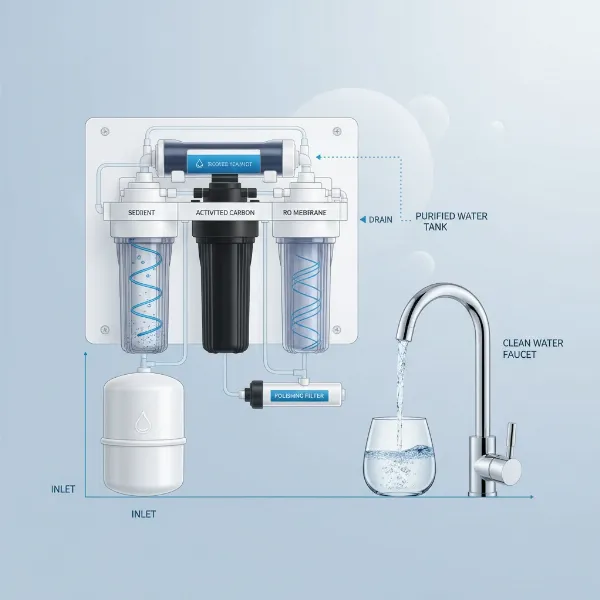 A reverse osmosis water filter system with clear lines showing water purification stages.
Distillation Systems
Water distillation is another highly effective method for lead removal. The process involves heating water to its boiling point, turning it into steam. The steam then rises, leaving most contaminants, including lead, behind in the boiling chamber. The purified steam is collected and condensed back into liquid form, resulting in highly pure water.
Distillation can remove virtually all heavy metals, including lead, as well as minerals and other inorganic substances. While effective, distillation units are generally slower than other filtration methods and can be energy-intensive. They are typically point-of-use systems, best suited for producing smaller quantities of drinking water.
Activated Carbon Filters (Certified for Lead Removal)
Not all activated carbon filters are created equal when it comes to lead removal. For lead, it is critical to select carbon filters that are specifically certified to remove this heavy metal. These specialized filters use a process called adsorption, where lead particles adhere to the surface of the carbon medium. They are often found in pitcher filters, faucet-mounted filters, and some under-sink units.
When choosing an activated carbon filter, look for certifications like NSF/ANSI Standard 53, which verifies a filter’s ability to reduce specific health-related contaminants, including lead. These filters offer a convenient and often more affordable solution for lead reduction, but regular filter replacement is essential to maintain their effectiveness, as they can become saturated over time.
Ion Exchange Filters
Ion exchange filters can also be effective in reducing lead levels in drinking water. This method works by exchanging undesirable lead ions in the water with other, less objectionable ions, often sodium or potassium, that are bound to the filter media. As water passes through, the resin beads in the filter “capture” the lead.
Ion exchange is frequently found in water softeners, which primarily target hardness minerals, but certain ion exchange resins are specifically designed and certified for lead removal. These filters can be a good option for addressing both lead and hardness issues simultaneously. Like all filters, their effectiveness is dependent on proper maintenance and timely replacement of the filter media.
Important Temporary Measures and Best Practices
Beyond installing a dedicated water filter system, there are important daily practices that can help minimize your exposure to lead:
- Flush Your Taps: If water has been sitting in your pipes for several hours (e.g., overnight or after work), let the cold water run before using it for drinking or cooking. For homes without lead service lines, 30-60 seconds is often sufficient. If you have a lead service line, flushing for 3-5 minutes is recommended.
- Use Cold Water Only: Always use cold water for drinking, cooking, and preparing baby formula. Hot water can cause more lead to leach from pipes and fixtures.
- Do NOT Boil Water: Boiling water does not remove lead; it actually concentrates it as water evaporates.
- Clean Faucet Aerators: Regularly clean your faucet’s screen (aerator) as lead particles and other debris can accumulate there.
Choosing the Right Lead Water Filter: Factors to Consider
Selecting the ideal water filter for lead removal involves a few critical considerations unique to your situation. Taking the time to evaluate these factors will help you make an informed decision.
Water Test Results
Your water test results are the most crucial piece of information. They will tell you not only if lead is present but also its concentration and if other contaminants are an issue. This data guides you towards the most appropriate filtration technology. For instance, extremely high lead levels might necessitate an RO system, while lower levels might be adequately handled by a certified carbon filter.
Needs and Usage
Consider how much filtered water your household needs and for what purposes. Do you need filtered water just for drinking and cooking from one tap, or are you looking for a whole-house solution?
- Point-of-Use (POU) Filters: These treat water at a single tap (e.g., kitchen faucet, under-sink, pitcher). They are typically more affordable and simpler to install, perfect for drinking and cooking water.
- Whole-House (POE) Filters: These treat all water entering your home. While beneficial for other contaminants, whole-house lead filters are less common and often not recommended as the primary lead solution since lead usually enters the water through household plumbing. Lead removal is most effective at or closest to the point of use.
Budget
Water filter systems vary widely in price, from inexpensive pitcher filters to more significant investments for whole-house or multi-stage RO systems. Beyond the initial purchase, factor in the ongoing costs of replacement filters, which are essential for maintaining effectiveness. Balance the upfront cost with the long-term operational expenses.
Certifications
This is non-negotiable for lead removal. Always look for certifications from independent organizations such as NSF International or the Water Quality Association (WQA). Specifically, check for products certified to:
- NSF/ANSI Standard 53: Confirms the filter reduces specific health-related contaminants, including lead.
- NSF/ANSI Standard 58: Certifies reverse osmosis systems for the reduction of various contaminants, including lead.
These certifications provide assurance that the product has been rigorously tested and performs as claimed.
Maintenance Requirements
All water filters require maintenance, primarily replacing filter cartridges or media. Consider how often filters need changing, the cost of replacements, and how easy the process is. Neglecting maintenance can compromise the filter’s performance and even allow contaminants to pass through.
Top Water Filter Types for Lead Removal
When it comes to effectively removing lead, specific types of water filters consistently rise to the top for their proven performance:
- Under-Sink Reverse Osmosis Systems: These are installed beneath your kitchen sink and provide a dedicated faucet for lead-free drinking and cooking water. They are highly effective, removing up to 99% of lead, and typically involve multiple filtration stages.
- Countertop Distillation Units: Ideal for those seeking pure water from a dedicated appliance. They boil water, capture the steam, and condense it, leaving lead behind. While effective, they are slower and produce smaller batches.
- NSF 53 Certified Water Filter Pitchers: These are among the most accessible and affordable options. Make sure the pitcher explicitly states NSF/ANSI 53 certification for lead reduction, as not all standard pitchers are designed for this.
- NSF 53 Certified Faucet-Mounted Filters: Conveniently attach directly to your existing kitchen faucet, offering on-demand filtered water. Like pitchers, verification of lead removal certification is crucial.
Each of these options provides a robust solution, but your specific needs, verified lead levels, and budget will guide your ultimate choice.
Installation, Use, and Maintenance Tips for Your Water Filter
Once you’ve invested in a water filter system to remove lead, proper installation, use, and maintenance are critical to ensure its long-term effectiveness and your continued peace of mind.
Installation:
For complex systems like under-sink Reverse Osmosis units, professional installation is often recommended to ensure correct setup and prevent leaks. If you’re a DIY enthusiast, meticulously follow the manufacturer’s instructions provided with your water filter. Improper installation can lead to inefficient filtration or even water damage. Ensure all connections are secure and that the system is properly flushed before first use, as instructed.
Usage:
Always use your water filter as intended. For point-of-use systems, draw water only from the filtered tap for drinking, cooking, and preparing baby formula. Remember the crucial tip: use cold water through your filter for consumption, as hot water can affect filter performance and increase lead leaching from unfiltered plumbing components.
Maintenance:
The lifespan of a water filter’s media is finite. Regular maintenance, primarily replacing filter cartridges, is paramount.
- Follow the Schedule: Adhere strictly to the manufacturer’s recommended replacement schedule for your filter cartridges. This is typically found in your owner’s manual. Mark your calendar or set reminders!
- Genuine Parts: Always use genuine replacement filters or those explicitly approved by the manufacturer. Substandard filters may not provide the same level of lead removal or fit correctly, potentially voiding warranties.
- Clean Aerators: Periodically remove and clean your faucet aerator (the screen at the end of your tap). Small lead particles can accumulate here, even with a filter, and cleaning it helps ensure optimal water flow and purity.
- Monitor Water Quality: If your filter system includes a TDS (Total Dissolved Solids) meter or a filter life indicator, pay attention to it. While TDS meters don’t directly measure lead, a sudden spike might indicate a filter issue.
Following these guidelines will help extend the lifespan of your water filter, guarantee consistent lead removal, and ensure your family always has access to clean, safe drinking water.
Long-Term Solutions and Community Action
While individual water filters offer immediate and effective protection, addressing lead in drinking water ultimately requires broader, systemic solutions. The most impactful long-term strategy is the full replacement of lead service lines (LSLs) – the pipes connecting municipal water mains to individual homes. Many communities and water systems across the nation are actively working on LSL replacement programs.
Often, the cost and responsibility for LSL replacement are shared between the utility and the homeowner. Contact your local water utility to inquire about lead service line inventories, testing programs, and any available financial assistance or replacement initiatives in your area. Advocating for infrastructure improvements and supporting community efforts to remove lead pipes helps ensure that future generations can enjoy lead-free water directly from the source. This comprehensive approach, combining point-of-use filtration with systemic infrastructure upgrades, is key to truly eradicating lead contamination.
> “Ensuring your family has safe drinking water can feel like a big task, but the solution is within reach. A properly certified and well-maintained lead water filter is a powerful and proven tool to protect your health today, while our communities work on the long-term goal of removing every lead service line.” – Dr. Jonathan Doyle, Water Quality Expert
Conclusion
The presence of lead in drinking water poses a serious, silent threat to public health, with no safe level of exposure. Taking proactive steps to test your water and implement effective lead removal strategies is not just a recommendation—it’s an essential act of protecting your family. From advanced Reverse Osmosis systems to specialized, certified activated carbon filters, proven technologies exist to transform your tap water into a safe and healthy source of hydration.
Prioritizing certified products, understanding your home’s unique needs, and diligent maintenance are the pillars of a successful lead removal plan. As we continue to advocate for wider infrastructure improvements, your personal commitment to clean water filtration remains your family’s immediate and most vital defense. What steps will you take today to ensure your drinking water is truly lead-free?
Frequently Asked Questions
Does boiling water remove lead from drinking water?
No, boiling water does not remove lead. In fact, boiling can actually concentrate lead levels in the water, as some of the water evaporates while the lead remains behind. Always avoid boiling water suspected of containing lead for consumption.
How often should I replace a water filter designed for lead removal?
The replacement frequency for a lead removal water filter depends on the specific product, your water usage, and the concentration of contaminants in your water. Always follow the manufacturer’s recommendations, which can range from every few months to once a year, to ensure continuous effectiveness.
What certifications should I look for when buying a water filter for lead?
When purchasing a Water Filter for lead removal, look for certifications from independent organizations like NSF International. Specifically, check for NSF/ANSI Standard 53 (for lead reduction) or NSF/ANSI Standard 58 (for reverse osmosis systems that reduce lead). These certifications confirm the product’s performance.
Is reverse osmosis (RO) the most effective way to remove lead from water?
Reverse osmosis (RO) is considered one of the most effective methods for removing lead from drinking water, capable of eliminating up to 99.1% of lead. Its semi-permeable membrane technology also filters out a wide range of other contaminants, making it a highly reliable purification solution for households.
How do I know if my home has lead pipes?
Identifying lead pipes typically involves contacting your local water utility, as they may have records or can assist with identification. You can also visually inspect the service line where it enters your home, though professional help is often best. Homes built before 1986 are at higher risk of having lead plumbing components.