Let’s be honest, that water filter—whether it’s in a pitcher in your fridge, attached to your faucet, or tucked away under the sink—can easily become an “out of sight, out of mind” appliance. But here’s a question that might stop you in your tracks: is your filter still protecting you, or has it become a breeding ground for the very things you’re trying to avoid? Knowing How To Know When To Change Your Water Filter isn’t just about maintenance; it’s about safeguarding the health of you and your family with every single glass you drink. It’s one of the most crucial parts of ensuring your home’s water purification system is actually doing its job.
Why Bother Changing Your Water Filter, Anyway?
Before we dive into the “how,” let’s quickly cover the “why.” Think of your water filter like a high-tech sponge or a very exclusive nightclub bouncer. Its job is to grab and hold onto nasty contaminants like chlorine, lead, sediment, pesticides, and other unwanted guests, only letting the pure, clean water pass through.
Over time, this “sponge” gets completely saturated. Once it’s full, two things can happen, and neither is good:
- It stops working. The filter media is so clogged that it can no longer trap new contaminants. They just flow right on by, straight into your glass.
- It can make things worse. In some cases, a heavily clogged filter can become a hotspot for bacteria to grow. The pressure of the water can also force previously trapped particles back out into your “filtered” water. Yikes.
So, a timely filter change isn’t just a suggestion—it’s essential for the performance of your system and the safety of your tap water.
The Telltale Signs: Your Senses Are Your First Defense
Your body has some pretty good built-in water quality detectors: your eyes, nose, and tongue. Long before you need to check a calendar, these senses can give you clues that it’s time for a change.
A Change in Taste or Smell
This is often the very first red flag. You bought a water filter to get rid of that swimming pool (chlorine) taste and smell, right? Or maybe your water had a slightly earthy or metallic tang. If you start to notice those old, familiar flavors and odors creeping back in, it’s a sure sign your filter’s carbon-based media has exhausted its ability to adsorb them. Your filter is essentially retired, and it’s time to send in a replacement.
The Water Flow Slows to a Trickle
Remember when you first installed your filter and the water flowed freely? If you’re now finding that filling a glass of water takes noticeably longer, you’re likely dealing with a clog. Over months of use, the filter traps sediment, rust, and other physical particles. This buildup physically blocks the pores of the filter, reducing the flow rate. It’s the most common indicator for under-sink and refrigerator filters.
You Notice a Drop in Water Pressure
This is the big brother to a slow water flow and primarily affects whole-house systems or dedicated drinking faucets connected to a reverse osmosis system. If your shower pressure seems weaker or your faucets aren’t as powerful as they used to be, a clogged sediment pre-filter in your main system could be the culprit.
Beyond Your Senses: The Technical Indicators
While your senses are great, they can’t detect invisible contaminants like lead or certain volatile organic compounds (VOCs). That’s why you also need to rely on more technical and reliable methods.
Heed the Filter Change Indicator
Many modern water filter pitchers and faucet-mounted units come with a built-in indicator light or sticker.
- LED Indicators: These are often found on faucet filters and some pitchers. They typically flash green when the filter is good, yellow when it’s nearing time for a change, and red when it’s time to replace it.
- Sticker Indicators: Simpler pitchers might use a sticker where you mark the date of replacement.
A crucial point to remember: Most of these indicators are simple timers. They don’t actually measure the quality of your water. They estimate the filter’s lifespan based on an average usage pattern (e.g., 40 gallons or 2 months). If your household uses a lot more water than average, you’ll need to change the filter sooner than the light tells you to.
Follow the Manufacturer’s Guidelines
This is the golden rule. Your filter’s manual is your most reliable source of information. Manufacturers spend a lot of time testing their products to determine their effective lifespan based on a specific volume of water or a period of time.
Here’s a general guide for common filter types:
| Filter Type | Typical Replacement Schedule | Key Contaminants Targeted |
|---|---|---|
| Water Filter Pitcher | 2-3 months or 40-60 gallons | Chlorine, Zinc, Copper, Taste & Odor |
| Faucet-Mounted Filter | 3-4 months or 100 gallons | Chlorine, Lead, Asbestos, Particulates |
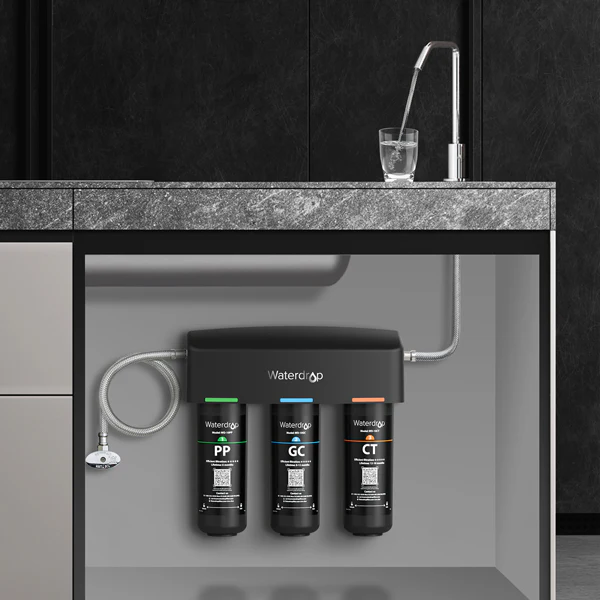
| Under-Sink Filter | 6-12 months | Wide range, including VOCs, Cysts, Lead |
| Reverse Osmosis System | Pre/Post-filters: 6-12 months; Membrane: 2-4 years | Everything: Dissolved Solids, Heavy Metals, Fluoride |
| Whole-House Filter | 3-6 months (sediment); 1-3 years (carbon) | Sediment, Rust, Chlorine, Scale |
Consider Your Water Usage and Local Water Quality
The manufacturer’s timeline is a great baseline, but it’s not one-size-fits-all. You need to adjust based on two key factors:
- Household Size: A single person will take much longer to use 100 gallons of water than a family of five. If you have a large family, you should plan to change your filters more frequently than the recommended time-based schedule.
- Source Water Quality: If your municipal water is particularly hard (high in minerals) or has a lot of sediment (common with well water), your filter will have to work much harder. It will clog faster and its lifespan will be shorter. You can often get a free annual water quality report from your local utility provider to understand what’s in your water.
“People often assume that if water looks clear, it’s clean. That’s a dangerous misconception. Many of the most harmful contaminants, like lead, arsenic, and PFAS, are completely invisible and have no taste or smell. That’s why sticking to a strict filter replacement schedule, based on manufacturer ratings and local water reports, is not just advisable—it’s critical for public health.”
— Dr. Eleanor Vance, Water Quality Specialist
So, How Often Should I Really Change My Water Filter?
The short answer is: You should change your water filter when you notice a decline in performance (taste, smell, flow) or when you reach the manufacturer’s recommended replacement interval, whichever comes first.
Being proactive is key. It’s always better to change your filter a little early than a little too late. Mark your calendar, set a recurring reminder on your phone, or sign up for an auto-ship subscription for replacement cartridges. Bảng trống. Make it a simple, repeatable part of your home maintenance routine, just like changing the batteries in your smoke detector.
Frequently Asked Questions (FAQ)
What happens if I don’t change my water filter?
If you don’t change your filter, it will eventually become so clogged with contaminants that it stops working. Water will flow through it without being filtered, and in a worst-case scenario, it can become a breeding ground for bacteria that can be released back into your water.
Can I just clean my water filter and reuse it?
No, for the vast majority of consumer water filters (like carbon, sediment, and reverse osmosis membranes), this is not possible. The contaminants are trapped deep within the filter media. Attempting to clean it is ineffective and can damage the filter, compromising its safety and performance.
Is the filter change indicator light always accurate?
Not always. Most indicators on pitchers and faucet filters are simple timers and don’t actually test the water. They are a helpful reminder based on average use but shouldn’t be the only thing you rely on, especially if you have a large family or poor water quality.
How does hard water affect my filter’s lifespan?
Hard water contains high levels of dissolved minerals like calcium and magnesium. These minerals can clog a filter’s pores more quickly, significantly reducing its lifespan and effectiveness. If you have hard water, you will likely need to replace your filters more often than the manufacturer recommends.
Why is my new filter making the water flow slowly?
A new filter, especially a high-quality carbon block filter, is very dense. It may take a few moments for the water to fully saturate the media, or the flow rate may be inherently slower due to the fine filtration process. You should also ensure you’ve properly flushed the new filter according to the instructions to clear any air pockets or loose carbon fines.
Your Health is Worth the Effort
Investing in a water filter is a fantastic first step toward healthier living. But that investment is only protected when you commit to regular maintenance. By learning how to know when to change your water filter, you ensure that every sip is as pure and safe as the day you first installed your system. Don’t wait for the bad taste to return. Check your filter, consult your manual, and make a filter change part of your routine. Your body will thank you for it.