Every time you reach for a glass of crisp, cold water from your refrigerator, there’s a hardworking component ensuring its purity: the water filter. This small but mighty device plays a crucial role in delivering clean, great-ttasting water and ice. But like any filter, it has a finite lifespan, and knowing “how often should you change your refrigerator water filter” is key to maintaining both your health and your appliance’s performance. Neglecting this simple maintenance task can lead to unappealing water, reduced flow, and even potential health concerns. Let’s delve into why this replacement schedule matters and how to keep your fridge’s water system operating at its best.
What is a Refrigerator Water Filter? Why Do You Need One?
A refrigerator water filter is a specialized component designed to remove impurities from your home’s water supply before it reaches your dispenser or ice maker. Most refrigerator filters primarily use activated carbon, a porous material that effectively absorbs contaminants. This mechanical filtration process traps larger particles while the carbon tackles smaller, dissolved substances.
Our tap water, while generally safe, can contain various impurities. These often include chlorine, which can affect taste and odor, along with sediment, rust, lead, and volatile organic compounds (VOCs). Over time, these contaminants accumulate in the filter’s media. If left unchecked, they can not only impact the taste and smell of your water but also potentially expose you to harmful substances. The benefits of using a functional refrigerator water filter are significant: it ensures clean drinking water, provides fresh-tasting ice, protects your family’s health, and helps extend the lifespan of your appliance by preventing mineral buildup and clogs.
How Long Do Refrigerator Water Filters Last? The General Rule
The golden rule for refrigerator water filter replacement is every six months or after filtering 300 to 400 gallons of water, whichever comes first. This recommendation comes directly from most refrigerator manufacturers and is a standard guideline across the industry. It’s a bit like changing the oil in your car or the batteries in your smoke detector – a routine maintenance task that’s easy to overlook but critical for optimal performance.
Even if your water still tastes fine after six months, the filter’s effectiveness diminishes over time. The activated carbon becomes saturated, losing its ability to capture new impurities. Beyond this period, not only does the filter stop working efficiently, but it can also become a breeding ground for bacteria and mold, potentially reintroducing contaminants back into your “filtered” water. Sticking to this replacement schedule ensures you consistently receive the highest quality water your filter is designed to provide.
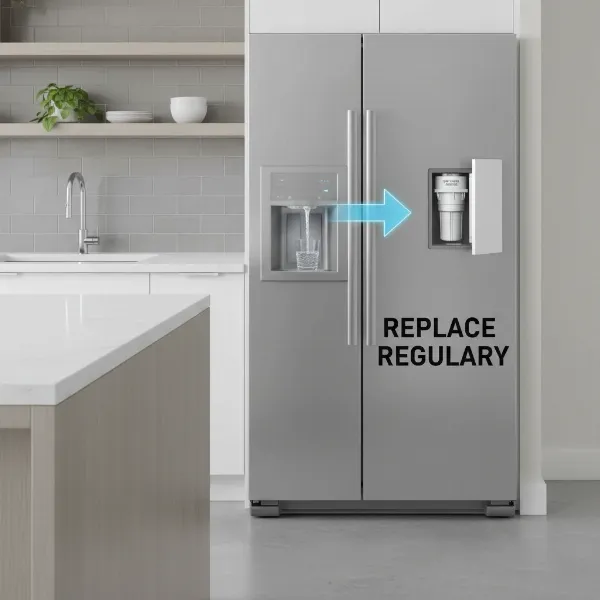 An illustration of a refrigerator with an arrow pointing to the water filter compartment, emphasizing regular replacement.
Factors Affecting Refrigerator Water Filter Lifespan
While the six-month guideline is a reliable starting point, several factors can influence how quickly your refrigerator water filter needs to be replaced. Understanding these can help you adjust your personal replacement schedule to ensure continuous access to clean water.
- Water Quality: This is arguably the biggest factor. If your home has hard water (high mineral content), excessive sediment, or elevated chlorine levels, your filter will work harder and clog faster. Well water, which often contains more sediment and naturally occurring contaminants, may also necessitate more frequent changes than municipal water. In areas with poor water quality, you might find yourself replacing the filter every three to four months.
- Usage Frequency: The more you use your refrigerator’s water dispenser and ice maker, the faster the filter will reach its gallon capacity. A large family that frequently fills water bottles or uses a lot of ice will deplete a filter much faster than a single individual. Heavy daily use accelerates the saturation of the filter media, reducing its effectiveness sooner than the six-month mark.
- Refrigerator Model and Filter Type: Different refrigerator models utilize various filter designs and technologies. Some larger filters boast higher gallon capacities, while others may require more frequent attention. Always refer to your refrigerator’s owner’s manual for specific recommendations, as filter capacities can range from 200 to 400 gallons.
- Local Conditions: Even environmental and regional factors can play a role. Depending on the age of municipal water systems, the frequency of pipe maintenance, or seasonal changes in water sources, the quality of your incoming water can fluctuate, potentially causing your filter to clog more quickly.
Signs You Need to Change Your Refrigerator Water Filter
Beyond the recommended six-month interval, your refrigerator will often give you clear indications when its water filter is no longer performing optimally. Paying attention to these signs can prevent you from consuming unfiltered water and protect your appliance.
- Indicator Light Is On: Many modern refrigerators feature a convenient indicator light that illuminates or blinks when it’s time for a filter change. While often tied to a simple timer, some advanced systems may monitor water usage, providing a more accurate prompt. Always reset this light after installing a new filter.
- Slow Water Flow: If your water dispenser is delivering water at a noticeably slower rate than usual, it’s a strong sign that the filter is clogged with trapped sediment and impurities. This blockage restricts water flow, much like a kink in a hose.
- Bad Taste or Odor: Your filter’s primary job is to remove unpleasant tastes and odors caused by chlorine, sulfur, and other chemicals. If your dispensed water starts tasting metallic, musty, or acquires an off-putting smell, it means the filter is no longer effectively removing these elements.
- Cloudy Water or Ice: Filtered water should be clear. If the water from your dispenser appears cloudy, murky, or discolored, or if your ice cubes are opaque or discolored instead of crystal clear, it indicates that the filter is failing to trap sediment and other particles.
- Reduced Ice Production or Smaller Ice Cubes: A clogged water filter can restrict the flow of water to the ice maker, leading to less ice production or the formation of smaller, hollow ice cubes. This happens because insufficient water is reaching the ice mold.
> “Ignoring your refrigerator’s water filter can compromise not only the taste of your water but also its safety. Regular replacement is a small effort for a significant return in health and appliance longevity.” – Maria Rodriguez, Certified Water Quality Specialist
Step-by-Step Guide: How to Change Your Refrigerator Water Filter
Replacing your refrigerator water filter is typically a straightforward process that anyone can do at home. Here’s a general guide; always consult your appliance’s owner’s manual for specific instructions for your model.
- Locate the Filter Compartment: Refrigerator filters are usually found in one of three places: in the grille at the bottom front of the fridge, inside the top right or left corner of the fresh food compartment, or on the rear panel.
- Turn Off Water Supply (If Necessary): While many filters can be changed without shutting off the water, some models may require it to prevent leaks. Check your manual. The shut-off valve is usually located behind the refrigerator or under the sink.
- Remove the Old Filter: Depending on your model, you might need to twist, pull, or press a release button. Have a towel ready, as some residual water may drip out.
- Insert the New Filter: Carefully align the new filter according to the arrows or markings on the filter and housing. Push or twist it firmly until it clicks securely into place.
- Flush the System: After installing the new filter, it’s crucial to flush about 2 to 3 gallons of water through the dispenser. This removes any trapped air and loose carbon particles from the new filter, which can cause cloudy water initially.
- Reset the Indicator Light: Most refrigerators have a reset procedure for the filter light. This usually involves holding down a “Filter” or “Reset” button for a few seconds. Refer to your manual for the exact steps.
Choosing the Right Replacement Refrigerator Water Filter
When it’s time for a new filter, ensuring you select the correct one is vital for proper fit and effective filtration.
- Identify Your Model Number: The easiest way to find the right filter is to check your refrigerator’s owner’s manual or locate the model number sticker inside the fridge (often near the crisper drawers, on the inner wall, or on the back panel). Filter compatibility is typically listed with your refrigerator’s model number.
- OEM vs. Compatible Filters: You have the choice between Original Equipment Manufacturer (OEM) filters, made by your appliance’s brand, or compatible filters from third-party vendors. While compatible filters can often be more affordable, ensure they are certified by reputable organizations like NSF International (NSF) or the Water Quality Association (WQA). These certifications confirm that the filter meets strict public health and safety standards for contaminant reduction. Choosing a certified filter provides peace of mind that it will perform as expected.
Conclusion
Understanding “how often should you change your refrigerator water filter” is a fundamental aspect of home maintenance that safeguards your health and preserves your appliance. The general recommendation of every six months or after 300-400 gallons is a reliable guide, but factors like your local water quality and household usage can influence this timeline. By recognizing the signs of a spent filter—such as slow water flow, unpleasant tastes, or cloudy ice—you can ensure that your refrigerator continues to provide the clean, refreshing water you expect. Making filter replacement a routine part of your home care schedule is a small effort that yields significant benefits. Isn’t peace of mind, combined with great-tasting water, worth it?
Frequently Asked Questions
What happens if I don’t change my refrigerator water filter?
|
Our Picks for the Best Water Filter in 2026
As an Amazon Associate I earn from qualifying purchases.
|
||
| Num | Product | Action |
|---|---|---|
| 1 | FRIGIDAIRE ULTRAWF Pure Source Ultra Water Filter, Original, White, 1 Count |

|
| 2 | GLACIER FRESH Water Filter Compatible with XWFE (Built-in CHIP), Replacement for GE XWFE, XWF Refrigerator Water Filter NSF/ANSI 42 Certification Pack of 1 |
|
| 3 | Brita UltraMax Large Water Dispenser With Standard Filter, BPA-Free, Reduces Copper, Cadmium and Mercury Impurities, Lasts 2 Months or 40 Gallons, Includes 1 Filter, Kitchen Accessories, Large 27-Cup |
|
| 4 | everydrop® by Whirlpool Refrigerator Water Filter A - EDRARXD1 (Pack of 1) |
|
| 5 | Brita Metro Water Filter Pitcher with SmartLight Change Indicator, BPA-Free, Replaces 1,800 Plastic Water Bottles a Year, Lasts Two Months, Includes 1 Filter, Small - 6-Cup Capacity, White |
|
| 6 | ZeroWater 32-Cup 5-Stage Water Filter Dispenser with Instant Read Out - 0 TDS for Improved Tap Water Taste - IAPMO Certified to Reduce Lead, Chromium, and PFOA/PFOS |
|
| 7 | ZeroWater 20-Cup Ready-Pour 5-Stage Water Filter Dispenser with 0 TDS Water Filter – IAPMO Certified to Reduce Lead, Chromium, and PFOA/PFOS |
|
| 8 | E-3000UV Whole House Salt-Free Water Softener & Filter Combo with UV |
|
| 9 | Samsung HAF-QIN/EXP Genuine Refrigerator Water Filter, Reduces 99% of Harmful Contaminants for Clean, Clear Drinking Water, 6-Month Life, Easy Install, Pack of 1 |
|
| 10 | everydrop by Whirlpool Ice and Water Refrigerator Filter 1, EDR1RXD1, Single-Pack , Purple |
|
If you neglect to change your refrigerator water filter, its effectiveness in removing contaminants will significantly diminish. This can lead to poor-tasting or foul-smelling water and ice, reduced water flow from the dispenser, and potential health risks if bacteria or other impurities accumulate and are released into your drinking water.
Can I clean and reuse an old refrigerator water filter?
No, refrigerator Water Filters are designed for single use and cannot be cleaned and reused. Once the activated carbon and other filtration media are saturated with trapped contaminants, their ability to filter is exhausted. Attempting to clean them will not restore their effectiveness and may even damage the filter, making it entirely useless.
How do I know which replacement filter to buy for my refrigerator?
The best way to determine the correct replacement filter is to check your refrigerator’s owner’s manual for the specific filter model number. You can also often find this information on the filter itself or on a label inside your refrigerator compartment, typically near the crisper drawers or on an inner wall.
Does turning off my refrigerator water supply extend the filter’s life?
No, simply turning off the water supply to your refrigerator does not extend the lifespan of the filter. The filter’s life is primarily determined by the volume of water processed and the level of contaminants it removes. If the filter is installed, even if water isn’t constantly flowing, it still ages and can accumulate stagnant water and potential bacterial growth over time.
Is it okay to go longer than six months if the water still tastes good?
While the water might still taste acceptable, it is not recommended to exceed the six-month or gallon capacity guideline. Even if you don’t detect a change in taste or odor, the filter’s media becomes less effective over time. This means it may no longer be removing harmful contaminants and could even harbor bacteria, potentially compromising your drinking water quality.