Ever seen that impressive ZeroWater demo? The one where they pour some tap water into the pitcher, and that little digital meter magically drops to read “000”? It’s compelling stuff. It makes you wonder, Does Zerowater Remove Everything? As your go-to guide here at Water Filter To Go, I get this question all the time. It’s a great question because it gets right to the heart of what we all want: pure, safe, and great-tasting water.
The short answer is no, no single gravity-fed filter removes absolutely everything. But the long answer is far more interesting and will help you understand if ZeroWater is the right bouncer for your home’s water supply. So, grab a glass of water (filtered, I hope!), and let’s dive deep into the science behind that “000” reading.
What Does That “000” TDS Reading Actually Mean?
Before we can talk about what ZeroWater removes, we need to understand what it’s measuring. That handy little device that comes with every pitcher is a TDS meter.
TDS stands for Total Dissolved Solids. Think of it like this: if you dissolve sugar in a cup of tea, you can’t see the sugar anymore, but it’s still there. That sugar is a “dissolved solid.” Your tap water is full of these dissolved solids—things like minerals (calcium, magnesium), salts, and heavy metals (lead, chromium).
A TDS meter measures the electrical conductivity of the water and gives you a reading in parts per million (PPM). The higher the conductivity, the more dissolved solids are present. ZeroWater’s claim to fame is its ability to reduce TDS to virtually zero. But here’s the crucial point:
TDS is not a complete measure of water purity. It doesn’t detect everything. Undissolved particles, bacteria, viruses, and certain chemicals like pesticides don’t register on a TDS meter.
So, while a “000” reading is an excellent indicator that a filter is removing a huge chunk of contaminants, it isn’t the whole story.
The Magic Behind the Curtain: How ZeroWater’s 5-Stage Filtration Works
So, how does ZeroWater achieve that impressive feat? It’s not magic; it’s a powerful, multi-layered process. Unlike typical 2-stage pitcher filters (like many standard Brita models), ZeroWater uses a unique 5-stage filter that acts like an elite security team for your water.
Bảng trống.- Stage 1: Coarse Filter Screen: This is the initial bouncer, catching the big stuff like dust and rust that can make water cloudy.
- Stage 2: Foam Distributor: This ensures water spreads out evenly over the filter, maximizing contact time and efficiency. No drop of water gets to skip class.
- Stage 3: Multi-layer Carbon & Oxidation Reduction Alloy: Here’s where the heavy lifting starts. The activated carbon is a rockstar at grabbing chlorine, which is what makes tap water taste and smell like a swimming pool. It also tackles pesticides and other organic contaminants.
- Stage 4: Dual Comprehensive Ion Exchange Resin: This is the secret sauce. This stage uses a process similar to what’s used in industrial water purification. It uses tiny resin beads that have a positive or negative charge. As water passes through, they grab the charged ions of dissolved solids—like lead, mercury, and minerals—and swap them out for harmless hydrogen and hydroxyl ions, which then form pure water (H2O). This is what demolishes the TDS reading.
- Stage 5: Fine Screen & Non-Woven Membrane Layers: A final checkpoint to catch any leftover fine particles and ensure no filter media escapes into your clean water.
This comprehensive process is why ZeroWater is a heavyweight contender in the world of pitcher filters.
The Hero List: What ZeroWater Is Certified to Remove
Talk is cheap, but certifications aren’t. ZeroWater filters are independently tested and certified by the NSF (National Sanitation Foundation), the leading authority in water filtration standards. This means they’ve been put through rigorous testing to prove they do what they say they do.
According to its NSF/ANSI 42 and 53 certifications, ZeroWater is a champ at removing or significantly reducing:
- Lead: Reduces 99% of lead, a dangerous neurotoxin often found in older plumbing.
- Chromium: Reduces 99% of both Chromium 3 and the more dangerous Chromium 6.
- PFOA/PFAS: Significantly reduces these “forever chemicals” that are a growing concern in water supplies across the country.
- Chlorine: Removes 99% of chlorine, dramatically improving taste and odor.
- Mercury: Reduces 99% of this toxic heavy metal.
It also effectively removes many other dissolved solids like asbestos, zinc, and hydrogen sulfide.
So, Does ZeroWater Remove Everything? The Unfiltered Truth
Now for the main event. We know what it does remove, so what doesn’t it remove? Or, what is it not designed or certified to handle?
What ZeroWater Doesn’t Remove
- Bacteria and Viruses: This is the most important distinction. ZeroWater is a water filter, not a water purifier. It is not designed to remove microbiological contaminants like E. coli, Giardia, or other bacteria and viruses. It should only be used with municipally treated water that is already considered microbiologically safe. If you’re on well water or have a “boil water” advisory, a ZeroWater pitcher is not enough. You’d need a purification system like UV or reverse osmosis.
- Fluoride: This is a tricky one. The ion exchange process does significantly reduce fluoride, often by over 90%. However, ZeroWater doesn’t actively seek an NSF certification for fluoride removal, so it’s not an official claim. If 100% fluoride removal is your top priority, you might look at a dedicated reverse osmosis system.
- Beneficial Minerals: Remember that ion exchange system? It’s not picky. It removes the bad stuff like lead, but it also removes beneficial minerals like calcium and magnesium. This is a trade-off for achieving “pure” H2O. Some people prefer the taste of mineral water, while others are concerned about missing out on these minerals.
As Dr. Eleanor Vance, a water quality specialist, often puts it:
“Consumers should see a ‘000’ TDS reading as an indicator of highly demineralized, deionized water, which is fantastic for removing heavy metals. However, it should not be mistaken for sterile or biologically pure water. The right filter always depends on the specific contaminants you’re targeting in your source water.”
ZeroWater vs. Other Filters: A Quick Showdown
How does ZeroWater stack up against the competition? Let’s put it in the ring with a standard carbon filter and a full-blown Reverse Osmosis (RO) system.
| Feature | ZeroWater Pitcher | Standard Carbon Pitcher (e.g., Brita) | Under-Sink Reverse Osmosis |
|---|---|---|---|
| Technology | 5-Stage Ion Exchange | Activated Carbon | Multi-stage, Semi-permeable Membrane |
| Removes | TDS, heavy metals, chlorine, PFOA/PFAS | Chlorine, some VOCs, zinc, mercury | Nearly everything: TDS, heavy metals, fluoride, bacteria, viruses |
| Keeps | Virtually no minerals | Some minerals | Virtually no minerals |
| Convenience | High (portable pitcher) | High (portable pitcher) | Low (requires installation) |
| Cost | Low initial, higher filter cost | Low initial, lower filter cost | High initial, moderate filter cost |
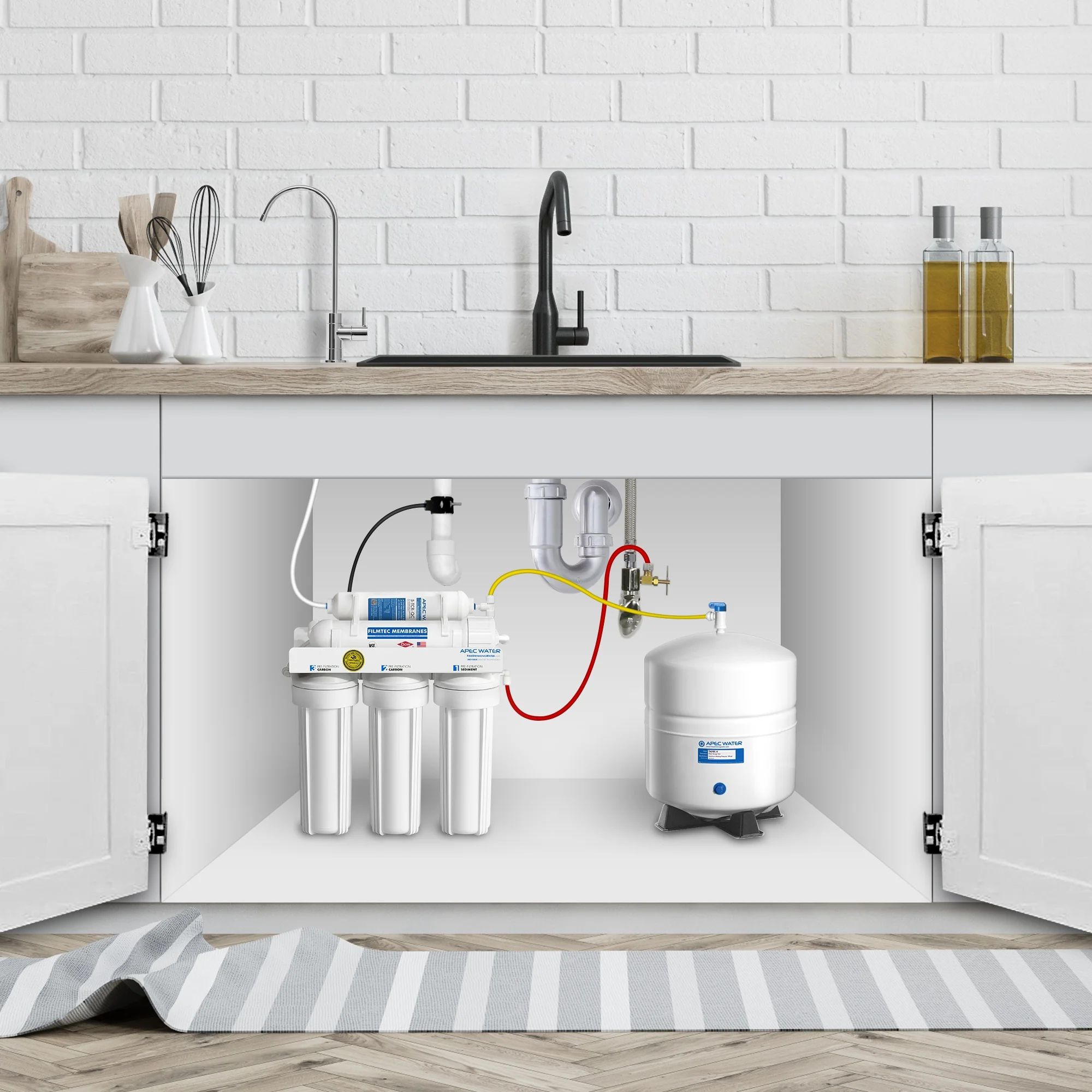
| Best For | People concerned with heavy metals and TDS | Improving taste and odor of tap water | Ultimate purification, well water, fluoride concerns |
Is a ZeroWater Filter Right for You?
Making the right choice comes down to your specific needs and your water source.
You should definitely consider a ZeroWater filter if:
- You live in an area with old pipes and are concerned about lead contamination.
- Your local water report shows high levels of chromium or PFOA/PFAS.
- You simply want to remove the maximum amount of Total Dissolved Solids possible from a pitcher filter.
- You can’t stand the taste of chlorine in your tap water.
You might want to consider another type of filter if:
- You are on well water or your area is under a boil advisory (you need a purifier like UV or RO).
- You want to specifically remove fluoride with a certified system (look into RO).
- You prefer to keep beneficial minerals in your water for taste or health reasons (a selective carbon filter might be better).
- Your tap water has very high TDS, as this will cause you to go through the expensive ZeroWater filters very quickly.
Frequently Asked Questions
How often do I need to change my ZeroWater filter?
This depends entirely on the TDS level of your tap water. If your water is very “hard” (high in TDS), you might need to change the filter every few weeks. If your water is already quite low in TDS, a filter could last for months. The included TDS meter is your guide: once the reading creeps up from “000” to “006,” it’s time for a change.
Why does my ZeroWater filter run out so quickly?
This is a common complaint and it’s directly tied to the TDS of your water. The filter is like a sponge for dissolved solids. If you have a lot of solids (high TDS), the sponge gets full much faster. While frustrating, it’s a sign the filter is working exactly as it’s designed to.
Is it bad to drink water with zero minerals?
This is a subject of debate. The World Health Organization (WHO) has noted potential health effects from long-term consumption of demineralized water. However, most people get the vast majority of their essential minerals from food, not water. If you eat a balanced diet, drinking demineralized water is generally considered safe.
Can ZeroWater remove fluoride?
Yes, its ion exchange process is very effective at removing fluoride. However, it is not officially NSF-certified for this specific purpose. If fluoride removal is your primary and non-negotiable goal, you should seek a product that holds that specific certification, like many reverse osmosis systems.
What does the ‘000’ reading on the TDS meter really mean?
It means the filter has successfully removed virtually all Total Dissolved Solids—things like minerals, salts, and heavy metals—that conduct electricity. It is a powerful indicator of the filter’s performance but does not guarantee the absence of all possible contaminants, especially biological ones like bacteria.
The Final Word on ZeroWater
So, does ZeroWater remove everything? No, but it removes more dissolved solids than any other gravity-fed pitcher filter on the market, and its certifications for lead and chromium are top-tier. It’s an exceptional tool for a specific job: stripping your water clean of dissolved contaminants.
The most important step you can take is to understand what’s in your local water. Look up your city’s water quality report. Once you know what you’re up against, you can choose your filtration system with confidence. Investing in a water filter isn’t just about better taste; it’s about taking control of your health, one pure glass at a time.