It’s a piece of advice as old as time, passed down through generations: “When in doubt, boil the water.” We’ve all heard it, especially before a camping trip or during a boil water advisory. But here’s a question that might stop you in your tracks: Does Boiling Water Filter It? The simple, and perhaps surprising, answer is no. Boiling is a powerful tool, but it’s a completely different process from filtration. Confusing the two could mean you’re still drinking a host of contaminants you’d rather avoid. Let’s dive into what really happens when you heat water to 212°F (100°C) and why a good water filter is your true best friend for clean, safe hydration.
Boiling vs. Filtering: Understanding the Key Difference
Think of it this way: boiling is like a bouncer at a club, focused on neutralizing any rowdy, living troublemakers. Filtration, on the other hand, is like a high-tech security checkpoint that scans and removes unwanted items, living or not.
Boiling is a method of disinfection. Its primary job is to kill or inactivate pathogenic microorganisms. When you bring water to a rolling boil for at least one minute (or three minutes at altitudes above 6,500 feet), you effectively eliminate most of the biological threats that can make you sick.
- Bacteria: Like E. coli, Salmonella, and Cholera.
- Viruses: Such as Hepatitis A and Norovirus.
- Protozoa: Including nasty parasites like Giardia and Cryptosporidium.
This is why health authorities issue boil water advisories after a water main break or flood—the immediate threat is biological contamination. But what about everything else lurking in your water?
What’s Left Behind? The Contaminants Boiling Can’t Remove
Here’s where the distinction becomes critically important. While boiling handles the biological bad guys, it does absolutely nothing to remove physical or chemical contaminants. In some cases, it can even make the problem worse.
Heavy Metals: The Silent Intruders
Lead, arsenic, mercury, and other heavy metals are serious health concerns. They can leach into water from old plumbing or industrial pollution. Boiling water does not remove heavy metals. In fact, as some of the water evaporates during boiling, the concentration of these metals in the remaining water actually increases.
“Boiling is an ineffective, and potentially dangerous, method for dealing with heavy metal contamination like lead,” warns Dr. Eleanor Vance, an environmental engineer. “You aren’t removing the threat; you’re just concentrating it in a smaller volume of water.”
Chemicals and Pesticides
Our water sources are often exposed to a cocktail of chemicals, from the chlorine used to treat municipal water to agricultural runoff containing pesticides and herbicides. There’s also the growing concern over pharmaceuticals and PFAS (per- and polyfluoroalkyl substances), often called “forever chemicals.” Boiling is powerless against these dissolved chemical contaminants.
Sediments and Microplastics
Have you ever noticed tiny particles floating in your water? That could be sediment, rust from pipes, sand, or dirt. More recently, we’ve become aware of microplastics—tiny plastic particles that have found their way into nearly every water source on the planet. Boiling doesn’t make these solids magically disappear. They’ll still be in your cup when you’re done.
Total Dissolved Solids (TDS) and Hardness
TDS refers to minerals, salts, and other organic matter dissolved in water. While not always harmful, high TDS can give water an unpleasant taste and contribute to “hard water,” which causes mineral buildup in your pipes and appliances. Just like with heavy metals, boiling only concentrates these solids, leaving you with harder, worse-tasting water.
So, How Do Water Filters Provide a Complete Solution?
If the answer to “does boiling water filter it?” is a firm no, then what is the solution? This is where modern water filtration technology shines, offering a multi-layered defense against a wide spectrum of impurities.
Activated Carbon: The Chemical Magnet
This is one of the most common and effective filter media. Think of activated carbon as a highly porous sponge with an enormous surface area. It uses a process called adsorption to trap chemical contaminants like chlorine, pesticides, and volatile organic compounds (VOCs), significantly improving the taste and odor of your water. Many pitchers and faucet-mounted filters rely on this technology.
Reverse Osmosis: The Ultimate Gatekeeper
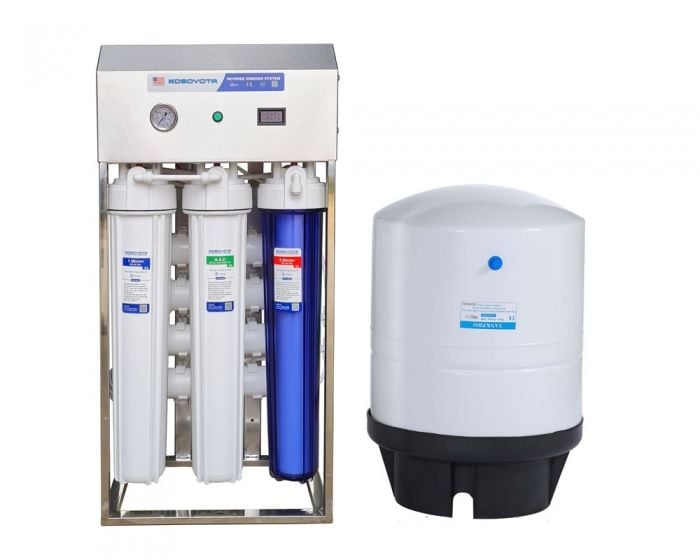
For the highest level of purification, nothing beats Reverse Osmosis (RO). An RO system pushes water through a semi-permeable membrane with incredibly tiny pores. This membrane is so fine that it blocks almost everything that isn’t a pure water molecule. It’s exceptionally effective at removing:
- Heavy metals (up to 99%+ of lead)
- Total Dissolved Solids (TDS)
- Chemicals like fluoride and arsenic
- Viruses and bacteria
If you want water that is as pure as it gets, an under-sink reverse osmosis system is the gold standard.
UV Purification: The Digital Disinfectant
While not technically a “filter,” a UV purifier is the modern equivalent of boiling. It uses ultraviolet light to scramble the DNA of microorganisms, rendering them harmless without adding any chemicals or changing the water’s taste. Many comprehensive systems pair a UV stage with sediment and carbon filters for a complete solution that handles all three types of contaminants: biological, chemical, and physical.
Finding the Right Filter for Your Home
Choosing a filter doesn’t have to be complicated. It’s about matching the right technology to your specific needs and budget.
| Filter Type | Primary Use | Removes | Cost (Initial & Ongoing) |
|---|---|---|---|
| Water Pitcher | Improving taste & odor | Chlorine, some heavy metals, sediment | Low initial, moderate filter costs |
| Faucet-Mounted | Convenience for drinking/cooking | Chlorine, lead, some chemicals | Low-moderate initial & filter costs |
| Under-Sink | High-purity drinking water | Wide range, including lead, TDS, chemicals (RO) | Moderate-high initial, moderate filter costs |
| Whole-House | Treating all water in home | Sediment, chlorine, hard water minerals | High initial, moderate-low ongoing costs |
The best first step? Find out what’s in your water. You can get a copy of your local water quality report from your utility provider or use an at-home water testing kit for a more detailed picture.
Frequently Asked Questions About Boiling and Filtering Water
1. So, is it ever a good idea to boil water?
Absolutely. Boiling is the recommended method for disinfecting water during emergencies like a power outage or a boil water advisory from your local authorities. It’s a reliable way to kill harmful germs when your primary filtration system might not be working or when the water is known to be biologically compromised.
2. Does boiling remove the taste of chlorine?
Boiling can help reduce the taste of chlorine by allowing some of it to evaporate as a gas, but it’s not a very efficient method. An activated carbon filter is far more effective at adsorbing chlorine and other chemicals that cause unpleasant tastes and odors.
3. Can I boil filtered water?
Of course! There’s no harm in boiling water that has already been filtered. You’d do it every day to make coffee, tea, or pasta. It’s just not necessary to boil it again for safety purposes if it has come from a reliable purification system.
4. What is the best way to remove lead from water?
The most reliable way to remove lead is with a water filter certified by the NSF (National Sanitation Foundation) for lead reduction, such as an activated carbon or reverse osmosis filter. Remember, boiling will only increase the lead concentration.
5. How do I know what’s in my tap water?
In the U.S., you can contact your local water utility for their annual Consumer Confidence Report (CCR). For a more immediate and specific analysis, you can purchase a comprehensive home water test kit that checks for dozens of common contaminants.
The Final Word: Invest in Filtration for True Peace of Mind
For generations, boiling has been our go-to safety net for questionable water. It’s an effective disinfectant that has saved countless lives. But in the modern world, where our concerns extend far beyond bacteria to include lead, microplastics, and forever chemicals, its limitations are clear.
So when you ask, does boiling water filter it?, the answer is a clear no—but understanding why is the first step toward achieving truly pure water. Boiling is a temporary fix for a biological problem. A high-quality water filter is a permanent, comprehensive solution for your family’s long-term health and well-being, providing a reliable barrier against a vast array of contaminants, sip after delicious sip. It’s an investment that pays you back with every clean, clear glass.