In the quest for cleaner, healthier drinking water, many households turn to water filter pitchers as a convenient and cost-effective solution. Two prominent names often emerge in this conversation: Clearly Filtered and Brita. While both aim to improve your tap water, they approach this goal with differing filtration capabilities, designs, and price points. Understanding these distinctions is crucial for making an informed decision that aligns with your specific water quality concerns and lifestyle.
What is a Water Filter Pitcher and Why Do You Need One?
A water filter pitcher is a portable device designed to remove impurities from tap water, offering a simple way to access filtered water without permanent installation. Tap water, even when deemed safe by municipal standards, can contain a variety of contaminants such as chlorine, lead, fluoride, microplastics, and certain chemicals. These substances can affect water’s taste and odor, and in some cases, pose long-term health risks. Using a water filter pitcher provides an accessible line of defense, enhancing the taste, smell, and overall quality of your drinking water for better health and enjoyment.
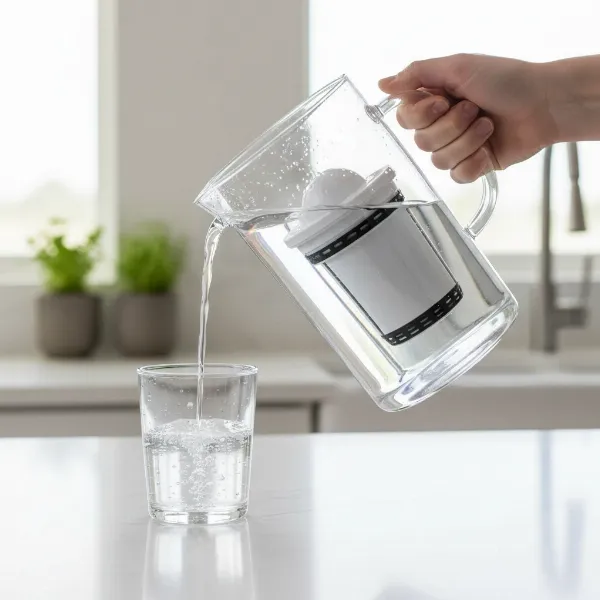 A person pouring clean water from a generic water filter pitcher in a modern kitchen.
Clearly Filtered Pitcher: Deep Dive into Advanced Filtration
The Clearly Filtered pitcher positions itself as a premium filtration solution, designed for those with significant concerns about a broad spectrum of contaminants. Its core strength lies in its “Affinity® Filtration Technology,” which reportedly targets over 365 impurities.
Filtration Technology & Contaminant Removal:
Clearly Filtered claims to remove a comprehensive list of harmful substances often missed by standard filters. This includes heavy metals like lead and mercury, chemicals such as fluoride, PFAS (per- and polyfluoroalkyl substances or “forever chemicals”), chromium-6, chloroform, herbicides, pesticides, and even pharmaceuticals. The company asserts its products are independently tested by EPA-accredited laboratories to meet or exceed NSF/ANSI standards, holding WQA certifications, particularly for PFOA/PFOS removal. This emphasis on extensive contaminant reduction is a primary differentiator.
While Clearly Filtered provides detailed performance data, some independent reviews and third-party tests, such as those by the Environmental Working Group (EWG), have shown variances in removal rates for certain contaminants like nitrates and chromium-6 compared to the company’s claims. Despite these occasional discrepancies, the overall consensus remains that Clearly Filtered offers significantly more comprehensive filtration than many conventional pitchers.
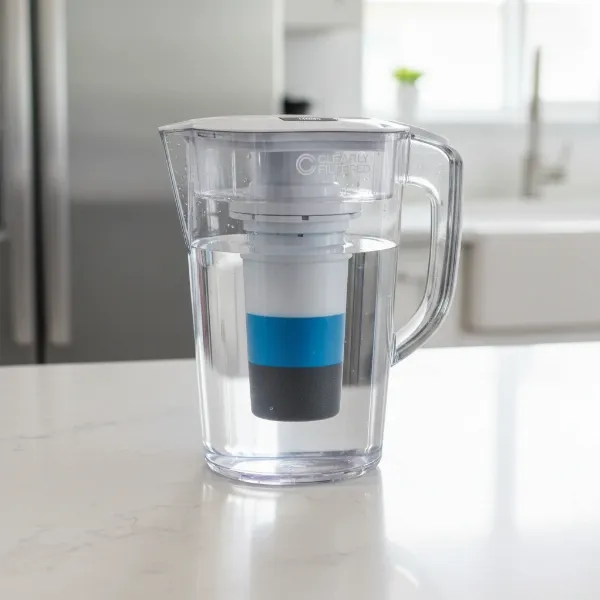 A Clearly Filtered water pitcher, highlighting its advanced multi-stage filtration system.
Design & Durability:
The pitcher itself is constructed from BPA-free Tritan plastic, which is noted for its durability and sturdier feel compared to some competitors. This robust design suggests a product built to last.
Filter Life & Cost:
Each Clearly Filtered replacement cartridge boasts a longer lifespan, typically filtering up to 100 gallons of water. While the initial purchase price for both the pitcher and replacement filters is notably higher than Brita, the extended filter life can result in a comparable cost per gallon over time.
Pros of Clearly Filtered:
- Superior removal of a wide range of contaminants, including fluoride, lead, and PFAS.
- Durable, high-quality, BPA-free Tritan plastic construction.
- Longer filter life per cartridge.
- Focus on advanced filtration for specific health concerns.
Cons of Clearly Filtered:
- Higher upfront cost for the pitcher and replacement filters.
- Slower filtration rate (can take 15-25 minutes for a full pitcher).
- Some questions regarding the interpretation of “NSF-compliant testing” versus full NSF certification for all claimed removals.
Brita Water Filter Pitcher: The Household Staple
Brita has been a household name in water filtration for decades, known for its accessibility, affordability, and ability to improve the aesthetic qualities of tap water.
Filtration Capabilities:
Brita pitchers primarily utilize activated carbon technology, often combined with ion-exchange resins. Their main strengths lie in significantly reducing chlorine taste and odor, which are common complaints about tap water. Brita’s Elite filters, a step up from their standard filters, are also certified by third parties under NSF/ANSI Standards 42 and 53 to reduce contaminants such as lead, mercury, cadmium, copper, and certain PFAS chemicals (like PFOA/PFOS).
Limitations:
Despite their effectiveness in improving taste and reducing some contaminants, Brita filters do not remove a wide array of substances. Critically, they are not designed to remove fluoride, nitrates, arsenic, bacteria, protozoa, or viruses. They also do not significantly soften water or remove many pharmaceutical drugs. This makes them a more basic filtration option, suitable for general improvements but not for addressing highly specific or extensive contamination concerns.
Design & Convenience:
Brita pitchers are typically lightweight and designed to fit easily into most refrigerator doors. They are known for their fast filtration rate, often filtering a cup of water in under a minute, providing quick access to filtered water. All Brita products are also confirmed to be BPA-free.
Filter Life & Cost:
Brita filters generally have a shorter lifespan, typically needing replacement every 40 gallons or approximately two months. However, their pitchers and replacement cartridges are significantly more affordable than Clearly Filtered products, making them an attractive option for budget-conscious consumers.
Pros of Brita:
- Affordable initial purchase and replacement filters.
- Fast filtration speed.
- Effective at reducing chlorine taste and odor.
- Elite filters reduce lead, mercury, and some PFAS.
- Widely available and recognized with NSF/ANSI certifications for stated claims.
Cons of Brita:
- Limited contaminant removal compared to advanced filters (does not remove fluoride, nitrates, bacteria, etc.).
- Shorter filter lifespan, requiring more frequent replacements.
- May not address specific, high-concern contaminants.
Head-to-Head: Clearly Filtered vs. Brita
When pitting these two popular pitcher filters against each other, the differences become clear. Your ideal choice will hinge on what you prioritize most in your water filtration.
| Feature | Clearly Filtered Pitcher | Brita Water Filter Pitcher |
|---|---|---|
| Contaminant Removal | Extensive (365+ claims): Lead, Fluoride, PFAS, Chromium-6, VOCs, Herbicides, Pesticides, Pharmaceuticals, Chloroform | Basic to Moderate: Chlorine (taste/odor), Lead, Mercury, Copper, Cadmium, some PFAS (Elite) |
| Certifications | WQA (PFOA/PFOS), tests to NSF/ANSI standards by EPA-accredited labs | NSF/ANSI certified (e.g., 42 for aesthetic, 53 for health contaminants) |
| Filtration Speed | Slow (15-25 minutes per pitcher) | Fast (under 1 minute per cup) |
| Filter Lifespan | 100 gallons (approx. 3-4 months) | 40 gallons (approx. 2 months) |
| Initial Pitcher Cost | Higher (premium price point) | Lower (budget-friendly) |
| Replacement Filter Cost | Higher per filter, but comparable per gallon over time | Lower per filter, but more frequent replacements |
| Material Quality | BPA-free Tritan plastic, sturdier design | BPA-free polypropylene/SAN plastic, lighter design |
| Primary Benefit | Comprehensive health protection from diverse contaminants | Improved taste, odor, and basic heavy metal reduction |
Key Decision Factors:
- Your Water Quality Concerns: If you are worried about specific contaminants like fluoride, PFAS, or a broad range of chemicals, Clearly Filtered offers more robust protection. If your primary goal is to remove chlorine and improve taste, with some lead reduction, Brita may suffice.
- Budget: Brita provides a more economical entry point and lower immediate replacement costs. Clearly Filtered is a larger initial investment, though its longer filter life can balance the long-term cost.
- Patience for Filtration Speed: Clearly Filtered’s thorough filtration takes significantly longer, which might be a drawback if you need large volumes of filtered water quickly. Brita offers instant gratification.
Which Pitcher is Right for You?
Choosing between Clearly Filtered and Brita ultimately depends on your individual priorities and the specific challenges of your local water supply.
Choose Clearly Filtered if:
- You are highly concerned about a wide array of contaminants in your tap water, including fluoride, PFAS, lead, and pharmaceuticals.
- You are willing to invest more for superior filtration performance and a more durable pitcher.
- You don’t mind a slower filtration rate for the assurance of cleaner water.
- You prioritize comprehensive health protection over immediate cost savings.
Choose Brita if:
- Your main concern is improving the taste and odor of your tap water by reducing chlorine.
- You are looking for an affordable, widely available, and convenient filtration solution.
- You need filtered water quickly and frequently.
- You are comfortable with a filter that reduces common contaminants like lead and mercury but doesn’t target more complex chemicals.
Using and Maintaining Your Water Filter Pitcher
Regardless of your choice, proper use and maintenance are paramount to ensuring your pitcher filter works effectively and safely. Always follow the manufacturer’s instructions for assembly and initial rinsing.
The most critical aspect of maintenance is timely filter replacement. Filters have a finite capacity; once they become saturated with contaminants, their effectiveness diminishes, and they can even start releasing trapped impurities back into your water. This also applies to Brita filters, where an unchanged filter can act as a breeding ground for bacteria. Mark your calendar or use the pitcher’s built-in indicator to remind you when a change is due. Regularly wash the pitcher components (excluding the filter cartridge) with mild soap and water to prevent bacterial growth and maintain hygiene.
Conclusion
Both Clearly Filtered and Brita offer valuable solutions for improving drinking water quality, but they cater to distinct needs. Clearly Filtered stands out with its advanced, broad-spectrum contaminant removal, making it an excellent choice for those seeking the highest level of filtration for health-related concerns. Brita remains a reliable and affordable option for enhancing water’s taste and odor while reducing common heavy metals. Your decision should be guided by a thorough understanding of your water quality, your budget, and your daily convenience preferences. By evaluating these factors, you can confidently select the water filter pitcher that provides the cleanest, safest, and most enjoyable hydration for your family.
What are your top water quality concerns, and how will they influence your choice?
Frequently Asked Questions
Does Clearly Filtered remove fluoride?
Yes, Clearly Filtered pitchers are designed to remove fluoride, with claims of up to 99.5% reduction. This is a significant differentiator from many standard pitcher filters, including Brita, which do not typically remove fluoride.
How often should I change my Brita filter?
Brita recommends changing their standard filters every 40 gallons or approximately every two months, whichever comes first. Brita Elite filters (formerly Longlast+) can last longer, often up to 120 gallons or six months. It’s crucial to adhere to these recommendations to ensure optimal filtration and prevent contaminants from re-entering your water.
Are water filter pitchers truly effective?
Yes, Water Filter pitchers are effective at reducing specific contaminants as claimed by their manufacturers. Their effectiveness varies widely based on the brand, filter type, and certification. Filters like Clearly Filtered offer extensive removal, while others like Brita focus on taste, odor, and select heavy metals. It’s important to choose a pitcher based on the specific impurities you wish to address.
Can a Brita filter remove PFAS?
Some Brita filters, specifically the Brita Elite (formerly Longlast+) filter, are certified to reduce certain PFAS chemicals like PFOA and PFOS. However, their standard filters may not offer this level of protection. Always check the specific filter’s performance data and certifications if PFAS removal is a primary concern.