In the quest for clean, safe drinking water, many individuals are exploring natural and sustainable alternatives to conventional filtration systems. Among these, charcoal sticks have gained popularity, often lauded for their eco-friendliness and simplicity. But beyond the aesthetic appeal and environmental benefits, a critical question remains: do charcoal sticks for water filtration truly work, and how effective are they in providing clean water for your family? This article delves into the science behind charcoal stick filtration, compares it to more advanced methods, and outlines the practicalities and limitations of incorporating these natural purifiers into your daily life.
What Are Charcoal Sticks for Water Filtration?
Charcoal sticks used for water filtration are typically made from natural materials like wood or bamboo, which undergo a process of carbonization – heating in a low-oxygen environment. This process transforms the material into a porous carbon structure. While various types exist, bamboo charcoal, often sourced from sustainably harvested bamboo, is a popular choice due to its rapid growth and perceived environmental advantages. These sticks are then placed directly into water containers, offering a simple, chemical-free method of filtration that has been practiced in different forms for centuries.
How Do Charcoal Sticks Purify Water? The Science of Adsorption
The primary mechanism by which charcoal sticks filter water is a process called adsorption. Unlike absorption, where a substance is soaked up, adsorption involves impurities sticking to the surface of the charcoal. The carbonized structure of the charcoal creates a vast network of tiny pores and channels. As water flows around and through these pores, contaminants like chlorine, volatile organic compounds (VOCs), and other microscopic impurities are attracted to and trapped on the surface of the charcoal. This process significantly improves the water’s taste and odor by removing the compounds responsible for unpleasant qualities. Additionally, some bamboo charcoal varieties are known to release beneficial minerals like magnesium and calcium back into the water, potentially enhancing its overall quality.
Are They Truly Effective? Examining the Filtration Power
While charcoal sticks do possess a degree of filtration capability, their effectiveness is a point of nuanced discussion. They are adept at reducing certain aesthetic impurities such, as chlorine, which can drastically improve the taste and smell of tap water. Many users report a noticeable difference in their drinking water, finding it fresher and more palatable. This makes them a viable option for those primarily concerned with taste improvement and light chemical reduction in already potable municipal water.
However, it is crucial to temper expectations regarding their ability to purify highly contaminated water. The surface area and pore structure of most commercially available charcoal sticks, particularly those not specifically “activated,” are often less developed than engineered activated carbon filters. This means their capacity to remove a broad spectrum of contaminants – including heavy metals, bacteria, viruses, fluoride, and pharmaceuticals – is significantly limited. For comprehensive purification or treatment of questionable water sources, charcoal sticks alone may not provide adequate protection.
“While charcoal sticks offer a natural and eco-friendly approach to improving water taste and odor, it’s essential to understand their limitations compared to advanced filtration technologies. They are a good starting point for enhancing already safe water, but not a replacement for systems designed to tackle serious contamination.” – Admin, waterfiltertogo.com
Pros and Cons of Using Charcoal Sticks for Water Filtration
Like any water treatment method, charcoal sticks come with their own set of advantages and disadvantages. Understanding these can help you determine if they align with your water filtration needs and lifestyle.
Advantages:
- Eco-Friendly and Sustainable: Many charcoal sticks, especially those made from bamboo, are sourced sustainably and are biodegradable. They offer a plastic-free alternative to traditional filters.
- Chemical-Free Filtration: The purification process relies solely on the natural properties of carbon, without the addition of chemicals.
- Improved Taste and Odor: Highly effective at adsorbing chlorine and other compounds that cause tap water to taste or smell unpleasant.
- Mineral Enrichment: Some types of bamboo charcoal can release beneficial minerals into the water, subtly enhancing its composition.
- Multi-Purpose Reuse: Once their filtration capacity wanes, charcoal sticks can be repurposed as dehumidifiers, compost additives, or even for insect repellent, promoting a zero-waste lifestyle.
- Simple to Use: The method is straightforward, requiring only the placement of sticks into a water container.
|
Our Picks for the Best Water Filter in 2026
As an Amazon Associate I earn from qualifying purchases.
|
||
| Num | Product | Action |
|---|---|---|
| 1 | ZeroWater 32-Cup 5-Stage Water Filter Dispenser with Instant Read Out - 0 TDS for Improved Tap Water Taste - IAPMO Certified to Reduce Lead, Chromium, and PFOA/PFOS |

|
| 2 | E-3000UV Whole House Salt-Free Water Softener & Filter Combo with UV |
|
| 3 | FRIGIDAIRE ULTRAWF Pure Source Ultra Water Filter, Original, White, 1 Count |
|
| 4 | everydrop® by Whirlpool Refrigerator Water Filter A - EDRARXD1 (Pack of 1) |
|
| 5 | GLACIER FRESH Water Filter Compatible with XWFE (Built-in CHIP), Replacement for GE XWFE, XWF Refrigerator Water Filter NSF/ANSI 42 Certification Pack of 1 |
|
| 6 | Brita Metro Water Filter Pitcher with SmartLight Change Indicator, BPA-Free, Replaces 1,800 Plastic Water Bottles a Year, Lasts Two Months, Includes 1 Filter, Small - 6-Cup Capacity, White |
|
| 7 | ZeroWater 20-Cup Ready-Pour 5-Stage Water Filter Dispenser with 0 TDS Water Filter – IAPMO Certified to Reduce Lead, Chromium, and PFOA/PFOS |
|
| 8 | everydrop by Whirlpool Ice and Water Refrigerator Filter 1, EDR1RXD1, Single-Pack , Purple |
|
| 9 | Samsung HAF-QIN/EXP Genuine Refrigerator Water Filter, Reduces 99% of Harmful Contaminants for Clean, Clear Drinking Water, 6-Month Life, Easy Install, Pack of 1 |
|
| 10 | Brita UltraMax Large Water Dispenser With Standard Filter, BPA-Free, Reduces Copper, Cadmium and Mercury Impurities, Lasts 2 Months or 40 Gallons, Includes 1 Filter, Kitchen Accessories, Large 27-Cup |
|
Disadvantages:
- Slow Filtration Process: It typically takes 4-8 hours for charcoal sticks to effectively filter water, making it a less convenient option for immediate access to large volumes.
- Limited Contaminant Removal: They are generally less effective at removing a wide range of contaminants, such as heavy metals, lead, pesticides, bacteria, and viruses, compared to activated carbon or reverse osmosis systems.
- Regular Maintenance Required: For optimal performance and hygiene, charcoal sticks need to be boiled weekly for sterilization and cleaned periodically (every two months).
- Longevity and Replacement: The sticks have a finite lifespan, usually 1-3 months, before needing replacement or repurposing.
- Not Ideal for Highly Contaminated Water: They should not be relied upon as the sole purification method for water sources with known microbial or chemical contamination.
- Potential for Plastic Packaging: Ironically, some charcoal stick products may still come in small plastic bags, negating some of their eco-friendly appeal.
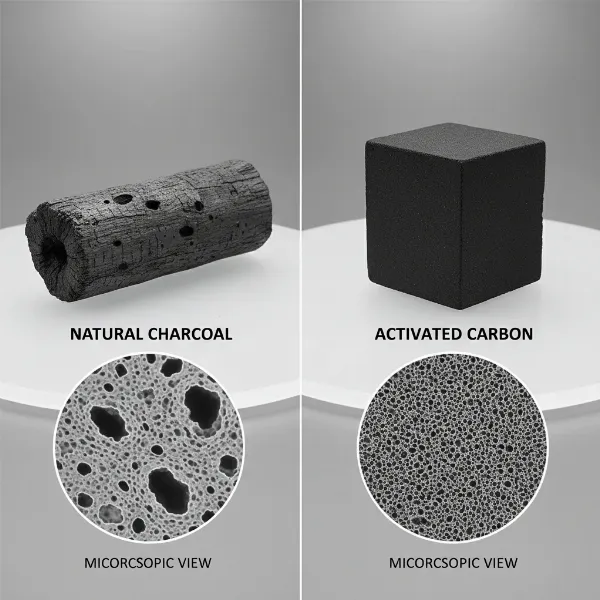 Comparing the porous structure of a charcoal stick to a block of activated carbon, highlighting the difference in surface area for water filtration effectiveness.
Charcoal Sticks vs. Activated Carbon: Understanding the Difference
The terms “charcoal” and “activated carbon” are often used interchangeably, but there’s a crucial distinction when it comes to water filtration. While charcoal sticks are a form of carbon, activated carbon undergoes a specialized manufacturing process that dramatically enhances its filtering capabilities.
Activated carbon is typically produced by heating carbonaceous materials to very high temperatures (800-1100°C) in the presence of gases like steam or carbon dioxide. This “activation” process etches away the carbon’s surface, opening up millions of tiny, intricate pores that dramatically increase the material’s internal surface area. A single gram of activated carbon can have a surface area equivalent to thousands of square feet. This extensive porous structure allows activated carbon filters to adsorb a much wider range of contaminants, including smaller particles and a broader spectrum of dissolved chemicals, with significantly greater efficiency and speed than non-activated charcoal sticks. While charcoal sticks work on the same principle of adsorption, they lack this highly engineered, expansive surface area, making them less robust for comprehensive water purification.
Choosing and Maintaining Your Charcoal Sticks
If you decide that charcoal sticks are a good fit for your water enhancement needs, proper selection and maintenance are key to maximizing their benefits and ensuring safe use.
When choosing charcoal sticks, look for products made from sustainably sourced bamboo or hardwood. Some premium Japanese binchotan charcoal sticks are renowned for their quality and effectiveness. Prioritize suppliers who provide clear instructions and ethical sourcing information.
Initial Preparation:
Before first use, it’s essential to prepare your charcoal stick. This typically involves boiling it in water for about 10-15 minutes. This process sterilizes the charcoal and opens up its pores, preparing it for adsorption. After boiling, allow the stick to dry completely before placing it in your water container.
Regular Use and Cleaning:
For ongoing use, simply place the stick in a pitcher or water bottle filled with tap water. Allow it to sit for at least 4-8 hours to effectively adsorb impurities and improve taste. Every two months, or if you notice a decline in water taste, remove the charcoal stick and gently scrub it under running water with a soft brush to remove any accumulated sediment. Following this, re-boil it for 10 minutes to re-sterilize and refresh its porous structure.
When to Replace and Repurpose:
Charcoal sticks generally last for about 1-3 months of active use. You’ll know it’s time to replace them when, even after cleaning and re-boiling, your water no longer tastes as fresh or clean as it did initially. Once their filtering days are over, don’t just discard them! They can be excellent natural dehumidifiers for closets or refrigerators, crushed and added to your garden compost to enrich the soil, or even used as an odor absorber in shoes.
Conclusion
Charcoal sticks for water filtration offer an appealing, eco-conscious option for improving the taste and odor of potable tap water. Their ability to adsorb chlorine and release beneficial minerals makes for a noticeably fresher drinking experience, all without the use of plastics or chemicals. However, it is vital to acknowledge their inherent limitations; these natural filters are not designed to purify highly contaminated water or remove a broad spectrum of harmful microorganisms and complex chemicals.
By understanding the distinction between simple charcoal sticks and highly efficient activated carbon, consumers can make informed choices. If your primary goal is to enhance the palatability of already safe municipal water and embrace a sustainable lifestyle, charcoal sticks are a commendable choice. But for comprehensive water purification where health concerns are paramount, integrating them with more robust filtration systems might be the optimal approach. What steps will you take to ensure your water is not only delicious but also truly safe?
Frequently Asked Questions
Do charcoal sticks remove bacteria and viruses from water?
No, standard charcoal sticks are not designed to effectively remove harmful bacteria, viruses, or other microorganisms from water. Their pore structure is generally too large to trap these microscopic pathogens, making them unsuitable for purifying microbiologically unsafe water sources. For such contaminants, boiling or specialized filters like UV purifiers or those with very fine membranes are necessary.
How often do I need to replace my charcoal water filter stick?
Typically, charcoal Water Filter sticks should be replaced every 1 to 3 months, depending on your water quality and frequency of use. You’ll notice a decrease in their effectiveness, such as water not tasting as fresh, even after cleaning and re-boiling, which indicates it’s time for a new stick.
Can I use any charcoal for water filtration?
No, you should only use charcoal specifically designed and packaged for water filtration, usually made from bamboo or hardwood. Regular grilling charcoal often contains additives or igniters that are unsafe for consumption, and its carbonization process is not optimized for water purification.
Will charcoal sticks remove fluoride from my drinking water?
Charcoal sticks are generally not effective at removing fluoride from drinking water. Fluoride removal typically requires more advanced filtration methods like reverse osmosis (RO) systems or specialized activated alumina filters, which are designed to target and reduce fluoride ions.