Tired of unsightly stains, metallic tastes, and unpleasant odors plaguing your home’s water supply? If you’re grappling with reddish-brown residue, black specks, or that tell-tale “rotten egg” smell, chances are you have elevated levels of iron and manganese in your water. These common water impurities don’t just affect aesthetics; they can impact your health, damage appliances, and make everyday water use a frustrating experience. Investing in a high-quality whole house water filter specifically designed for iron and manganese removal is not just a convenience—it’s an essential step towards ensuring clean, safe, and pleasant water for every tap in your home.
What is a Whole House Water Filter? Why Do You Need One for Iron and Manganese?
A whole house water filter is a filtration system installed at your home’s main water line, ensuring that all water entering your household is treated before it reaches any faucet or appliance. For homes with iron and manganese issues, this comprehensive approach is crucial because these contaminants affect not just drinking water, but also water used for showering, laundry, cooking, and dishwashing.
Iron in water, often appearing as rusty or reddish-brown particles, can leave orange or reddish stains on fixtures, clothing, and even porcelain. It can also impart an unappealing metallic taste and odor to your water. Manganese, while less common than iron, causes similar problems but typically results in black or brown stains and a distinct odor. Both contaminants can promote the growth of iron-reducing bacteria, leading to slimy build-up in pipes and further exacerbating water quality issues. Beyond the visual and sensory nuisances, these minerals can prematurely corrode plumbing and significantly reduce the lifespan of water-using appliances like dishwashers, washing machines, and water heaters. A whole house filter tackles these problems at the source, protecting your entire home and preserving your peace of mind.
Common Types of Whole House Water Filters for Iron and Manganese
Effective removal of iron and manganese typically involves oxidation, where the dissolved (ferrous) minerals are converted into an insoluble (ferric) form that can then be physically filtered out. Various technologies employ this principle:
Oxidation Filtration Systems
These systems are generally more robust and suitable for higher concentrations of iron, manganese, and often hydrogen sulfide.
- Air Injection Oxidation (AIO) Filters: These chemical-free systems work by introducing a pocket of air into the filter tank, which oxidizes dissolved iron and manganese. The oxidized particles then become solid and are trapped by a filter media bed. Periodically, the system backwashes, flushing the trapped contaminants down the drain and replenishing the air pocket. Brands like Springwell offer popular AIO systems.
- Chemical Oxidation (e.g., Hydrogen Peroxide + Catalytic Carbon Filtration): Considered highly effective, especially for severe cases. Hydrogen peroxide is injected into the water, acting as a powerful oxidizer. This converts iron, manganese, and hydrogen sulfide into insoluble solids. A catalytic carbon filter then traps these solids and further enhances the oxidation process. This method is praised for its efficiency in dealing with significant contaminant loads.
- Manganese Greensand, Birm, Filox, and Katalox Light Media Filters: These systems utilize specialized filter media that contain an oxidizing agent or act as a catalyst to facilitate the oxidation of iron and manganese.
- Filox Media: Known for its powerful, chemical-free performance, capable of removing high levels of iron (up to 15 ppm) and manganese (up to 3 ppm), as well as hydrogen sulfide.
- Katalox Light Media: A lightweight and powerful chemical-free option, ideal for moderate iron levels (up to 7 ppm) and often preferred for low-yield wells.
- Birm Media: An economical choice for low to moderate iron levels (up to 3 ppm), effective when the water’s pH is 6.8 or greater. These media-based systems also require periodic backwashing to flush out accumulated contaminants.
|
Our Picks for the Best Water Filter in 2026
As an Amazon Associate I earn from qualifying purchases.
|
||
| Num | Product | Action |
|---|---|---|
| 1 | Brita UltraMax Large Water Dispenser With Standard Filter, BPA-Free, Reduces Copper, Cadmium and Mercury Impurities, Lasts 2 Months or 40 Gallons, Includes 1 Filter, Kitchen Accessories, Large 27-Cup |

|
| 2 | ZeroWater 20-Cup Ready-Pour 5-Stage Water Filter Dispenser with 0 TDS Water Filter – IAPMO Certified to Reduce Lead, Chromium, and PFOA/PFOS |
|
| 3 | Brita Metro Water Filter Pitcher with SmartLight Change Indicator, BPA-Free, Replaces 1,800 Plastic Water Bottles a Year, Lasts Two Months, Includes 1 Filter, Small - 6-Cup Capacity, White |
|
| 4 | FRIGIDAIRE ULTRAWF Pure Source Ultra Water Filter, Original, White, 1 Count |
|
| 5 | E-3000UV Whole House Salt-Free Water Softener & Filter Combo with UV |
|
| 6 | everydrop by Whirlpool Ice and Water Refrigerator Filter 1, EDR1RXD1, Single-Pack , Purple |
|
| 7 | everydrop® by Whirlpool Refrigerator Water Filter A - EDRARXD1 (Pack of 1) |
|
| 8 | Samsung HAF-QIN/EXP Genuine Refrigerator Water Filter, Reduces 99% of Harmful Contaminants for Clean, Clear Drinking Water, 6-Month Life, Easy Install, Pack of 1 |
|
| 9 | ZeroWater 32-Cup 5-Stage Water Filter Dispenser with Instant Read Out - 0 TDS for Improved Tap Water Taste - IAPMO Certified to Reduce Lead, Chromium, and PFOA/PFOS |
|
| 10 | GLACIER FRESH Water Filter Compatible with XWFE (Built-in CHIP), Replacement for GE XWFE, XWF Refrigerator Water Filter NSF/ANSI 42 Certification Pack of 1 |
|
Multi-Stage Cartridge Filtration Systems
These systems typically involve a series of filter cartridges, each designed to address different contaminants. They are often a more economical option for lower levels of iron and manganese.
- Sediment Filters: The first stage usually consists of a sediment filter (e.g., a 5-micron polypropylene filter) to remove larger particles like dirt, rust, sand, silt, and scale. This protects subsequent, more specialized filters from premature clogging, extending their lifespan.
- Iron and Manganese Specific Filters: These cartridges contain media (such as Zeomangan or specialized manganese dioxide) that specifically target and reduce soluble iron and manganese by converting them into filterable solids. Express Water and Waterdrop offer systems with such dedicated cartridges.
- Activated Carbon Filters (Carbon Block or Granular Activated Carbon – GAC): Often included as a final stage, these filters are excellent at removing chlorine, chloramines, unpleasant tastes and odors, industrial solvents, pesticides, herbicides, and other organic compounds. They can also assist in adsorbing any remaining insoluble iron.
Comparing Whole House Iron and Manganese Filters: A Detailed Look
Choosing between different filtration technologies depends heavily on your specific water conditions and household needs.
| Feature | Oxidation Filtration Systems (e.g., AIO, Filox) | Multi-Stage Cartridge Filtration Systems (e.g., Waterdrop, Express Water) |
|---|---|---|
| Effectiveness | High capacity, ideal for moderate to high iron/manganese levels. | Effective for low to moderate iron/manganese levels. |
| Contaminants | Iron, Manganese, Hydrogen Sulfide. | Iron, Manganese, Sediment, Chlorine, Odors, some chemicals. |
| Maintenance | Automatic backwashing cycles, minimal media replacement. | Regular cartridge replacement (typically 6-12 months). |
| Cost (Initial) | Generally higher due to advanced technology and larger tanks. | Typically lower initial cost. |
| Cost (Ongoing) | Lower, primarily for electricity/water for backwash (if applicable). | Higher due to recurring cartridge replacement costs. |
| Water Type | Excellent for well water with high mineral content. | Suitable for well or municipal water, depending on contaminant levels. |
| Complexity | More complex installation, sometimes requires professional setup. | Simpler installation, often DIY-friendly. |
| Flow Rate | Designed to handle high flow rates without significant pressure drop. | Generally maintain good flow rates (e.g., 15 GPM). |
Oxidation systems are often the workhorses for homes with significant iron and manganese problems, particularly those on well water. They tackle the root cause by transforming the minerals chemically, then physically removing them. While the initial investment might be higher, their low-maintenance operation (mostly automated backwashing) and longer media life can lead to lower long-term costs.
Cartridge-based systems, conversely, offer a more accessible entry point for homes with less severe contamination. Their modular design allows for targeted filtration, and replacing cartridges is a straightforward task. However, the frequency of replacement means ongoing costs can accumulate, and they may not be as effective for very high concentrations of contaminants.
Choosing the Perfect Whole House Filter: Key Factors to Consider
Selecting the right whole house filter for iron and manganese is a critical decision that should be informed by several factors:
- Water Test Results: This is paramount. A professional water test will accurately identify the levels of iron, manganese, hydrogen sulfide, pH, and other potential contaminants in your water. Knowing these concentrations is crucial, as different filtration technologies are optimized for varying contaminant loads and water chemistry. For instance, Birm media requires a pH of 6.8 or greater to be effective.
- Water Source: Is your water coming from a municipal supply or a private well? Well water often has higher, more variable concentrations of naturally occurring minerals like iron and manganese, alongside potential bacterial issues. City water generally has lower mineral content but may contain chlorine or chloramines, which some filter media can also address.
- Household Size and Water Usage: Consider how much water your household consumes daily. A system’s flow rate (gallons per minute, GPM) is important to ensure you don’t experience a drop in water pressure during peak usage. For example, some 3-stage systems offer a steady 15 GPM flow rate. The system’s capacity (gallons before filter replacement or regeneration) should also align with your family’s needs.
- Budget: Evaluate both the upfront purchase price and the long-term operational costs, which include filter cartridge replacements, salt for regeneration (if applicable), and potential professional maintenance. While cartridge systems may have a lower initial cost, their ongoing filter replacement expenses can sometimes exceed the long-term cost of a more expensive backwashing system.
- Certifications: Look for systems certified by reputable organizations like NSF International (e.g., NSF/ANSI 372 for lead-free materials). These certifications indicate that the product meets strict standards for material safety, structural integrity, and contaminant reduction performance.
- Maintenance Requirements: Consider your willingness and ability to perform maintenance. Cartridge systems require manual replacement, while many oxidation systems feature automatic backwashing, making them more hands-off.
“Understanding your water’s specific chemistry through testing is the single most important step in selecting an effective iron and manganese filter. Without it, you’re just guessing.” – John Smith, Senior Water Treatment Specialist
Top-Rated Whole House Filters for Iron and Manganese Today
Based on their distinct technologies and performance characteristics, several types of systems stand out for effective iron and manganese removal:
- Oxidation + Catalytic Carbon Systems (e.g., US Water Systems): These are often lauded as premium solutions for their ability to handle high concentrations of iron, manganese, and hydrogen sulfide through the powerful combination of hydrogen peroxide oxidation and catalytic carbon filtration. They are typically robust, durable, and offer long-term performance.
- Air Injection Oxidation (AIO) Systems (e.g., Springwell, Fleck 5600 SXT Oxidation/Media System): AIO systems are popular chemical-free options that efficiently oxidize and filter out contaminants. They are well-regarded for their reliability, consistent performance, and the ability to eliminate unpleasant odors like sulfur. Many feature digital control heads for smart regeneration.
- Multi-Stage Cartridge Systems (e.g., Waterdrop 3-Stage, Express Water 3-Stage, Applied Membranes): These integrated systems provide a comprehensive solution for homes with moderate iron and manganese levels, alongside other common impurities like sediment and chlorine.
- The Waterdrop 3-Stage Whole House Water Filter System is noted for its high reduction rates, claiming to reduce 95.9% of iron and 99.7% of manganese, thanks to its double manganese sand filtration and activated carbon components. It’s also NSF/ANSI 372 certified for lead-free materials.
- The system is another example, using a combination of sediment, specific iron and manganese reducing filters, and activated carbon blocks to address a range of impurities including hydrogen sulfide.
- Applied Membranes Iron Manganese, Sediment & Carbon Whole House Water Filtration Systems are designed for effective iron reduction from 3 ppm to less than 0.01 ppm and manganese reduction from 1 ppm to less than 0.01 ppm.
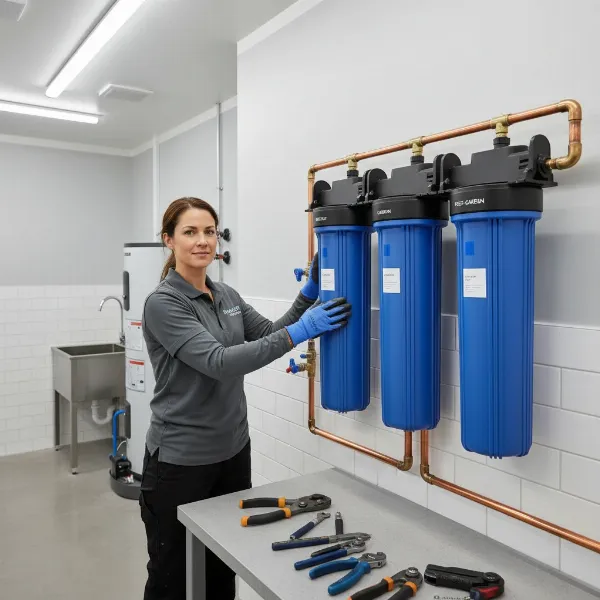 A professional installing a multi-stage whole house water filter system in a utility room, focusing on pipe connections and filter housings
Installation, Usage, and Maintenance Tips for Your Filter System
Proper installation, usage, and maintenance are key to maximizing the effectiveness and lifespan of your whole house iron and manganese filter.
- Professional Installation Recommended: While some cartridge systems boast easy DIY installation, complex oxidation systems or those requiring modifications to your main water line are best installed by a licensed plumber. Correct installation ensures optimal performance and prevents leaks.
- Initial Flushing: After installation, it’s crucial to flush the system according to the manufacturer’s instructions. This removes any media fines or manufacturing residues, ensuring clear water from the start. For systems with iron/manganese filters, flushing typically involves running water for several minutes until it runs clear.
- Regular Filter Replacement (Cartridge Systems): Adhere strictly to the manufacturer’s recommended replacement schedule for cartridges. Iron and manganese reducing filters might need changing every 6-12 months, while carbon filters could last up to 12 months, depending on your water quality and usage. Neglecting replacements can lead to reduced efficiency, decreased flow, and potential damage to the system.
- Backwashing (Oxidation Systems): For backwashing media filters, ensure the control valve is programmed correctly for automatic regeneration cycles. These cycles are vital for cleaning the filter media and flushing accumulated contaminants down the drain. Monitor the system to ensure backwashing occurs as scheduled.
- Pre-filter Protection: If your system includes a sediment pre-filter, regularly inspecting and replacing or cleaning it (if reusable) is important. A clogged sediment filter reduces overall system efficiency and can shorten the life of subsequent, more expensive filters.
- Water Testing: Periodically re-test your water, even after installation, to ensure the filter system continues to perform optimally and to catch any changes in your water quality.
Smart Ways to Save Money with Your Iron and Manganese Water Filter
While an investment, a well-chosen and maintained whole house filter can save you money in the long run.
- Invest in Quality: Opting for a reputable system with durable components and effective filtration technology, even if it has a higher initial cost, can prevent premature failures and costly repairs down the line.
- Regular Maintenance: Diligent adherence to maintenance schedules, especially filter replacements or backwashing, prevents system inefficiency and extends the overall life of your unit. This avoids the need for early replacement of the entire system.
- Protect Your Appliances: By removing iron and manganese, you prevent staining, scale buildup, and corrosion in your water heater, dishwasher, washing machine, and plumbing. This significantly extends the lifespan of these expensive household appliances, saving you on replacement and repair costs.
- Optimal Sizing: Ensure your filter system is correctly sized for your household’s water usage and contaminant levels. An undersized system will be overworked, requiring more frequent maintenance and potentially failing sooner. An oversized system might be an unnecessary expense.
- DIY Where Possible: For cartridge-based systems, learning to perform filter replacements yourself can save on plumber fees. Most cartridge changes are designed to be straightforward for homeowners.
- Consider Total Cost of Ownership: When comparing systems, look beyond the purchase price to the total cost over several years, factoring in replacement filters or media, and water/electricity usage for backwashing. Sometimes, a more expensive initial investment leads to lower long-term costs.
Conclusion
Choosing the best whole house filter for removing iron and manganese is a pivotal step towards enjoying truly clean, clear, and odor-free water throughout your home. By understanding the types of contaminants, the various filtration technologies available, and the crucial factors that influence your choice—from water testing to maintenance—you can make an informed decision that benefits your health, protects your plumbing and appliances, and enhances your daily life. The right system offers a lasting solution to combat unsightly stains, metallic tastes, and sulfurous odors, transforming your water experience.
Ready to take control of your water quality?
Frequently Asked Questions
Is manganese in water harmful to health?
While iron and manganese are often considered aesthetic contaminants due to staining and taste, high levels of manganese, particularly in drinking water, have been linked to neurological effects in infants and children. The EPA sets health advisories for manganese, making its removal important for both aesthetic and health reasons.
How often should I replace iron filter media in an oxidation system?
Unlike cartridge filters, the media in backwashing oxidation systems (like Filox, Birm, or catalytic carbon) generally lasts much longer, often 5-10 years or more. Replacement frequency depends on the specific media, raw water quality, and proper backwashing cycles. Consult your system’s manual for precise recommendations.
Can a water softener remove iron and manganese?
Traditional water softeners are primarily designed to remove hardness minerals (calcium and magnesium). While some can effectively remove low levels of clear (ferrous) iron (typically less than 3-5 ppm), they are generally not effective for higher concentrations of iron, manganese, or iron bacteria. For significant iron and manganese issues, a dedicated iron/manganese filter is necessary, often installed before a water softener.