Are you tired of dealing with dull, brittle hair and dry, itchy skin despite using premium products? The culprit might not be your shampoo or lotion, but the water flowing from your showerhead. Hard water, laden with minerals like calcium and magnesium, and chemicals such as chlorine used in municipal treatment, can wreak havoc on your hair and skin health. Investing in a high-quality shower filter is a simple yet impactful step towards transforming your daily shower into a rejuvenating experience, ensuring softer hair, healthier skin, and a more vibrant you.
The Hidden Impact of Your Shower Water: Why You Need a Shower Filter
Many of us don’t consider the quality of our shower water, yet it’s constantly interacting with our bodies. A shower filter is a specialized device designed to purify your shower water by reducing unwanted contaminants, providing a cleaner, gentler stream.
Hard water, characterized by high concentrations of dissolved minerals like calcium and magnesium, is prevalent in approximately 85% of homes across the United States. When hard water mixes with soap, it creates “soap scum” instead of a rich lather, which then clings to your hair and skin, leaving behind a residue that can lead to dryness, irritation, and a feeling of tightness. For hair, this mineral buildup can cause dullness, frizz, and even breakage over time.
Beyond hardness, chlorine is a common disinfectant in public water supplies, vital for killing bacteria and pathogens. However, this potent chemical is not ideal for your body. Chlorine can strip natural oils from your skin and hair, disrupting the skin barrier and leading to excessive dryness, itching, and conditions like eczema or psoriasis. For colored hair, chlorine can accelerate fading and diminish vibrancy. Other unwelcome guests like chloramines, heavy metals, and sediment can further compound these issues, contributing to scalp irritation, dullness, and a generally less refreshing shower experience. By removing or neutralizing these harsh elements, shower filters offer a transformative experience, contributing to noticeably softer hair, more hydrated skin, and better absorption of your favorite hair and skincare products.
Exploring the World of Shower Filters: Types and Technologies
Choosing a shower filter means understanding the different types available and the technologies they employ to purify your water. Each design and filtration medium targets specific contaminants, allowing you to select the best option for your home’s water quality and your personal needs.
In-Line Shower Filters are among the most popular choices. These filters connect directly between your existing shower arm and your showerhead, making them incredibly versatile as they work with virtually any showerhead you already own. Installation is typically straightforward, often requiring no tools, though they might slightly lower the position of your showerhead.
Filtered Showerheads integrate the filtration system directly into the showerhead unit. This option offers a seamless look and often maintains excellent water pressure. The main trade-off can be a more limited selection of spray patterns compared to traditional showerheads, and they might be a bit pricier upfront.
Handheld Filtered Showerheads combine the benefits of filtration with the convenience of a flexible hose and detachable wand. These are perfect for targeted rinsing, cleaning the shower, or bathing pets, offering all the purification benefits with added maneuverability.
The effectiveness of any shower filter hinges on its filtration media. Modern shower filters often utilize multi-stage filtration systems, combining several technologies to tackle a broad spectrum of contaminants:
- KDF-55 (Kinetic Degradation Fluxion): A high-purity copper-zinc formulation that reduces chlorine and heavy metals like lead and mercury through an electrochemical oxidation-reduction process. It also inhibits the growth of bacteria, fungi, and mold.
- Activated Carbon: Known for its highly porous structure, activated carbon excels at adsorbing chlorine, chloramines, volatile organic compounds (VOCs), and unpleasant odors, significantly improving the aesthetic quality of your water.
- Calcium Sulfite: This powerful agent is particularly effective at reducing chlorine in both hot and cold water, making it a valuable component in multi-stage filters.
- Vitamin C (Ascorbic Acid/Sodium Ascorbate): Increasingly popular, Vitamin C rapidly neutralizes both chlorine and chloramines, which is crucial since chloramines are harder to remove than chlorine alone. It’s often included as a separate cartridge or a layer within multi-stage filters.
- Ceramic Beads/Balls: These can target sediment, dirt, and some bacteria, often enhancing the water’s feel.
- Redox Media: This material works synergistically with KDF to further reduce chlorine, especially in warmer water temperatures.
- Mechanical Filtration: Layers of sand, ultra-fine stainless steel mesh, or micro-porous PP cotton act as physical barriers to capture larger sediments, rust, and limescale, protecting the finer filtration media and extending the filter’s life.
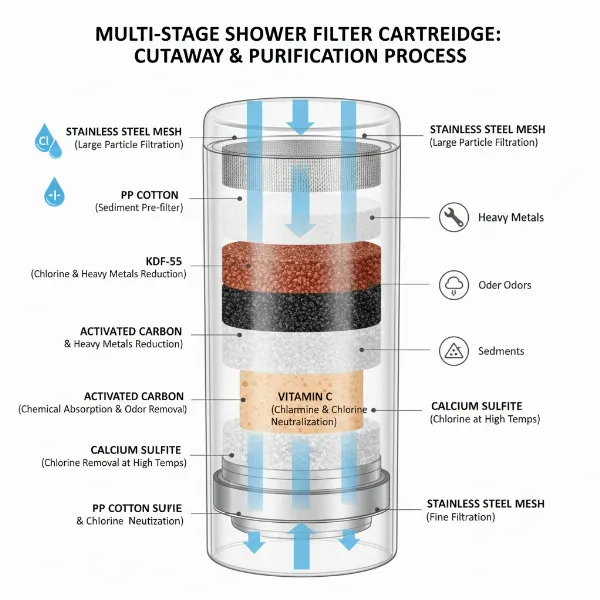 Diagram of a multi-stage shower filter showing various media layers like KDF, carbon, and calcium sulfite
By understanding these components, you can better appreciate how a shower filter comprehensively addresses the various impurities in your water, leading to a healthier and more enjoyable shower.
Choosing Your Perfect Shower Filter: A Comprehensive Buying Guide
Selecting the right shower filter involves more than just picking the first option you see. A thoughtful approach ensures you get a product that truly meets your needs and delivers on its promises.
First, identify your specific water quality issues. Do you have extremely hard water, visible scaling, or a strong chlorine smell? Local water quality reports can provide detailed information about contaminants in your municipal supply. Alternatively, simple home test kits can help you determine your water hardness and chlorine levels. Knowing what you’re up against allows you to choose a filter specifically designed to target those problems.
Next, consider your personal needs and preferences:
- Contaminant Removal: If you’re primarily concerned with hard water, look for filters that explicitly mention hard water reduction or softening, although dedicated water softeners are more effective for overall hardness. For chlorine, KDF and Vitamin C filters are excellent. For a broader range of issues, a multi-stage filter is usually best.
- Flow Rate: A good shower filter should maintain adequate water pressure. Look for products that specify a flow rate of at least 2.0 Gallons Per Minute (GPM) to avoid a disappointing trickle.
- Filter Lifespan & Replacement: How often are you willing to change the filter cartridge? Most filters last between 3 to 6 months, or for a specified number of gallons (e.g., 6,000-12,000 gallons). Factor in the cost and availability of replacement cartridges.
- Ease of Installation: Many in-line filters are designed for tool-free installation with standard ½-inch NPT plumbing connections, taking only minutes. Verify compatibility with your existing shower setup.
- Budget: Shower filters range widely in price, from under $30 to over $150 for the initial unit, plus ongoing costs for replacement cartridges. Balance upfront cost with long-term effectiveness and filter life.
Perhaps the most crucial factor in your decision should be certifications. Look for independent, third-party certifications to verify a filter’s performance claims.
- NSF/ANSI Standard 177: This is the specific certification for shower filters, confirming their ability to reduce free available chlorine.
- NSF/ANSI Standard 42: This certification addresses aesthetic impurities like chlorine, taste, and odor.
- WQA Gold Seal and IAPMO: These are other highly reputable organizations that test and certify water treatment products for material safety and performance.
“Always prioritize shower filters with third-party certifications like NSF/ANSI 177. These certifications offer a crucial layer of trust, ensuring that the filter’s claims about chlorine reduction and material safety have been independently verified, giving you true peace of mind.” – Dr. Elena Petrova, Water Quality Specialist
Avoid brands that only claim “tested” without providing verifiable lab reports, as these often fail to deliver the promised results. A certified filter is an assurance that you’re investing in a product that genuinely works.
Top Shower Filters for Healthier Hair and Skin in 2026
Navigating the market for the best shower filter can be overwhelming, with numerous options promising dramatic results. Based on extensive research, user reviews, and filtration technology, here are some top contenders that consistently deliver on their promise of healthier hair and skin:
- Weddell Duo Shower Filter: Often cited for its exceptional contaminant reduction, the Weddell Duo stands out for its ability to eliminate disinfection byproducts (DBPs) in addition to chlorine. It typically features an NSF certification for chlorine reduction, indicating reliable performance. While its primary strength lies in advanced contaminant removal, its impact on reducing water hardness minerals might be limited compared to dedicated softeners. It’s an excellent choice for those prioritizing comprehensive chemical filtration.
- Jolie Filtered Showerhead: This stylish option has gained significant popularity for its effectiveness in improving skin and hair. Utilizing KDF-55 filtration, it’s third-party tested to reduce chlorine and heavy metals. Users consistently report softer hair and less dry skin, making it a favorite for those seeking aesthetic appeal alongside performance. The Jolie Filtered Showerhead integrates the filter directly into a beautifully designed showerhead.
- Canopy Filtered Showerhead: Recognized as a strong overall performer, the Canopy Filtered Showerhead is praised for its ease of filter replacement and noticeable positive impact on hair and skin. It often comes in both fixed and handheld versions, offering flexibility. Its robust filtration system ensures a consistent supply of cleaner water, and filters are typically designed for a longer lifespan, reducing maintenance frequency.
- AquaBliss Multi-Stage Shower Filters (SF100/SF220): AquaBliss filters, such as the SF100 and SF220, are well-regarded for their multi-stage filtration capabilities, often featuring 10-15 stages. These systems combine various media like KDF, activated carbon, and calcium sulfite to effectively reduce chlorine, sediment, and minerals that contribute to hard water. While many users report significant improvements, it’s worth noting that some of their specific claims may not always be backed by independent third-party lab testing.
- Aqua Earth 15 Stage Shower Water Filter: A great option, particularly for homes with well water or higher levels of specific contaminants. This filter typically incorporates multiple stages, including activated charcoal, to trap a wide array of impurities like lime, copper, rust, chlorine, chloramine, and sediment. It’s designed to provide a comprehensive clean, ensuring that common well water issues are effectively addressed. This filter often requires a separate showerhead.
When making your choice, consider your specific water concerns, budget, and desired level of convenience, knowing that these top-rated options offer a reliable pathway to healthier showering.
Maintaining Your Shower Filter for Optimal Performance
Even the best shower filter requires a little care to ensure it continues to deliver clean, soft water. Proper installation and routine maintenance are key to maximizing its lifespan and effectiveness.
Most in-line shower filters are designed for straightforward, tool-free installation. You simply unscrew your existing showerhead, screw on the filter housing, and then reattach your showerhead to the filter. It’s a quick process that typically takes less than five minutes. Always refer to the manufacturer’s specific instructions, as some models may require plumber’s tape for a secure, leak-free seal.
The most critical maintenance task is regular filter replacement. Over time, the filtration media becomes saturated with contaminants and loses its effectiveness. Most manufacturers recommend changing cartridges every three to six months, or after a certain number of gallons (e.g., 10,000-12,000 gallons). Ignoring this can lead to reduced filtration quality and decreased water pressure. Some filters come with indicators or subscription services to remind you when it’s time for a fresh cartridge.
Beyond cartridge replacement, it’s a good practice to periodically clean your showerhead. Mineral buildup can still occur on the showerhead nozzles, regardless of filtration, potentially reducing water flow. You can easily clean it by soaking the showerhead in a solution of white vinegar and water.
If you notice reduced water pressure after installing a filter, first check if the filter cartridge is overdue for replacement, as a clogged filter is a common culprit. Ensure all connections are tightly sealed to prevent leaks, which can also affect pressure. If issues persist, consult the manufacturer’s troubleshooting guide or customer support. Proper care not only ensures consistent water quality but also extends the life of your filtration system, protecting your investment.
Smart Tips to Maximize Your Shower Filter Investment
Making the most of your shower filter involves a few smart strategies, ensuring you get the best possible results for your hard-earned money and continued well-being.
First and foremost, prioritize certified filters. While many brands make bold claims, independent third-party certifications like NSF/ANSI 177 are your strongest assurance of a product’s efficacy and safety. These certifications mean the filter has been rigorously tested to perform as advertised, specifically in reducing chlorine and other impurities, allowing you to invest with confidence.
Next, understand your local water quality. Getting a detailed report from your municipal water provider or using a home test kit will reveal the specific contaminants and hardness levels in your water. This knowledge empowers you to choose a filter with the right combination of filtration media, precisely targeting the issues most prevalent in your area. For instance, if chloramines are an issue, a filter with Vitamin C is essential, whereas high sediment calls for robust mechanical pre-filtration.
Adhere to regular maintenance schedules—especially filter replacement. While it might seem like an added expense, changing your filter on time prevents it from becoming a breeding ground for bacteria or simply ineffective, ensuring your water remains consistently clean. Neglecting this crucial step not only compromises filtration but can also lead to issues like reduced water pressure.
Finally, consider the bigger picture. While shower filters are excellent point-of-use solutions, if your entire home struggles with severe hard water issues, a whole-house water softening system might be a more comprehensive long-term solution. A shower filter addresses the immediate need for healthier showering, but understanding broader water treatment options can guide future investments in your home’s water quality.
By applying these tips, you’ll not only enjoy the immediate benefits of softer hair and healthier skin but also ensure your shower filter remains a valuable, long-lasting asset in your home.
Conclusion
Embracing the benefits of a shower filter for hard water and hair health is a pivotal step toward elevating your daily self-care routine. By understanding the detrimental effects of hard water minerals and chlorine, and by choosing a filter with verified efficacy and appropriate filtration technologies, you can transform your showering experience. The right shower filter is more than just an accessory; it’s an essential investment in the vitality of your hair, the suppleness of your skin, and your overall well-being. Take the initiative to discover the perfect solution for your home, and prepare to feel the noticeable difference. What changes will you experience once your shower water is finally free from harsh elements?
Frequently Asked Questions
What does a shower filter remove?
A shower filter typically removes a range of contaminants including chlorine, chloramines, sediment, and heavy metals like lead and iron. Many advanced multi-stage filters also reduce hard water minerals such as calcium and magnesium, contributing to softer water and improved hair and skin health.
How often should I change my shower filter?
Most shower filters require cartridge replacement every 3 to 6 months, or after filtering a specific volume of water, commonly between 6,000 to 12,000 gallons. Always refer to the manufacturer’s guidelines, as replacement frequency can vary based on water quality and usage.
Can a shower filter really improve my hair and skin?
Absolutely. By removing harsh chemicals like chlorine and reducing mineral buildup from hard water, shower filters help your hair retain its natural oils and moisture, leading to less dryness, frizz, and breakage. For skin, filtered water can reduce irritation, dryness, and help maintain the skin’s natural barrier, resulting in a softer, healthier feel.
Are shower filters hard to install?
No, most in-line shower filters are designed for quick and easy, tool-free installation. They typically screw directly onto your existing shower arm, and your showerhead then attaches to the filter. The entire process often takes less than five minutes.
Do shower filters reduce water pressure?
High-quality shower filters are engineered to maintain good water pressure. While a slight, imperceptible drop might occur, a significant reduction in flow usually indicates a clogged filter that needs replacement, or a lower-quality unit that restricts water flow excessively.
What certifications should I look for in a shower filter?
Key certifications include NSF/ANSI Standard 177, which specifically certifies shower filters for their ability to reduce free available chlorine. NSF/ANSI Standard 42 is also relevant for aesthetic impurities like chlorine, taste, and odor. Additionally, certifications from the Water Quality Association (WQA) or IAPMO indicate adherence to industry standards for material safety and performance.
Is a shower filter the same as a water softener?
No, a shower filter is not the same as a traditional water softener. While some shower filters can help reduce hard water minerals to a degree, they do not soften water through the ion-exchange process used by dedicated whole-house water softeners. Shower filters primarily focus on removing chlorine, chloramines, and other contaminants, offering a localized solution for shower water quality.