Embarking on a camping or backpacking adventure promises breathtaking views, exhilarating challenges, and a profound connection with nature. Yet, amidst the serenity, a crucial question often arises: “Is this water safe to drink?” Access to clean, safe drinking water is not just a convenience; it’s a lifeline in the backcountry. Without a reliable method to purify water, you risk succumbing to debilitating waterborne illnesses that can quickly turn a dream trip into a nightmare. Portable water filters for camping and backpacking have revolutionized outdoor hydration, transforming murky stream water into potable refreshment and offering peace of mind miles from civilization.
This comprehensive guide is designed to navigate the world of portable water filtration, helping you understand the different technologies available, what contaminants they tackle, and how to choose the perfect filter for your specific outdoor needs. We’ll delve into the nuances of various filter types, compare their performance, and offer practical advice on maintenance and cost-saving tips, ensuring your next adventure is safely and refreshingly hydrated.
The Lifeline of the Wild: What is a Portable Water Filter and Why is it Essential?
At its core, a portable water filter is a device designed to remove harmful contaminants from natural water sources, making them safe for consumption in the wilderness. While often used interchangeably, it’s important to distinguish between a “filter” and a “purifier.” Generally, filters remove larger microorganisms like bacteria and protozoa, along with sediment and microplastics, while purifiers go a step further by eliminating microscopic viruses.
The backcountry, despite its pristine appearance, can harbor a surprising array of invisible threats in its water sources. Common culprits include bacteria such as E. coli, protozoa like Giardia and Cryptosporidium, which can cause severe gastrointestinal distress. In some regions or scenarios, viruses (like norovirus) or chemical pollutants (heavy metals, pesticides, PFAS) can also be present, necessitating more advanced purification methods. Using a portable water filter not only safeguards your health but also significantly reduces the amount of water you need to carry, lightening your pack and extending your range in the wilderness. This simple yet vital piece of gear ensures you stay energized and healthy, fully immersed in the beauty of your surroundings without unnecessary worry.
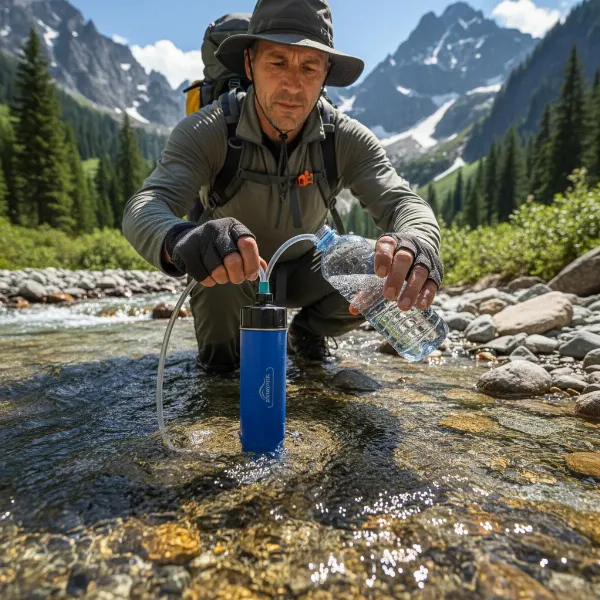 Backpacker uses a portable water filter to get safe drinking water from a clear mountain stream.
Navigating the Options: Popular Types of Portable Water Filters
The market offers a diverse range of portable water filters, each with unique advantages and disadvantages tailored to different outdoor scenarios. Understanding these types is key to selecting the right tool for your adventure.
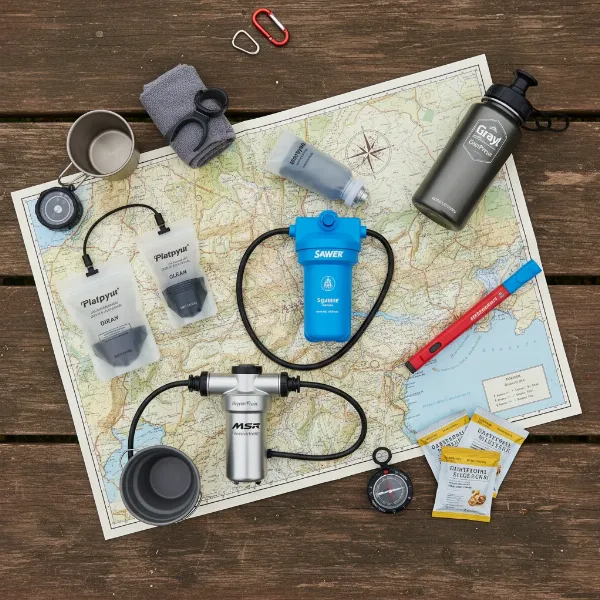 Diverse collection of portable water filters, including squeeze, gravity, pump, and straw models, displayed on a wooden surface.
Squeeze Filters
Squeeze filters are among the most popular choices for backpackers due to their impressive balance of weight, speed, and versatility. Brands like Sawyer Squeeze and Katadyn BeFree dominate this category.
- How they work: These filters typically feature a hollow fiber membrane through which water is forced by squeezing a soft bottle or bag. The tiny pores in the membrane physically block bacteria, protozoa, and microplastics.
- Pros: Extremely lightweight, compact, fast flow rates, often compatible with standard water bottles, and can be used in-line with hydration bladders or directly from a source.
- Cons: Can be tedious for filtering large volumes, prone to clogging in very silty water, and usually do not remove viruses or chemicals (unless specifically designed with additional components, like carbon).
- Ideal for: Solo hikers, day trips, ultralight backpacking, or as a reliable personal filtration system.
|
Our Picks for the Best Water Filter in 2026
As an Amazon Associate I earn from qualifying purchases.
|
||
| Num | Product | Action |
|---|---|---|
| 1 | ZeroWater 32-Cup 5-Stage Water Filter Dispenser with Instant Read Out - 0 TDS for Improved Tap Water Taste - IAPMO Certified to Reduce Lead, Chromium, and PFOA/PFOS |

|
| 2 | GLACIER FRESH Water Filter Compatible with XWFE (Built-in CHIP), Replacement for GE XWFE, XWF Refrigerator Water Filter NSF/ANSI 42 Certification Pack of 1 |
|
| 3 | everydrop by Whirlpool Ice and Water Refrigerator Filter 1, EDR1RXD1, Single-Pack , Purple |
|
| 4 | Brita UltraMax Large Water Dispenser With Standard Filter, BPA-Free, Reduces Copper, Cadmium and Mercury Impurities, Lasts 2 Months or 40 Gallons, Includes 1 Filter, Kitchen Accessories, Large 27-Cup |
|
| 5 | ZeroWater 20-Cup Ready-Pour 5-Stage Water Filter Dispenser with 0 TDS Water Filter – IAPMO Certified to Reduce Lead, Chromium, and PFOA/PFOS |
|
| 6 | Samsung HAF-QIN/EXP Genuine Refrigerator Water Filter, Reduces 99% of Harmful Contaminants for Clean, Clear Drinking Water, 6-Month Life, Easy Install, Pack of 1 |
|
| 7 | everydrop® by Whirlpool Refrigerator Water Filter A - EDRARXD1 (Pack of 1) |
|
| 8 | E-3000UV Whole House Salt-Free Water Softener & Filter Combo with UV |
|
| 9 | FRIGIDAIRE ULTRAWF Pure Source Ultra Water Filter, Original, White, 1 Count |
|
| 10 | Brita Metro Water Filter Pitcher with SmartLight Change Indicator, BPA-Free, Replaces 1,800 Plastic Water Bottles a Year, Lasts Two Months, Includes 1 Filter, Small - 6-Cup Capacity, White |
|
Gravity Filters
For groups or basecamp scenarios where large volumes of water are needed, gravity filters offer an effortless solution. The Platypus GravityWorks and Katadyn Gravity BeFree are excellent examples.
- How they work: Consisting of two bags (one for dirty water, one for clean) connected by a filter, gravity does the work. You fill the “dirty” bag, hang it higher than the “clean” bag, and gravity pulls water through the filter.
- Pros: Requires no pumping or squeezing, processes large volumes quickly, ideal for groups, and allows you to attend to other camp chores while water filters.
- Cons: Can be bulkier and heavier than squeeze filters, requires a suitable anchor point (like a tree branch), and some designs can be challenging to fill from shallow sources.
- Ideal for: Group camping, basecamps, longer expeditions where a steady supply of filtered water is crucial.
Pump Filters
Pump filters are robust and reliable workhorses, particularly valuable when dealing with challenging water sources. The MSR HyperFlow Microfilter and Katadyn Hiker are well-known models.
- How they work: A hose draws water from the source into the filter body, where a manual pump mechanism forces it through a ceramic or hollow fiber element into your clean container.
- Pros: Excellent for very murky or shallow water sources where other methods might struggle to collect water, very durable, and field-maintainable (you can often clean the filter element in the field). Many newer pump purifiers also remove viruses.
- Cons: Generally heavier and bulkier than squeeze or gravity filters, requires manual effort (pumping), and can have multiple parts to manage.
- Ideal for: Expeditions, remote travel, areas with highly turbid water, or as a primary filter for solo or small group use where durability is paramount.
Straw Filters
The simplest and often lightest form of personal filtration, straw filters like the LifeStraw Personal are designed for immediate, on-the-go hydration.
- How they work: You simply place one end of the straw directly into a water source and suck, drawing water through the integrated filter.
- Pros: Ultralight, extremely portable, very fast for individual sips, and requires no setup time.
- Cons: Does not allow for water storage, can be awkward to use in very shallow water, and filters only what you drink directly.
- Ideal for: Emergency kits, ultralight day hikes, trail running, or as a backup filter.
Bottle Filters / Press Filters
Combining a water bottle with an integrated filter, these systems offer an all-in-one solution for personal hydration. The Grayl GeoPress is a prime example of a press-filter bottle.
- How they work: Water is collected in the outer bottle, and an inner chamber containing the filter is pressed down, forcing water through the filter and into the clean inner chamber. Some filter bottles are designed for direct sipping through a filter in the lid.
- Pros: Convenient all-in-one design, often removes viruses, heavy metals, and chemicals (especially press filters), durable, and good for travel.
- Cons: Can be heavier and bulkier than other personal filters, often slower to filter, and cartridge life can be shorter and more expensive. Some are difficult to fill from shallow sources.
- Ideal for: International travel where tap water quality is questionable, day trips, or users who prefer an integrated bottle solution and enhanced purification capabilities.
Chemical Treatment
For the absolute lightest and most compact water treatment solution, chemical tablets or drops are often carried as a primary or backup method. Aquamira drops and Katadyn Micropur tablets are popular choices.
- How they work: Chemicals (usually chlorine dioxide or iodine) are added to water and given a specific contact time to kill bacteria, protozoa, and viruses.
- Pros: Extremely lightweight and packable, inexpensive, effective against viruses, and requires no mechanical parts. Excellent as a backup.
- Cons: Requires a waiting period (often 15 minutes to 4 hours depending on the chemical and contaminant), does not remove sediment or improve taste (and can sometimes add a chemical taste), and not all chemicals are effective against Cryptosporidium.
- Ideal for: Ultralight backpackers, emergency kits, or as a backup to a primary filter.
UV Light Purifiers
Ultraviolet (UV) light purifiers offer a chemical-free way to eliminate microbiological contaminants. The Katadyn Steripen Ultra is a well-known device in this category.
- How they work: A UV light emitter is submerged in clear water and stirred. The UV-C light scrambles the DNA of bacteria, protozoa, and viruses, rendering them unable to reproduce and cause illness.
- Pros: Fast treatment time (often under 2 minutes per liter), no chemicals or taste alteration, effective against viruses, and lightweight.
- Cons: Requires batteries (a potential point of failure), only effective in clear water (sediment can shield microbes), does not remove particulates or chemicals, and can be sensitive to cold temperatures.
- Ideal for: Fast-paced trips where water sources are generally clear, international travel, or as a supplemental purification method.
Choosing Your Wilderness Companion: Factors to Consider When Buying
Selecting the “best” portable water filter isn’t a one-size-fits-all decision; it hinges on your specific needs, the nature of your adventures, and the conditions you expect to encounter.
Your Adventure Style
- Solo vs. Group: For individual hydration, a lightweight squeeze filter, straw, or bottle filter might suffice. For groups or basecamps, a gravity filter or a high-capacity pump filter will be more efficient.
- Trip Duration: For day hikes or short overnights, a simple squeeze or straw filter is ideal. Longer expeditions require more robust, higher-capacity, and easily maintainable systems.
- Pace of Travel: Fast-paced “thru-hikers” often prioritize minimal weight and instant access, leaning towards squeeze or straw filters. Those who take their time at camp might prefer the passive filtration of a gravity system.
Water Source Quality
- Turbidity (Clearness): If you anticipate drawing water from clear mountain springs, most filters will perform well. For murky, silty rivers or stagnant ponds, a pump filter with a pre-filter or a system specifically designed for turbid water (like the MSR Guardian Purifier) will be more effective and less prone to clogging. Chemical and UV treatments are less effective or completely ineffective in turbid water.
- Contaminant Risk: In most developed regions (e.S., North America, Europe), bacteria and protozoa are the primary concerns, making a standard hollow fiber filter sufficient. For international travel or areas with known human waste contamination, a purifier that removes viruses (e.g., Grayl GeoPress, MSR Guardian, chemical tablets, UV purifiers) is highly recommended.
Weight and Packability
Every ounce counts in backpacking. Squeeze filters, straw filters, and chemical treatments are generally the lightest options. Pump filters and press bottles, while effective, add more weight and bulk. Consider how the filter fits into your pack and how much space it occupies. Ultralight enthusiasts often opt for filters that screw onto Smartwater bottles to save on carrying dedicated dirty water bags.
Filtration Speed and Volume
How much water do you need, and how quickly?
- Instant Access: Straw filters offer immediate sips, while squeeze filters and press bottles provide quick liters.
- High Volume: Gravity filters excel at processing several liters passively, making them great for cooking and hydrating multiple people. Pump filters can also handle high volumes but require manual effort.
Ease of Use and Maintenance
- Simplicity: Squeeze filters and bottle filters are often very straightforward. Gravity filters are hands-free once set up. Pump filters require manual effort but offer versatility in water collection.
- Field Maintenance: Filters like the Sawyer Squeeze or MSR Guardian have easy backflushing mechanisms to restore flow. Some ceramic filters can be scrubbed clean. Consider if you’re comfortable performing maintenance in the field or prefer a low-maintenance option. Preventing freezing is also critical for all membrane-based filters; carry them in your sleeping bag in cold weather.
Contaminant Removal
Always check what a filter is certified to remove. Most reputable brands will specify removal of 99.9999% of bacteria and 99.999% of protozoa. If viruses, heavy metals, or chemicals are a concern, look for purifiers or filters with additional activated carbon elements.
Durability and Longevity
Investing in a durable filter means it will withstand the rigors of the trail. Consider the filter’s expected lifespan (often measured in liters) and the availability and cost of replacement cartridges. Some filters, like the Sawyer Squeeze, boast extremely long lifespans, offering excellent long-term value.
Budget
Portable water filters range from inexpensive chemical tablets ($15-20) to high-end purifiers ($100-400+). Factor in not just the initial purchase price but also the cost and frequency of replacing filter cartridges or purification elements.
Top Portable Water Filters for Your Next Outdoor Journey
Based on performance, versatility, and user feedback, here are some of the most highly-regarded portable water filters currently on the market:
Sawyer Squeeze Water Filter
The Sawyer Squeeze is an undisputed champion in the ultralight backpacking community, celebrated for its remarkable flow rate, minimal weight, and incredible longevity. This hollow fiber filter effectively removes 99.99999% of bacteria (like E. coli) and 99.9999% of protozoa (like Giardia and Cryptosporidium). It can be used in various configurations: attached to a soft pouch (often a Cnoc bladder for enhanced ease of use), screwed onto a standard Smartwater bottle, or as an in-line filter for a hydration reservoir. Its ability to backflush easily with a syringe restores flow after use in silty water, making it a highly reliable and economical choice due to its “lifetime guarantee” on the filter element itself.
Katadyn BeFree Water Filter
For those prioritizing speed and minimal fuss, the Katadyn BeFree is a formidable contender. This squeeze filter is known for its exceptionally fast flow rate right out of the box, allowing you to drink directly from its collapsible soft flask or fill other containers quickly. It employs a 0.1-micron EZ-Clean Membrane™ that removes bacteria, cysts, and sediment. The BeFree is incredibly lightweight and compact, making it a favorite for trail runners and ultralight hikers who value fast, on-the-go hydration. Cleaning is simple – just swish the filter in water.
Platypus GravityWorks Water Filter System
When hydrating a group or setting up a comfortable camp, the Platypus GravityWorks is a top-tier gravity filter. Available in various capacities (commonly 4-liter), this system takes the effort out of filtering. Simply fill the “dirty” reservoir, hang it from a tree, and let gravity push the water through its hollow fiber filter into the “clean” reservoir or your hydration bladder. It’s renowned for its fast flow rate and large volume capacity, making it perfect for cooking, cleaning, and drinking for multiple people. While heavier than personal squeeze filters, its hands-free operation makes it invaluable at basecamp.
Grayl GeoPress Water Filter and Purifier Bottle
The Grayl GeoPress is an all-in-one press-filter bottle designed for adventurers who demand comprehensive protection, including against viruses, heavy metals, and chemicals. Its innovative “French press” design makes purification surprisingly quick and easy: fill, press, and drink. While it’s heavier and more expensive than many filters, its ability to tackle virtually all waterborne threats, including international tap water, offers unparalleled peace of mind. It’s particularly suited for travel where water sources are highly suspect or for front-country use where convenience and robust purification are key.
LifeStraw Peak Series Personal Water Filter Straw
The original LifeStraw became iconic for its simplicity, and the Peak Series continues this legacy with improved durability and versatility. This ultralight straw filter allows you to drink directly from streams, lakes, or water bottles, removing bacteria, protozoa, and microplastics. It’s an excellent choice for solo adventurers, emergency kits, or as a lightweight backup. Its compact size and instant filtration make it a go-to for situations where you need water immediately without carrying extra gear.
Keeping Your Flow: Usage and Maintenance Tips for Portable Water Filters
To ensure your portable water filter performs optimally and lasts for many adventures, proper usage and diligent maintenance are crucial. Neglecting these steps can lead to reduced flow rates, premature clogging, and even failure.
- Collect Wisely: Always try to collect water from the clearest source available. Avoid stagnant water, areas downstream from livestock, or highly turbid (muddy) sections if possible. A pre-filter (like a bandana or mesh bag) can remove larger particulates before they reach your filter, extending its life.
- Backflush or Clean Regularly: This is the most important maintenance step for many filters.
- Squeeze Filters (Sawyer Squeeze, Platypus QuickDraw): Use the included syringe to force clean water backward through the filter, dislodging trapped particles. Do this after every few liters or when the flow rate noticeably decreases.
- Katadyn BeFree: Swish the filter vigorously in clean water to clear out debris.
- Pump Filters (MSR, Katadyn): Follow manufacturer instructions for field cleaning. Ceramic elements can often be scrubbed. Some advanced pump purifiers, like the MSR Guardian, have self-cleaning mechanisms.
- Prevent Freezing: The hollow fibers in most filters can be permanently damaged if water inside them freezes. Always keep your filter in a warm place, such as inside your jacket or sleeping bag, especially in freezing temperatures. If you suspect it has frozen, it’s safer to replace it, as its integrity might be compromised.
- Proper Storage: After your trip, thoroughly clean and backflush your filter according to manufacturer instructions. Allow it to air dry completely before storing it in a cool, dry place. This prevents mold and bacterial growth. Some manufacturers recommend specific storage solutions (e.g., a mild bleach solution) for long-term storage.
- Know When to Replace: Pay attention to the manufacturer’s stated lifespan in liters. While some filters (like the Sawyer Squeeze) boast incredibly long lifespans, others have shorter limits. If your filter’s flow rate remains consistently low even after cleaning, or if you notice any damage (cracks, leaks), it’s time for a replacement. Don’t risk your health with a compromised filter.
Smart Hydration: Tips for Saving Money When Using a Portable Water Filter
Investing in a quality portable water filter is a wise decision for any outdoor enthusiast, but there are ways to maximize your investment and keep long-term costs down.
- Choose Filters with High Lifespans: Filters like the Sawyer Squeeze offer a “lifetime guarantee” and claim to filter hundreds of thousands of liters, making their initial cost a minuscule per-liter expense over time. While replacement bags may be needed, the filter itself often lasts exceptionally long.
- Practice Diligent Maintenance: Regular backflushing and proper cleaning, as detailed above, are critical. A well-maintained filter will retain its flow rate and last longer, delaying the need for replacements. Neglecting cleaning is the fastest way to kill a filter prematurely.
- Utilize Compatible Bottles/Bags: Many squeeze filters are designed to screw onto standard soda or Smartwater bottles. These are readily available, inexpensive, and can serve as your dirty water collection bags or clean water storage, saving you money on proprietary bladders.
- Protect from Freezing: As mentioned, freezing can permanently damage filters. Always keep your filter warm in cold conditions to avoid costly replacements.
- Consider Chemical Treatment as a Backup: Instead of buying a second, expensive mechanical filter as a backup, carry lightweight and inexpensive chemical tablets or drops. They provide emergency purification for minimal cost and weight.
- Buy Replacement Parts (if applicable): Some filters allow you to replace just the filter cartridge or membrane, rather than the entire unit. This can be more cost-effective than buying a whole new system.
Conclusion
The pursuit of adventure in the great outdoors is an enriching experience, but it requires diligent preparation, especially when it comes to clean water. Choosing the best portable water filter for camping and backpacking is a crucial decision that directly impacts your safety and enjoyment. Whether you prioritize ultralight efficiency with a squeeze filter, hands-free convenience with a gravity system, robust performance with a pump, or comprehensive purification with a press bottle or chemical treatment, there’s a perfect solution waiting for you.
By understanding the types of filters, their capabilities against various contaminants, and the factors unique to your outdoor pursuits, you can make an informed choice that ensures safe and refreshing hydration. Remember, investing in a reliable filter and practicing good maintenance habits are investments in countless memorable adventures. Don’t let uncertainty about water quality hold you back from exploring the wild. Stay hydrated, stay safe, and enjoy every drop of your journey!
Frequently Asked Questions
What is the difference between a water filter and a water purifier for backpacking?
A Water Filter typically removes bacteria, protozoa, and sediment, while a water purifier also eliminates viruses, which are smaller. Filters are usually sufficient for water in North America, but purifiers are recommended for international travel or areas with higher viral risks.
How do I know if my portable water filter is still working effectively?
A noticeable decrease in flow rate, even after proper backflushing or cleaning, is a primary indicator that your filter may be clogging or reaching the end of its lifespan. Some filters also have visual indicators, or you can track liters filtered.
Can I use a portable water filter in freezing temperatures?
Most membrane-based filters can be permanently damaged by freezing, as ice crystals can rupture the delicate filter pores. It’s crucial to keep your filter from freezing by storing it close to your body or in your sleeping bag when temperatures drop.
Do portable water filters remove chemicals, heavy metals, or microplastics?
Most basic portable filters (e.g., hollow fiber) remove microplastics, bacteria, and protozoa. To remove chemicals and heavy metals, you typically need a filter with an activated carbon component, such as some press-filter bottles like the Grayl GeoPress.
How often should I replace my portable water filter?
The replacement frequency depends on the filter’s rated lifespan (specified in liters by the manufacturer), the quality of the water you’re filtering, and your maintenance habits. Even if a filter has a very long stated lifespan, if its performance degrades significantly, it’s time for a replacement.
Can I drink directly from any water source with a straw filter?
While straw filters allow direct drinking, it’s always best to choose the clearest, most flowing water source available. Avoid stagnant water or areas with obvious contamination to reduce the risk of overwhelming the filter or encountering contaminants it’s not designed to remove.
Is it necessary to carry a backup water treatment method?
Yes, it is highly recommended to carry a backup water treatment method, such as chemical purification tablets. Filters can clog, break, or freeze, and having a backup ensures you won’t be without safe drinking water in an emergency.