Ever stare at a glass of tap water and wonder what’s really floating around in there? It looks clear, sure, but we’ve all heard stories. It’s a thought that crosses my mind often. As a team dedicated to demystifying water quality, we know that the key to true peace of mind lies in understanding the tools that protect you. One of the most critical, yet often misunderstood, concepts is a what is a water filter’s micron rating. Getting this right is the difference between a filter that looks like it’s working and one that is genuinely safeguarding your family’s health.
Did you know that many of the most harmful contaminants are completely invisible to the naked eye? That’s where the science of filtration comes in, and the micron rating is your secret weapon. Let’s dive in and make this simple.
First Off, What in the World Is a Micron?
Before we can talk ratings, we need to get a handle on the measurement itself. Don’t worry, there’s no complex math here.
A micron, short for micrometer, is a unit of measurement. A ridiculously small one. To put it into perspective:
- One micron is one-millionth of a meter.
- A single human hair is about 50-70 microns thick.
- The smallest thing the human eye can see is around 40 microns.
- A particle of dust or pollen might be 10 microns.
So, when we talk about filtering things out of your water, we’re dealing with particles that are microscopic. Think of it like a window screen. A standard screen keeps out flies and mosquitoes, but it won’t stop dust or pollen. To stop those smaller particles, you’d need a screen with much, much smaller holes. A water filter works on the same principle.
So, What Is a Water Filter’s Micron Rating?
A water filter’s micron rating simply tells you the size of the holes, or pores, in the filter media. It indicates the size of the smallest particle that the filter can capture. The lower the micron rating, the smaller the pores, and the finer the filtration.
For example, a 10-micron filter will let any particle smaller than 10 microns pass right through. A 1-micron filter, on the other hand, will trap those particles, providing a higher level of water purification. It’s a direct measure of the filter’s physical ability to act as a barrier.
Absolute vs. Nominal: The Nitty-Gritty Detail That Matters
Here’s where things get a little more technical, but it’s a crucial distinction. You’ll see filters advertised with either an “absolute” or a “nominal” micron rating.
- Absolute Micron Rating: This is the gold standard. An absolute 1-micron filter is certified to remove at least 99.9% of particles that are 1 micron or larger. It’s a guarantee. When you’re dealing with health-related contaminants like cysts, this is what you want to see.
- Nominal Micron Rating: This is more of an average. A nominal 1-micron filter might remove 85% of particles that are 1-micron in size. It will stop most particles of that size, but it’s not a guarantee. These are often fine for removing larger sediment but are less reliable for microscopic pathogens.
As our go-to water quality expert, Dr. Eleanor Vance, often says, “Consumers often focus on removing chlorine taste, but the real health threats are microscopic pathogens like Giardia and Cryptosporidium. A filter’s absolute micron rating is your first and most important line of defense against these invisible invaders.”
Why a Micron Rating Is Your Best Friend: Common Contaminants
Understanding the size of what you want to remove is key to choosing the right filter. Here’s a quick cheat sheet to see why a what is a water filter’s micron rating is so important.
| Contaminant | Typical Size (in Microns) | Filter Rating Needed to Remove |
|---|---|---|
| Sand, Silt, Sediment | 25+ microns | 5 – 25 microns |
| Human Red Blood Cell | 7-8 microns | 5 microns or less |
| Giardia, Cryptosporidium Cysts | 1-10 microns | Absolute 1 micron or less |
| Most Bacteria (E. coli, Salmonella) | 0.2-2 microns | 0.5 microns or less |
| Viruses (Hepatitis A, Norovirus) | 0.004-0.1 microns | Not reliably removed by mechanical filtration alone. Requires reverse osmosis or UV purification. |
As you can see, a simple 20-micron sediment filter is great for keeping sand out of your plumbing but does absolutely nothing to protect you from protozoan cysts like Giardia, which can cause serious gastrointestinal illness. For that, you need a filter rated at an absolute 1-micron or less, as recommended by the EPA.
How to Choose the Right Micron Rating for Your Home
So, what’s the magic number for you? It depends entirely on your water source and your primary concerns.
- Start with Your Water Source: The first step is to understand what’s in your water. If you’re on city water, you can often get a copy of the annual Consumer Confidence Report (CCR) from your local utility. For well water, it’s essential to get it tested professionally. You can’t filter what you don’t know is there.
- Define Your Goal: What are you trying to achieve?
- For basic sediment removal (city or well water): If your main issue is cloudy water, sand, or rust particles clogging your faucets, a filter with a 5-micron to 25-micron rating is typically sufficient. This is common for a whole-house pre-filter.
- For general-purpose drinking water (city water): Most city water is biologically safe. A 1 to 5-micron filter, often found in refrigerator or faucet filters, will improve taste and clarity by removing sediment and some larger particles. An activated carbon block filter is often combined here to remove chlorine and chemical contaminants.
- For protection against cysts (city or well water): If you are concerned about Giardia or Cryptosporidium (which can be resistant to chlorine), you must choose a filter with an absolute rating of 1 micron or smaller. Look for products with NSF/ANSI 53 certification for cyst reduction.
- For protection against bacteria (well water or boil alerts): To remove bacteria, you need to step up your game to a filter rated at 0.5 microns or less. These are often called “purifiers.”
Does a Smaller Micron Rating Always Mean Better?
Not necessarily. While a sub-micron filter offers more protection, there’s a trade-off. The smaller the pores, the more they restrict water flow. This can lead to a noticeable drop in your water pressure.
Furthermore, a super-fine filter will clog up much faster if you have a lot of sediment in your water. A smart strategy, especially for whole-house filtration systems, is to use a multi-stage approach:
- A 20-micron pre-filter to catch the big stuff (sand, rust).
- A 5-micron secondary filter to catch finer silt.
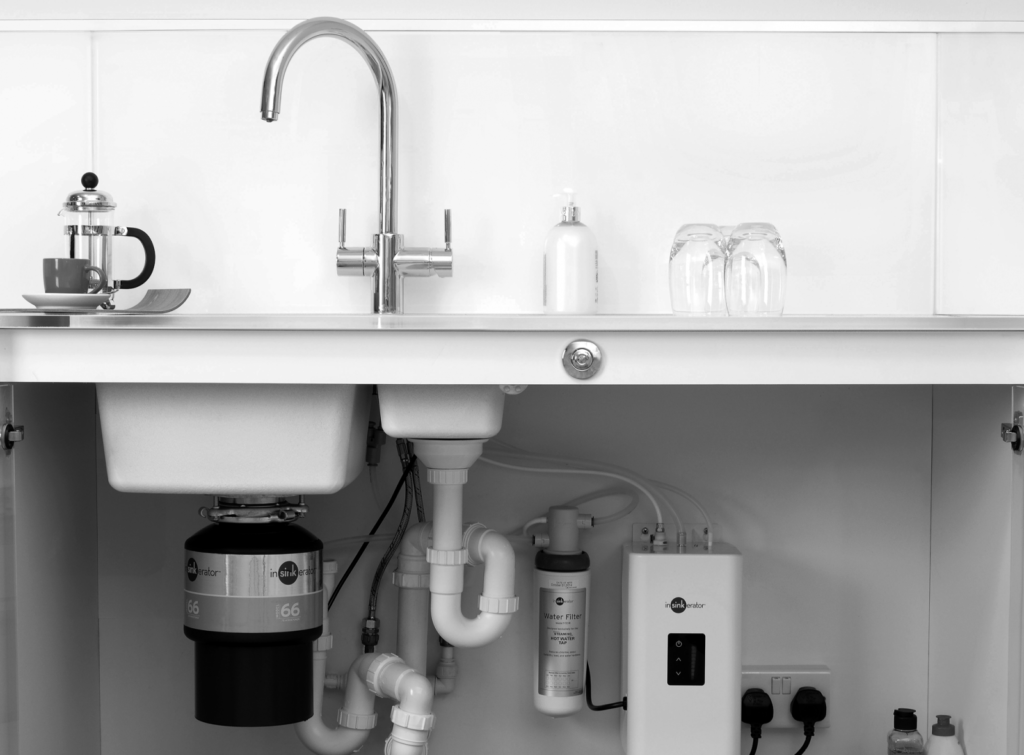
- A 1-micron or 0.5-micron carbon block filter at the point of use (like under your kitchen sink) for the final polish and protection.
This protects your finer, more expensive filters from clogging prematurely and keeps your water pressure strong.
Beyond the Micron Rating: A Holistic Approach
A what is a water filter’s micron rating is a critical piece of the puzzle, but it’s not the whole story. Mechanical filtration (which is what micron ratings measure) only removes physical particles. It doesn’t remove dissolved contaminants like:
- Chlorine
- Lead
- Pesticides
- Herbicides
- Viruses
- PFAS (Forever Chemicals)
For these, you need other technologies like activated carbon, reverse osmosis (RO), or UV purification. The best water filter for your home is often a system that combines several of these methods to provide comprehensive protection.
Frequently Asked Questions (FAQ)
1. What micron rating do I need to remove bacteria?
To be confident you’re removing bacteria like E. coli, you should look for a water filter with an absolute rating of 0.5 microns or less. These are often labeled as water purifiers.
2. Can a 1-micron filter remove viruses?
No. Viruses are incredibly small, typically ranging from 0.004 to 0.1 microns. A 1-micron filter is not effective against them. Virus removal requires technologies like reverse osmosis or ultraviolet (UV) sterilization.
3. Will a smaller micron rating affect my water pressure?
Yes, it’s very likely. The smaller the pores in a filter, the more it restricts water flow, which can lead to a drop in pressure. This is why multi-stage filtration is often recommended for whole-house systems.
4. How often should I change my water filter?
This depends on the filter type, its micron rating, and your water quality. A 5-micron sediment filter in a home with well water might need changing every 1-3 months, while a 1-micron under-sink filter on clean city water could last 6-12 months. Always follow the manufacturer’s recommendations.
5. What is NSF/ANSI 53 certification?
This is a certification from the National Sanitation Foundation that verifies a filter can remove specific health-related contaminants, such as lead, cysts (Giardia), and volatile organic compounds (VOCs). If a filter claims to remove these, make sure it’s certified to NSF/ANSI 53.
Your Health is Worth the Knowledge
Understanding what is a water filter’s micron rating moves you from being a passive consumer to an empowered guardian of your family’s health. It’s not about finding the smallest number; it’s about finding the right number for your specific water quality needs. By matching the filter to the contaminant, you can build a system that delivers truly clean, safe, and great-tasting water every single day. The next time you pour a glass of water, you won’t have to wonder what’s in it—you’ll know it’s just pure, refreshing water.