Let’s be real for a moment. You turn on the tap, fill a glass, and drink. You probably do it every single day without a second thought. But have you ever wondered what else might be in that water? It’s an unsettling question, isn’t it? As your go-to source for all things water filtration, we’re diving deep into a popular solution with this Aquasana Reverse Osmosis Review to see if it’s the answer to your water worries. We’re here to cut through the jargon and give you the straightforward, honest truth about what this system can do for your home and your health.
Did you know that even municipal water that meets legal standards can still contain contaminants you’d rather not drink? Things like lead from old pipes, chlorine used for disinfection, and even emerging contaminants like PFAS are a growing concern. That’s where a powerful filtration system becomes less of a luxury and more of a necessity.
Why Your Tap Water Isn’t as Clean as You Think
Before we get into the specifics of any one system, it’s crucial to understand the “why.” Your local water treatment facility does a great job of making water safe on a large scale, primarily by killing off bacteria and viruses with disinfectants like chlorine. However, that’s not the end of the story.
Here’s a quick rundown of what could still be coming out of your faucet:
- Disinfection Byproducts (DBPs): These are compounds formed when chlorine reacts with organic matter in the water. Some have been linked to health concerns.
- Heavy Metals: Lead and mercury can leach into the water from old plumbing infrastructure. Even low levels of lead are considered unsafe, especially for children.
- Pesticides and Herbicides: Runoff from agricultural areas can introduce these chemicals into the water supply.
- Pharmaceuticals and Personal Care Products: Trace amounts of medications and other chemicals are increasingly being detected in water sources.
- PFAS (Per- and Polyfluoroalkyl Substances): Often called “forever chemicals,” these are persistent industrial compounds that are incredibly difficult to remove and are linked to a host of health issues.
This isn’t meant to scare you, but to empower you. Knowing what you’re up against is the first step in choosing the right defense.
“The biggest challenge with modern tap water isn’t what you can see, taste, or smell; it’s the invisible contaminants. Things like PFAS and trace pharmaceuticals are insidious, and standard pitcher filters often can’t touch them. This is where advanced purification technologies like reverse osmosis become essential for true peace of mind.”
— Dr. Eleanor Vance, Environmental Scientist
How Does Reverse Osmosis Actually Work?
You’ve heard the term “reverse osmosis,” but what does it mean? Imagine a bouncer at a super exclusive club. This bouncer is the reverse osmosis membrane, and it has a very strict guest list. Water molecules are small enough to get in, but larger molecules—like salts, fluoride, lead, and arsenic—get turned away at the door.
In technical terms, water pressure is used to force tap water through a semipermeable membrane. This membrane has microscopic pores that are so tiny, they block almost everything that isn’t pure H₂O. It’s one of the most effective methods of water purification available to consumers, capable of removing an incredibly broad spectrum of contaminants.
Bảng trống.An In-Depth Aquasana Reverse Osmosis Review
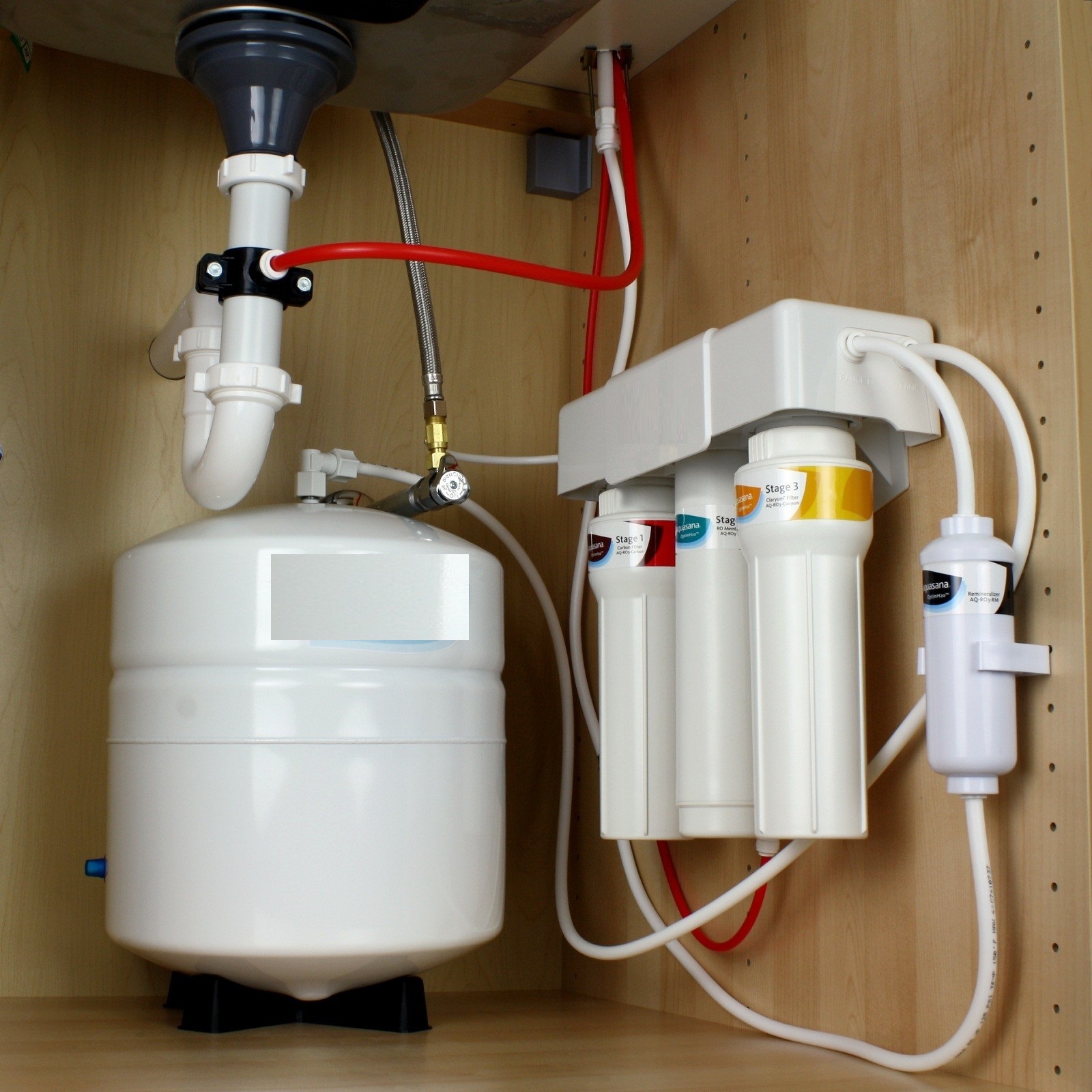
Now, let’s get to the main event. Aquasana is a well-known name in the water filtration world, but how does their reverse osmosis system, specifically the OptimH2O® Reverse Osmosis + Claryum®, stack up? I’ve installed my fair share of under-sink systems, and I was eager to see what makes this one tick.
What Makes the Aquasana System Stand Out?
The first thing you’ll notice is that this isn’t just a reverse osmosis (RO) system. It’s a multi-stage hybrid. This is a huge plus. While RO is fantastic at removing dissolved solids, it’s not the best at catching things like chlorine or pesticides. Aquasana’s approach combines the best of both worlds.
Here’s the breakdown of its filtration stages:
- Activated Carbon Filter: This is the first line of defense. It tackles organic chemicals like pesticides, herbicides, and VOCs. It also drastically improves the taste and smell of your water by removing chlorine and chloramines.
- Reverse Osmosis Membrane: This is the powerhouse stage that removes up to 99% of 90 different contaminants, including fluoride, lead, arsenic, nitrates, and those nasty “forever chemicals,” PFAS.
- Claryum® Filter: This is Aquasana’s proprietary technology. It acts as a final polishing filter to catch anything the first two stages might have missed.
- Remineralizer: This is the game-changer. One of the common criticisms of RO water is that it’s so pure, it’s also stripped of beneficial minerals like calcium, magnesium, and potassium, which can make it taste flat or acidic. Aquasana’s system reintroduces these healthy minerals back into the water post-filtration, improving the taste and pH balance.
Performance: What Contaminants Does It Actually Remove?
Talk is cheap, so let’s look at the data. The Aquasana OptimH2O® is NSF/ANSI certified to standards 42, 53, 58, and 401. What does that even mean? It means an independent third party has rigorously tested it and verified its claims.
It’s certified to reduce or remove:
- 99% of Lead and Asbestos
- 97% of Chlorine and Chloramines
- 95% of Fluoride and Mercury
- 99% of PFAS/PFOA/PFOS
- Dozens of other contaminants including pesticides, pharmaceuticals, and nitrates.
This level of performance puts it in the top tier of residential under-sink water filters. Completing a full Aquasana reverse osmosis review means confirming that it does what it says on the box, and the certifications back it up.
The User Experience: Installation and Maintenance
Let’s be honest, no one wants a system that requires a PhD to install. The Aquasana system is designed for a reasonably handy DIYer. The instructions are clear, and all the parts are color-coded, which is a thoughtful touch. You’ll need some basic tools and a free afternoon, but it’s a manageable project.
Maintenance is where this system really shines. The filter cartridges are designed for easy, twist-off replacement. You don’t need any special tools, and you won’t have to shut off your water supply to do it. The system even has an indicator light on the faucet that tells you when it’s time to change the filters.
The Taste Test: How Does the Water Actually Taste?
This is subjective, but critical. Thanks to the remineralization stage, the water from the Aquasana system tastes fantastic. It’s crisp, clean, and refreshing, without the “flatness” that can come from standard RO systems. It’s like drinking premium bottled spring water, right from your own tap. Coffees and teas taste richer, and foods cooked with it are more flavorful.
Who is the Aquasana Reverse Osmosis System For?
So, after this thorough review, who is the ideal customer for this system?
- Health-Conscious Individuals and Families: If you are actively trying to reduce your family’s exposure to chemicals and contaminants, this system offers one of the most comprehensive filtration solutions available.
- People on Well Water: Well water can have high levels of dissolved solids, nitrates, or even arsenic. An RO system is often the best and only way to make it safe to drink.
- Anyone with Known Water Quality Issues: If your local water report shows high levels of fluoride, lead, or other specific contaminants, this system provides a targeted and highly effective solution.
- Those Who Value Taste: If you’re tired of the taste of chlorine or simply want the best-tasting water possible, the combination of advanced filtration and remineralization is hard to beat.
Comparison of Popular Water Filtration Technologies
To help you see where the Aquasana RO system fits in, here’s a quick comparison table:
| Feature | Activated Carbon (e.g., Pitcher) | Reverse Osmosis (RO) | UV Purifier |
|---|---|---|---|
| Primary Target | Chlorine, Taste, Odor, some VOCs | Dissolved solids, heavy metals, fluoride, salts | Bacteria, viruses, microorganisms |
| Removes Lead? | Some models are certified | Yes, highly effective | No |
| Removes Fluoride? | No | Yes, highly effective | No |
| Removes Bacteria? | No | Yes (most) | Yes, highly effective |
| Wastes Water? | No | Yes (produces brine waste) | No |
| Improves Taste? | Yes | Yes (especially with remineralization) | No, it’s for safety |
How Often Do You Change Aquasana Filters?
You should change the Claryum® and Carbon filters every 6 months. The Reverse Osmosis membrane itself only needs to be replaced every 12 months, and the remineralizer should be changed annually as well. The system’s indicator light will remind you, taking the guesswork out of it.
The Final Verdict
So, what’s the bottom line on this Aquasana reverse osmosis review? The Aquasana OptimH2O® is a top-tier water purification system that delivers on its promises. It combines the raw power of reverse osmosis with the targeted filtration of activated carbon and Claryum®, and then cleverly solves the primary drawback of RO by adding essential minerals back in.
It’s an investment, to be sure. But when you consider the cost of bottled water, both to your wallet and the environment, and the invaluable peace of mind that comes from knowing your family’s drinking water is truly pure, it’s an investment that pays for itself. If you’re serious about your water quality, this system is one of the best you can buy.
Frequently Asked Questions (FAQ)
Q1: Does the Aquasana reverse osmosis system remove fluoride?
A1: Yes, it is one of the most effective methods for removing fluoride from drinking water. The system is NSF certified to remove over 95% of fluoride, providing a reliable solution for those who wish to avoid it.
Q2: How much water does the Aquasana RO system waste?
A2: Like all reverse osmosis systems, it produces brine (waste water) during the purification process. Aquasana has engineered its system to be highly efficient, with a ratio of about 1:1, meaning for every gallon of purified water produced, about one gallon is sent to the drain. This is significantly better than older, less efficient models.
Q3: Can I install the Aquasana OptimH2O® myself?
A3: Absolutely. The system is designed with DIY installation in mind. It comes with a detailed manual, color-coded tubing, and a faucet. Most people with basic plumbing skills can complete the installation in a couple of hours.
Q4: Is the ongoing cost of filter replacement expensive?
A4: The ongoing cost is a crucial factor. While there is a recurring expense for replacement filters, it typically breaks down to less than 10 cents per gallon of purified water. When compared to the high cost and environmental impact of bottled water, it is very economical over the long term.
Q5: How does this system compare to a Berkey filter?
A5: They are very different technologies. A Berkey is a gravity-fed filter that primarily uses carbon and is excellent for removing bacteria and chlorine. An Aquasana RO system is a plumbed-in, pressure-driven system that excels at removing a much wider range of dissolved solids, including fluoride, arsenic, and nitrates, which a Berkey cannot remove. The choice depends on the specific contaminants you need to target.