Let’s have a little chat about the water that comes out of your tap. You turn it on every day to drink, cook, and make your morning coffee. But have you ever paused and wondered what’s really in it? The truth is, even if your water is officially “safe” to drink, it can still carry unwanted passengers like chlorine, lead from old pipes, or other contaminants. That’s where the search for the Best Countertop Water Filter begins—a simple, powerful step toward taking control of your family’s health and wellness.
Did you know that the taste and smell of your water are often direct clues about its contents? That slight swimming pool scent is chlorine, used for disinfection. While it kills germs, you probably don’t want it in your teacup. This guide is your friendly co-pilot, here to navigate the often-confusing world of water purification and help you land on the perfect solution for your kitchen.
Why Your Tap Water Needs a Second Look
“But my water comes from the city, isn’t it clean?” It’s a fair question, and one I hear all the time. Municipal water treatment facilities do a remarkable job, adhering to standards set by agencies like the Environmental Protection Agency (EPA). However, the journey from the treatment plant to your faucet is a long one.
Along the way, water can pick up a host of unwelcome guests:
- Chlorine and Chloramine: These are disinfectants. They’re essential for killing bacteria, but they can leave behind an unpleasant taste and odor and create disinfection byproducts.
- Heavy Metals: Lead and copper can leach from aging pipes and plumbing fixtures. The EPA has a zero-tolerance goal for lead in drinking water because of its severe health risks, especially for children.
- Emerging Contaminants: These are the new kids on the block that we’re learning more about every day. Think PFAS (so-called “forever chemicals”), pharmaceuticals, and microplastics.
- Sediment and Turbidity: Silt, sand, and rust particles can make your water cloudy and affect its taste.
Choosing to filter your water isn’t about being paranoid; it’s about being proactive. It’s about adding that final, crucial layer of defense right at the point of use.
How Do Countertop Water Filters Actually Work?
It’s not magic, it’s science—but I promise to make it simple. Think of a water filter as a bouncer at a club, deciding who gets in and who gets turned away. Different types of filters use different “bouncers” or methods to purify your water.
Activated Carbon: The Contaminant Magnet
This is the most common technology you’ll find, and for good reason. Imagine a tiny, ultra-porous sponge. As water passes through, the activated carbon’s massive surface area uses a process called adsorption to grab onto and trap contaminants like chlorine, pesticides, and volatile organic compounds (VOCs). It’s fantastic for improving taste and odor.
Reverse Osmosis (RO): The Ultimate Gatekeeper
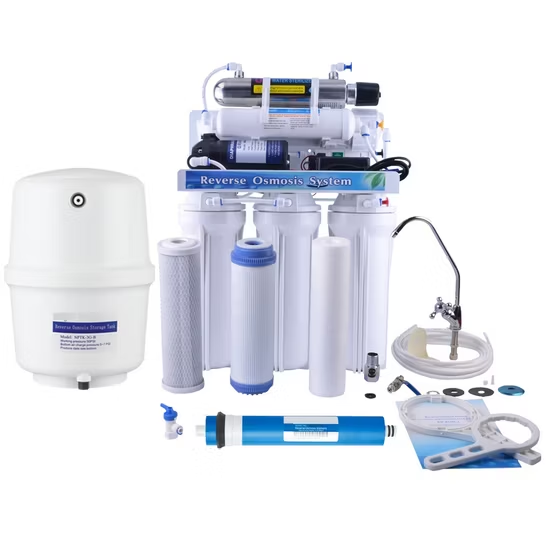
If activated carbon is a bouncer, Reverse Osmosis is a high-security checkpoint. This system uses pressure to force water through a semi-permeable membrane—a screen so fine that only tiny water molecules can get through. It’s incredibly effective at removing a huge range of contaminants, including heavy metals like lead, dissolved salts, and even some viruses. Most of the best countertop water filter systems in the premium category use this technology.
Ion Exchange and Other Specialized Media
Some filters include special resins that target specific contaminants. For example, ion exchange is great for softening hard water by swapping out calcium and magnesium ions. Other media can be specifically designed to target things like fluoride or arsenic.
Bảng trống.What Are My Options? A Breakdown of Countertop Models
The term “countertop” covers a few different styles, each with its own pros and cons. Let’s break them down so you can see which one might be the right fit for your lifestyle.
Water Filter Pitchers & Dispensers
These are the simplest entry point into filtered water. You fill them up from the tap, and gravity does the work, pulling water through a filter cartridge into the reservoir below.
- Best for: Singles, couples, renters, and anyone on a tight budget.
- Pros: Inexpensive, portable, requires no installation.
- Cons: Small capacity, slower filtering speed, filters need frequent replacement.
Faucet-Mounted Filters
These little gadgets screw directly onto your faucet. With the flip of a switch, you can choose between filtered and unfiltered water, giving you purified water on demand for drinking and cooking.
- Best for: Those who want on-demand convenience without a complicated setup.
- Pros: Easy to install, space-saving, relatively affordable.
- Cons: Can slow water flow, may not fit all faucet types, filters require regular changes.
Freestanding Countertop Filters
This is the category where you’ll find the real powerhouses. These units sit on your counter and connect directly to your faucet via a small hose, or they are gravity-fed systems that you fill manually.
- Best for: Families, health enthusiasts, and anyone serious about removing the widest possible range of contaminants.
- Pros: Superior filtration (often multi-stage or RO), larger capacity, long-lasting filters.
- Cons: Takes up counter space, higher initial investment.
“We’re increasingly finding that the most significant long-term health risks in drinking water come from contaminants we can’t see, taste, or smell, like PFAS and microplastics. A high-quality, certified countertop filter isn’t a luxury anymore; it’s a fundamental tool for modern wellness.”
— Dr. Eleanor Vance, Environmental Scientist
How to Choose the Best Countertop Water Filter For You
Okay, you’re convinced. But with so many options, how do you pick the one? Don’t sweat it. Just follow these simple steps.
- Figure Out What’s In Your Water. This is the most important step! You can’t fight an enemy you don’t know. Check your local water utility’s annual “Consumer Confidence Report” (CCR). It’s a public document that lists the contaminants detected in your water supply.
- Identify Your Main Goal. Are you just trying to get rid of that chlorine taste? Or are you concerned about lead, fluoride, or PFAS? Your answer will determine the type of filtration technology you need. An activated carbon filter is great for taste, but you’ll need something more robust like a reverse osmosis system for heavy metals.
- Consider Your Lifestyle and Space. How much water does your family drink? How much counter space can you spare? If you’re a family of five, a small pitcher probably won’t cut it. If you live in a tiny apartment, a large RO unit might be too bulky.
- Budget for the Long Haul. Think beyond the initial price tag. Look at the cost and lifespan of the replacement filters. Sometimes, a more expensive unit with long-lasting filters is actually cheaper in the long run than a cheap unit that needs new filters every month.
- Look for the Seal of Approval. This is non-negotiable. Only consider filters that are independently certified by the NSF (National Sanitation Foundation) or ANSI (American National Standards Institute). These certifications guarantee that the filter does what it claims to do. For example, NSF/ANSI 53 certifies for health-related contaminants like lead, while NSF/ANSI 42 is for aesthetic concerns like chlorine taste.
How Often Should I Change My Water Filter?
This is a crucial question, and the answer is: it depends. Always follow the manufacturer’s recommendations. A filter’s lifespan is typically measured in gallons or months (e.g., 40 gallons or 2 months, whichever comes first). Sticking to this schedule is vital. An old, clogged filter not only stops working but can actually become a breeding ground for bacteria, making your water worse than unfiltered tap water.
Here’s a quick maintenance checklist:
- [ ] Mark your calendar with the next filter change date as soon as you install a new one.
- [ ] Keep a spare filter on hand so you’re never caught without one.
- [ ] Regularly clean the filter housing or pitcher according to the instructions.
- [ ] Notice a change in water flow or taste? It’s probably time for a change, even if it’s a bit early.
Frequently Asked Questions
Do countertop water filters remove healthy minerals?
Some do. Reverse osmosis is so effective that it removes almost everything, including beneficial minerals like calcium and magnesium. However, many of the best countertop water filter systems now include a remineralization stage to add those healthy minerals back in for better taste and health benefits. Standard carbon filters typically leave these minerals untouched.
What’s the difference between a countertop filter and an under-sink filter?
The main difference is placement and installation. Countertop filters are easier to install and more portable, making them ideal for renters. Under-sink filters are hidden out of sight and often have a higher capacity, but they require more permanent installation and plumbing work.
Is filtered water from a countertop unit better than bottled water?
Absolutely. From a cost and environmental perspective, there’s no contest. Filtering your own water is vastly cheaper than buying bottled water, and it eliminates single-use plastic waste. Plus, you have complete control over the filtration process.
Can I use a countertop water filter with well water?
Yes, but it’s essential to get your well water tested first. Well water can contain unique contaminants like bacteria, iron, and high levels of sediment that may require a specialized filtration system, sometimes including a UV sterilizer for microbiological safety.
The Final Drop: Your Path to Purer Water
Choosing the best countertop water filter is more than just buying another kitchen gadget. It’s a powerful, personal investment in your family’s health and peace of mind. By understanding what’s in your tap water and matching it with the right certified technology, you can transform every glass into clean, safe, and delicious hydration. You’re not just filtering out the bad stuff; you’re adding in a daily dose of wellness. Now, go enjoy that pure, refreshing glass of water—you’ve earned it.